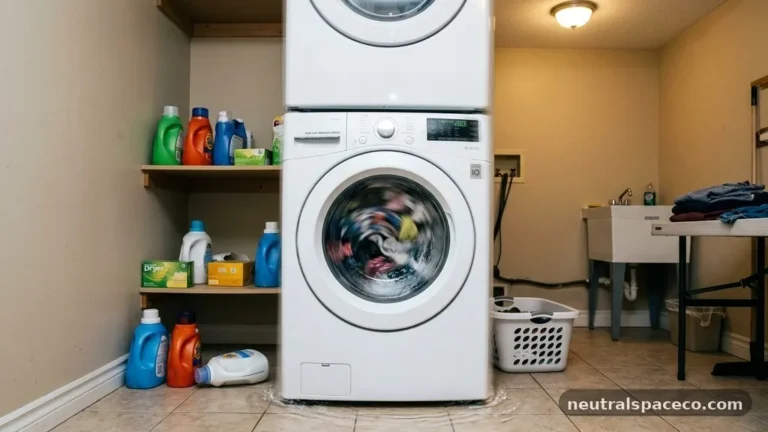
Determining the Minimum Walkway Clearance in Front of Front-Load Washer with Door Open
Determining the minimum walkway clearance in front of front-load washer with door open is a critical step in laundry room design. Many homeowners overlook how much space is actually required to load and unload clothes comfortably without feeling cramped. Failing to account for the swing of the door often leads to a restricted layout where you cannot stand directly in front of the machine.
By planning for the right amount of floor space, you ensure that your laundry routine remains efficient and frustration-free. This article breaks down the exact dimensions you need to maintain a functional workspace while keeping your home’s flow intact.
To achieve a comfortable experience, you generally need a minimum of 36 to 48 inches of clear space in front of your machine. This distance allows for the full swing of the door plus enough room for a person to stand between the open door and the opposite wall or cabinet.
If you have less than 36 inches, you will likely find yourself maneuvering awkwardly around the open door just to reach the drum. While some compact models require slightly less, planning for the standard 48-inch clearance is the best way to guarantee you won’t regret your layout later.
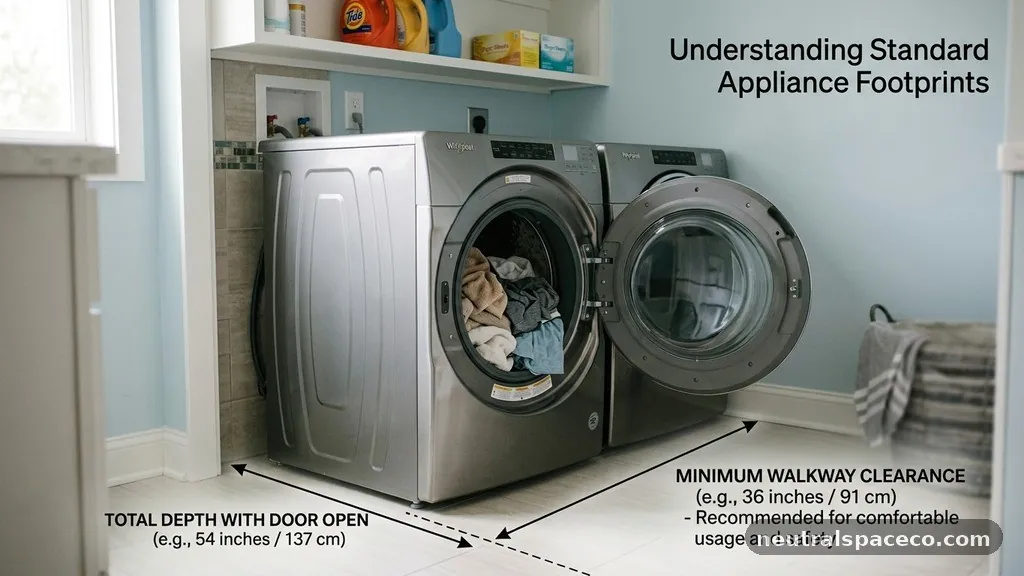
Understanding Standard Appliance Footprints
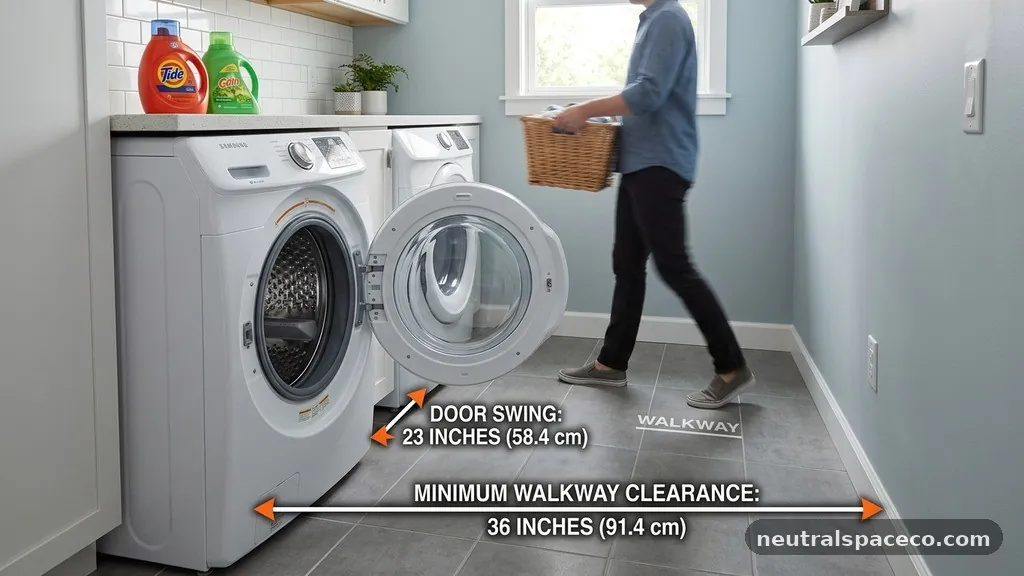
Most modern front-loading machines are designed with a depth ranging from 28 to 34 inches. When you add the length of the door, which typically measures between 15 and 20 inches, the total depth of the unit when open can easily exceed 50 inches.
This is why the minimum walkway clearance in front of front-load washer with door open often surprises people who only measure the machine itself. You must account for the full extension of the hardware to avoid obstruction.
If your laundry room is a narrow closet or a tight hallway, every inch counts. You should measure the depth of your specific model from the wall to the outermost edge of the open door.
Manufacturers provide these specifications in the technical data sheets available on their websites. Comparing these numbers against your floor plan is the most reliable way to avoid installation errors.
The Importance of Ergonomic Flow
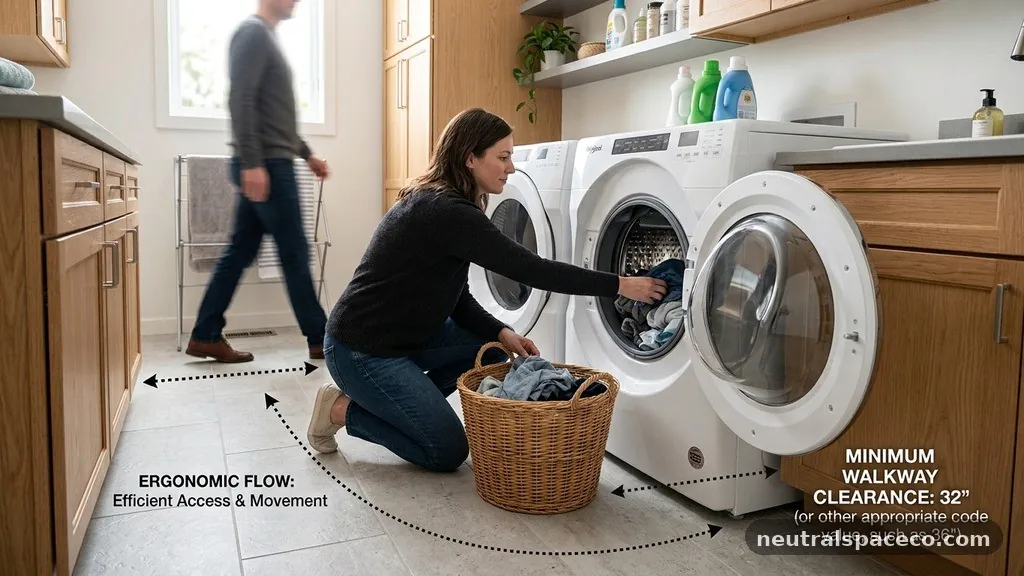
Ergonomics play a huge role in how you interact with your appliances daily. If the clearance is too tight, you will be forced to crouch or twist your body to transfer heavy, wet clothes from the washer to the dryer.
This repetitive motion can lead to unnecessary strain on your back and shoulders over time. A clear, open floor allows you to stand upright while loading the machine, which is far more sustainable for your physical health.
Consider the path of travel through the laundry room as well. If the washer door blocks the only walkway to a back door or a hallway, you are creating a bottleneck.
Ideally, the door should swing into an area that does not impede traffic when the machine is in use. If you cannot change the layout, look for machines with reversible door hinges, which can sometimes be adjusted to swing in a direction that is less disruptive to your floor plan.
Comparing Standard and Compact Machine Requirements
Not all washing machines occupy the same amount of space. Compact units, often found in apartments or small condos, have smaller footprints, but they still require a decent amount of room for the door to open fully. Standard full-size machines require more substantial clearance due to their increased drum capacity and physical dimensions.
| Appliance Type | Average Machine Depth | Typical Door Depth | Recommended Clearance |
|---|---|---|---|
| Compact Washer | 24 – 26 inches | 14 – 16 inches | 36 inches |
| Standard Washer | 28 – 32 inches | 18 – 22 inches | 48 inches |
| Large Capacity | 32 – 36 inches | 20 – 24 inches | 52+ inches |
These figures provide a baseline, but you should always verify the specific model you intend to purchase. The table above highlights how quickly space requirements grow as the machine capacity increases. Always err on the side of caution by leaving an extra few inches for comfort.
The Impact of Adjacent Obstacles
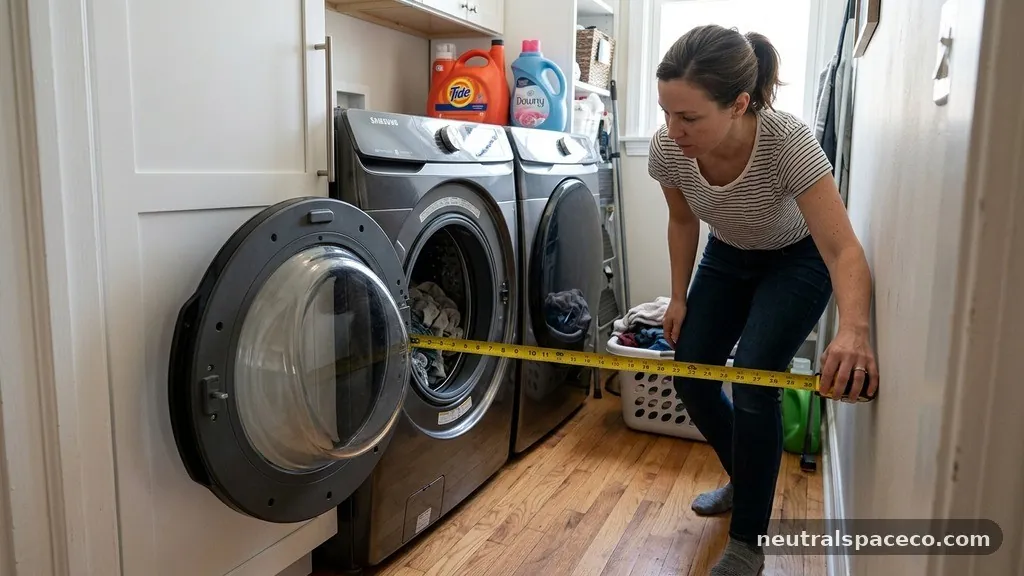
Walls, cabinets, and folding tables are the most common culprits for restricted laundry room access. If you have a wall directly opposite your washer, the door swing must be measured against that wall.
If the door hits the wall before it is fully open, you may struggle to get large items like blankets or comforters into the drum. You can visit the Energy Star website to review general appliance guides that often touch on installation best practices.
Cabinets or baseboards can also interfere with the door hinge. Ensure that any nearby cabinetry is set back far enough that the washer door can open at least 90 degrees.
Some doors are designed to open even wider, which is helpful if your laundry basket is bulky. If you find that a cabinet is in the way, consider installing a door stop to prevent the washer door from banging into the wood or hardware.
Managing Laundry Basket Placement
You need to think about where your laundry basket sits while you are working. Many people place the basket on the floor directly in front of the machine.
If your walkway clearance is already minimal, the basket will likely become a tripping hazard or block your access to the drum. A wall-mounted folding shelf or a dedicated pull-out drawer can keep the floor clear.
If you are short on space, consider using a narrow rolling cart that can be tucked away when not in use. This allows you to have a basket at a comfortable height without permanently occupying the floor space in front of the washer. Keeping the floor clear of baskets and other clutter is just as important as the structural clearance of the door itself.
Strategies for Tight Laundry Spaces
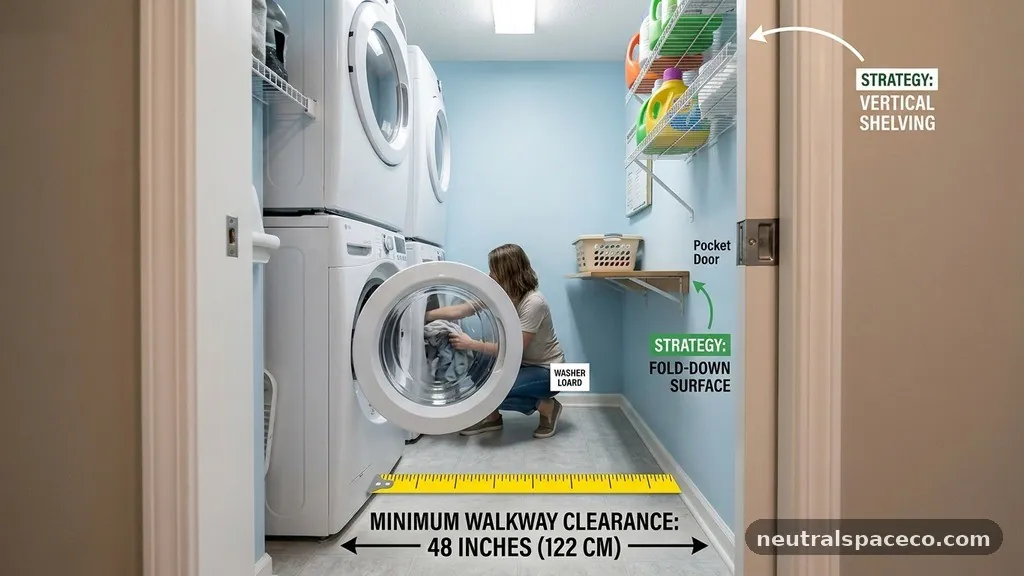
When you are forced to work with a very small room, you have to get creative. Stacked machines are the most effective way to save floor space, as they consolidate the footprint of two appliances into one. While this does not change the door swing requirements, it does free up the surrounding area for better movement.
If stacking is not an option, you might consider a top-load washer, which eliminates the need for horizontal door clearance entirely. However, if you are committed to the front-load style, look for models with thinner profiles.
Some manufacturers make “shallow depth” washers specifically for tight laundry closets. These machines can save you 3 to 4 inches of depth compared to standard models, which is often the difference between a cramped space and a comfortable one.
The Role of Door Swing Direction
Most front-load washers have doors that open from left to right, but many models allow for the hinge to be swapped. Check your owner’s manual to see if your specific machine supports a reversible door. Changing the swing direction can make a massive difference if your current layout forces you to reach around the door to load your clothes.
If you have a side-by-side washer and dryer, you can often arrange the doors so they open away from each other. This creates a “landing zone” in the middle of the two machines where you can stand while moving clothes from one to the other. This simple adjustment can make a laundry room feel much larger without needing to perform any major renovations.
Safety and Maintenance Considerations
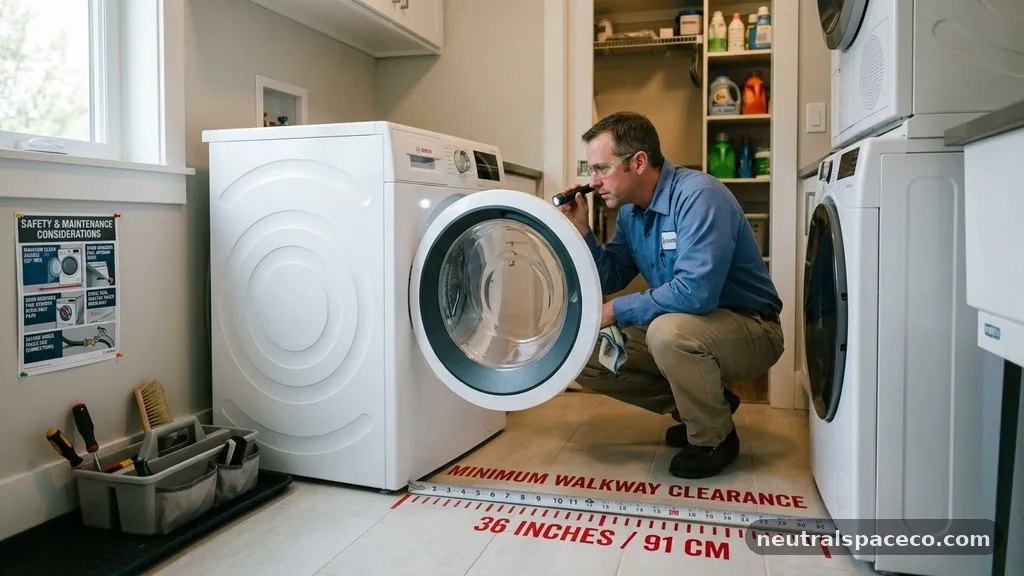
Leaving the door open between cycles is a standard recommendation to prevent mold and mildew growth. This means that the minimum walkway clearance in front of front-load washer with door open is a constant factor in your home’s layout, not just during laundry day. If your laundry room is in a high-traffic area, an open door can be a significant hazard.
Consider the safety of children and pets when leaving the door ajar. If the machine is located in a hallway, you might need to install a baby gate or a door to the laundry closet to keep the area secure. Maintaining the machine properly is essential, but it should not come at the cost of your household’s safety or accessibility.
Planning for Future Upgrades
If you are planning to renovate your laundry room, think about the future. You might buy a compact machine now, but a future owner or a future upgrade might involve a larger unit. Build your clearance requirements based on the larger standard sizes to ensure the space remains versatile.
It is much cheaper to move a water hookup or relocate a cabinet during a renovation than it is to realize your new washer doesn’t fit after the work is finished. Always measure for the “worst-case scenario” regarding door width and depth. This forward-thinking approach will save you from having to replace your appliances or re-do your cabinetry later on.
Frequently Asked Questions
How much space is needed for a laundry basket in front of the washer?
You should add at least 18 to 24 inches of extra depth beyond the open door swing to accommodate a standard laundry basket comfortably. If you have less room, consider using a folding wall shelf or a slim cart to keep the floor clear of obstacles.
Do all front-load washers have the same door swing depth?
No, door depth varies significantly by brand and model. Some machines have flat, flush doors, while others have curved or bulky designs that extend further into the room. Always check the manufacturer’s technical specifications for the exact “depth with door open” measurement.
Can I install a front-load washer in a tight hallway?
Yes, but you must ensure that the door does not block the path of travel when in use. If the door creates a major obstruction, you may need to look for a unit with a reversible hinge or consider a top-load machine instead.
Why is it important to keep the washer door open?
Front-load washers have tight rubber gaskets that trap moisture, which can lead to mold and unpleasant odors. Leaving the door slightly ajar allows air to circulate inside the drum, keeping the machine fresh and extending the life of the seal.
What is the minimum clearance if I have a pedestal under the washer?
Adding a pedestal changes the height of the door, but it does not typically change the horizontal clearance requirements. However, the pedestal may make it easier to load the machine without needing as much room to bend or crouch, which can make a tight space feel slightly more manageable.
Final Thoughts on Laundry Room Layout
Achieving the correct minimum walkway clearance in front of front-load washer with door open is essential for a functional home. By prioritizing at least 36 to 48 inches of space, you ensure that your laundry chores are completed with ease and without physical discomfort. Remember to account for the full swing of the door, the placement of your laundry baskets, and the potential for future upgrades to larger machines.
Taking these measurements now will prevent long-term frustration and help you create a space that truly serves your needs. If you are currently feeling cramped, consider the small adjustments mentioned above to reclaim your floor space and improve your overall routine.