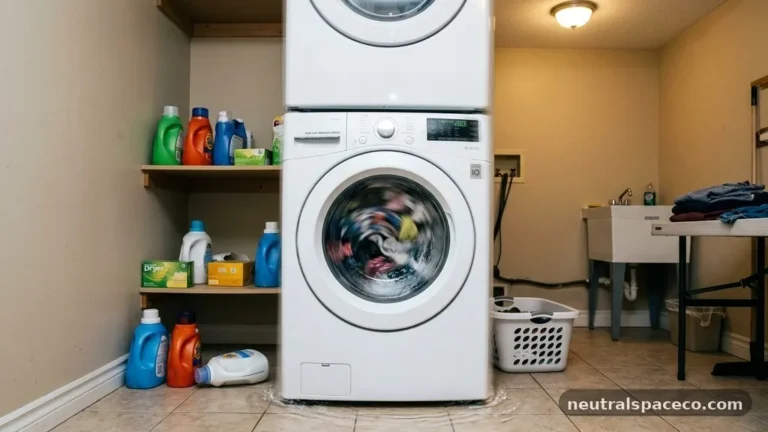

10 Removable Wood Folding Countertop Over Laundry Machines Ideas
Introduction
A Removable Wood Folding Countertop Over Laundry Machines provides a practical way to add workspace while maintaining access to your appliances. Installing a Removable Wood Folding Countertop Over Laundry Machines allows you to maximize your laundry room utility without making permanent modifications to the space.
This article explores ten creative design ideas for building a versatile workspace above your washer and dryer. You will learn about selecting budget-friendly materials like plywood, using proper cutting techniques with a circular saw, and applying protective finishes like polyurethane. We also cover essential construction methods, including using pocket hole screws for bracing and shims to keep your structure level on uneven floors. Whether you are looking to create a seamless look with edgebanding or need a simple solution that remains easy to detach, these concepts help you optimize your laundry room layout effectively.
Maximizing Utility While Preventing Vibration Issues
Maximizing laundry room functionality with a removable wood folding countertop over laundry machines lets you sort and fold clothes easily without permanently altering your appliances or walls. A dedicated workspace turns cramped laundry areas into efficient zones, but washing machines shake violently during high-speed spin cycles. This movement creates a primary concern for homeowners placing items directly on top of appliances. If a surface rests immediately on the machine, constant vibration can cause rattling, surface scratches, or structural damage to the outer appliance housing.
Removable designs solve this problem by keeping the entire wooden structure completely independent of the moving appliances. You can build a freestanding table frame or modular bridge that spans over the washer and dryer without touching them at any point. This independent setup absorbs or avoids machine vibrations entirely, protecting both your appliances and your custom project.
To achieve this safely, incorporating specific layout and assembly practices helps avoid common mistakes. Consider the following steps and guidelines for a stable build:
* Maintain a small clearance gap between the underside of the wood and the top of the appliance to prevent accidental contact during heavy spin cycles.
* Utilize a circular saw or track saw to cut countertop panels to precise dimensions, ensuring clean lines. (source: https://pmc.ncbi.nlm.nih.gov/articles/PMC4290629/)
* Apply shims under side support panels as a typical practice to ensure the countertop stays completely level on uneven laundry room floors.
* Use 2×2 support boards, which are often ripped down from standard 2×4 boards to stay budget-friendly.
* Rely on pocket hole screws when attaching 1×3 bracing boards to vertical side support panels for a sturdy frame.
Plywood is commonly chosen for these projects because it is lightweight enough to manage and move around easily while remaining budget-friendly. Because wood in a laundry space deals with humidity, spar urethane or polyurethane can be applied as a protective finish to seal the surface against moisture. Additionally, builders often add 2-inch edgebanding to cover plywood edges for a seamless, finished look that mimics a heavy butcher block. By keeping the structure modular, you can easily lift the wooden top out of the way whenever you need access to the back of the machines for maintenance or repairs.
Best Woods for Laundry Countertops
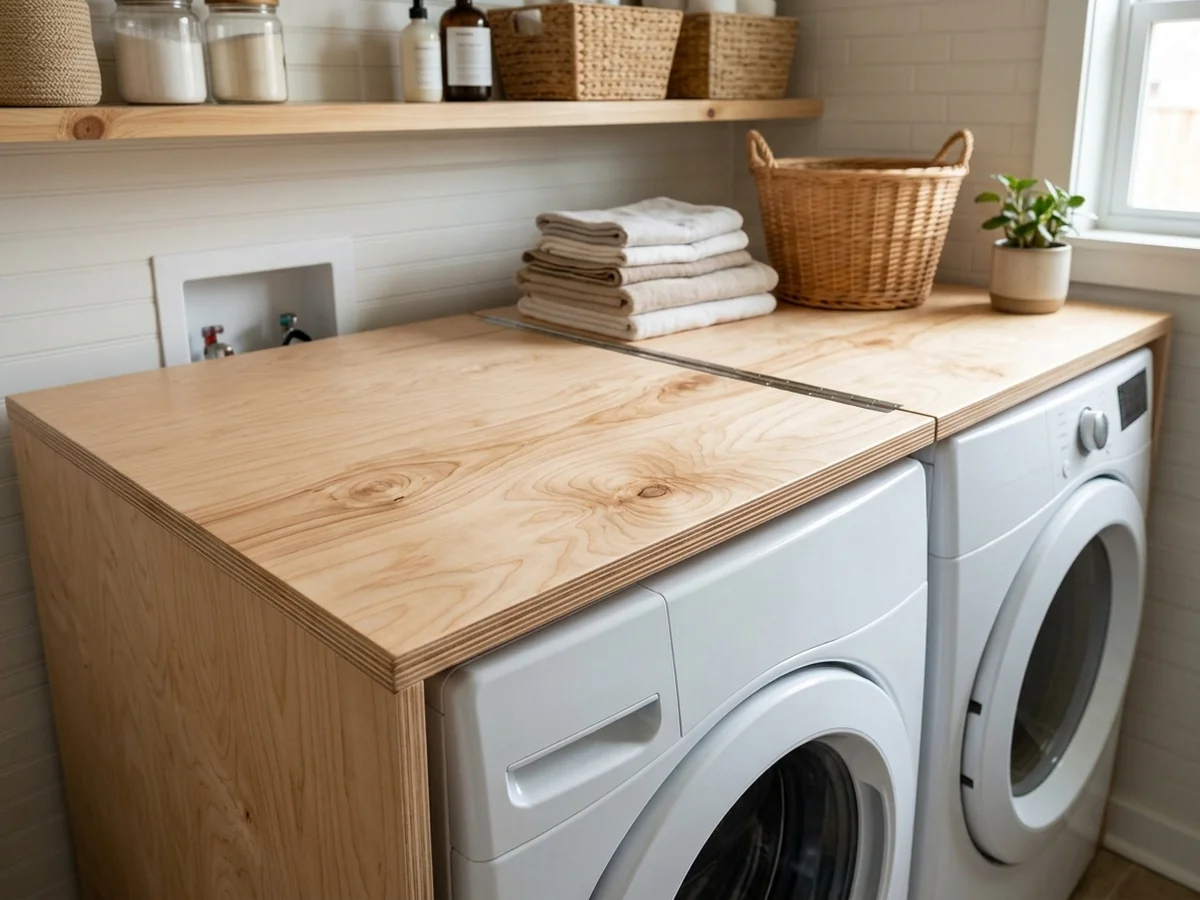
Selecting the right material is essential when planning a diy laundry room folding counter above front load machines. Plywood frequently serves as a popular choice for a removable wood folding countertop over laundry machines because the material is lightweight enough to manage and move around easily while remaining budget-friendly. When preparing the panels, a circular saw or track saw can be used to cut countertop panels to dimensions (source: https://pmc.ncbi.nlm.nih.gov/articles/PMC4290629/). Additionally, a jigsaw can be utilized to trim excess wood to account for unique wall variations or tight alcove spaces.
A common mistake when working with plywood is leaving the raw edges exposed, which disrupts the aesthetic of a clean workspace. To solve this, applying two-inch edgebanding is a standard practice to cover plywood edges and create a seamless look that mimics a solid butcher block. For the support structure, 2×2 support boards are often ripped down from 2×4 boards to stay budget-friendly while still holding the weight of baskets and folded linens. Pocket hole screws are commonly used to attach 1×3 bracing boards securely to vertical side support panels, reinforcing the entire frame.
Because laundry areas experience high humidity and occasional spills, protecting the wooden surface is crucial. Spar urethane or polyurethane can be applied to seal and protect wood laundry countertops, preventing moisture absorption and surface wear over time. Finally, when installing the finished structure on site, shims can be used under side support panels to ensure the countertop stays level on uneven floors, preventing any unwanted rocking during appliance spin cycles.
Measuring Your Laundry Countertop
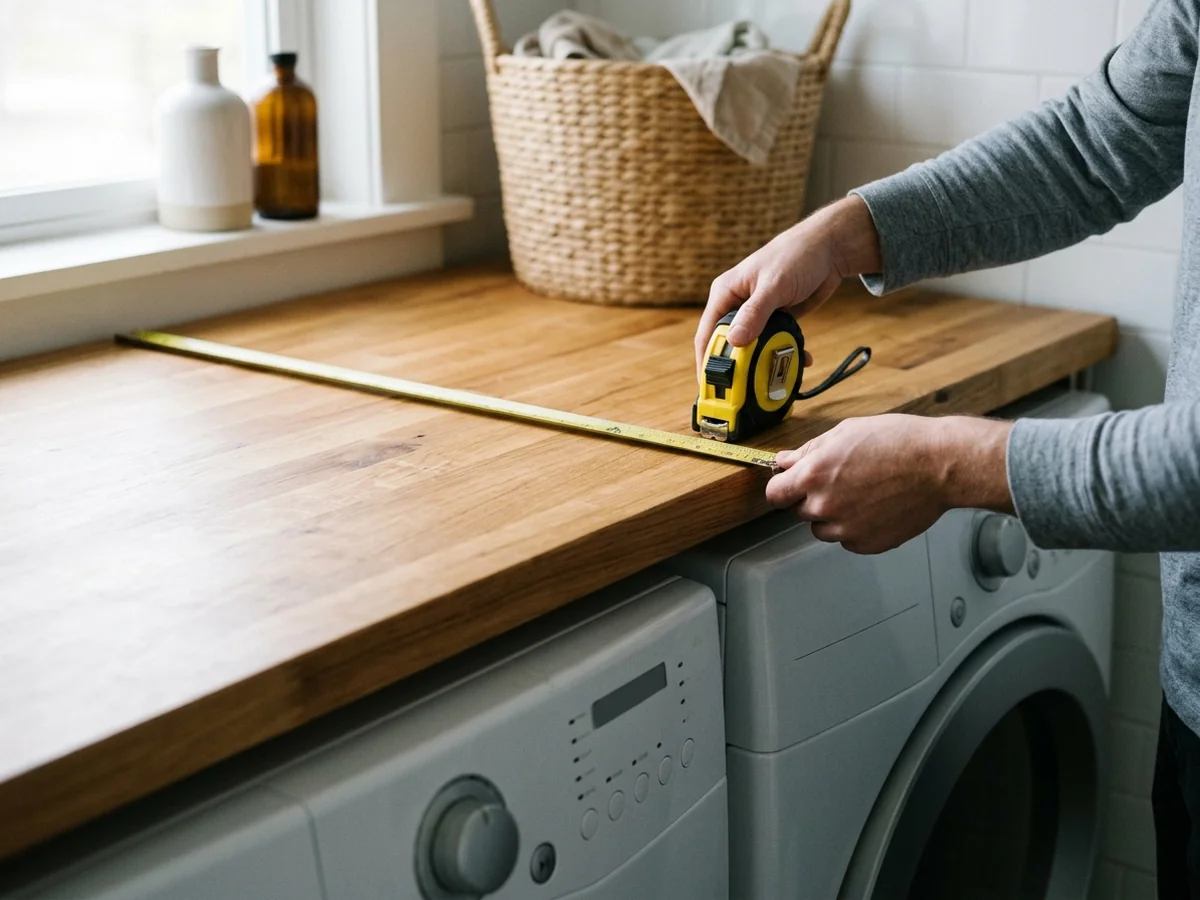
Achieving a professional finish for a removable countertop over washer and dryer units starts with precision. Because laundry machines vibrate during spin cycles, your measurements must account for both the physical footprint of the appliances and the necessary clearance for mechanical operation. Begin by measuring the width, depth, and height of your machines side by side. It is essential to add at least one to two inches of clearance on all sides, as this prevents the wood from rattling against the machines or restricting access to power cords and water hoses located behind the units.
When measuring, do not assume your walls are perfectly square. Home improvement projects often reveal minor wall bows or corners that are not at true ninety-degree angles. To manage these imperfections, measure the width at both the back and the front of the laundry area. If you are building a custom surface, such as a diy laundry room folding counter using plywood or butcher block, note the tightest measurement to ensure the board fits, then use a jigsaw to scribe and trim the edges for a flush, custom look against the drywall.
To cut your chosen material, a circular saw or track saw is used to achieve clean, straight lines across the surface. Before making any cuts, mark your dimensions clearly with a square to avoid material waste. If you find that your floor is slightly uneven, which is common in many laundry rooms, you can use shims under your side support panels to ensure the entire countertop remains perfectly level. This step is critical for stability and ensures that items placed on the surface do not slide off.
Common mistakes often involve forgetting to account for appliance doors and detergent drawers. Always check the swing of your doors to ensure the countertop height does not block your ability to fully load or unload the machines. If you decide to use plywood for your project, it is often chosen because it is lightweight enough to manage and move around while being budget-friendly. To complete the look, many DIYers find that 2-inch edgebanding can be used to cover exposed plywood edges, creating a seamless, high-quality aesthetic that mimics the appearance of a thicker, solid slab.
Designing for Easy Removal
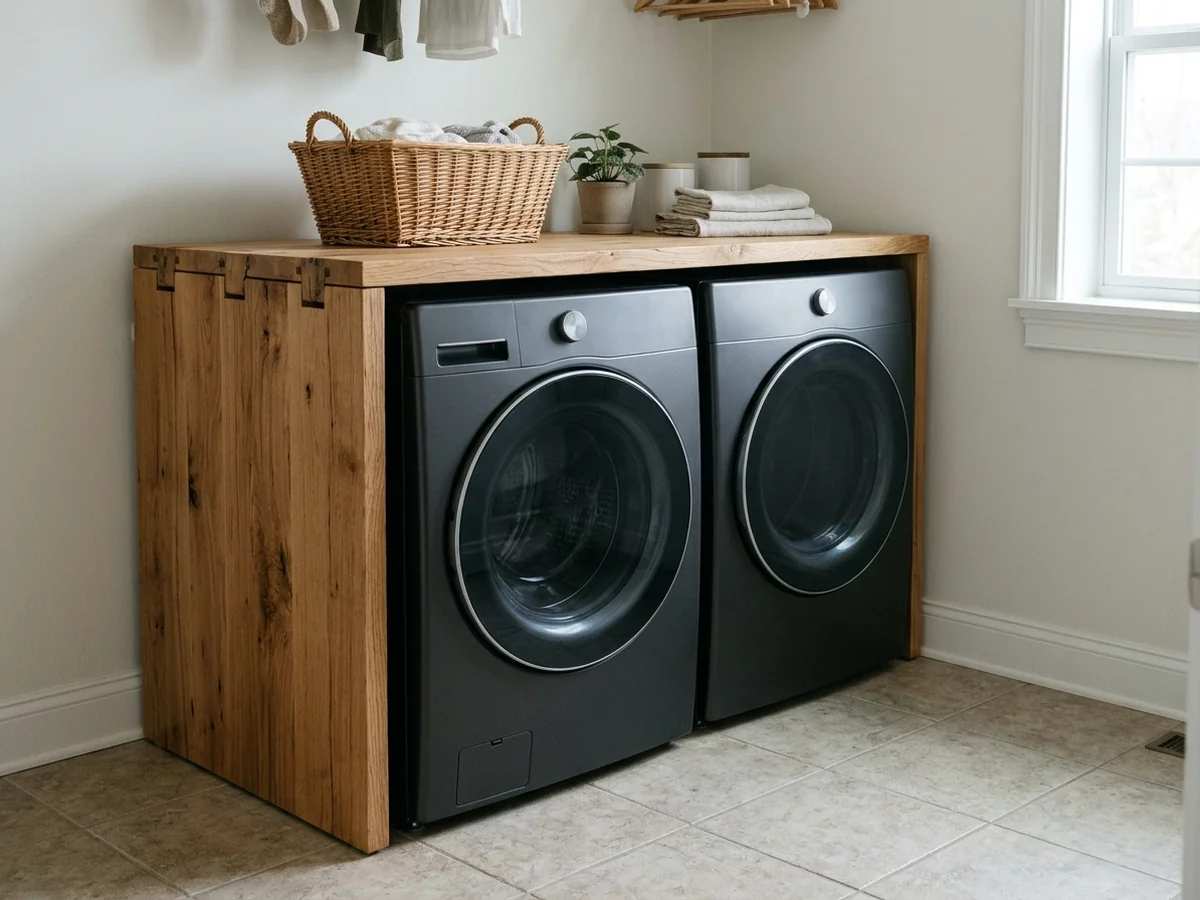
Creating a non-permanent setup for a removable countertop over washer and dryer units requires designing a freestanding bridge that lifts off easily without damaging surrounding walls. Renters and homeowners often prefer this approach because it avoids drilling holes into drywall and allows for quick appliance maintenance.
Side support legs eliminate the need for wall mounting by carrying the downward weight of the wooden surface directly to the floor. These vertical panels frame your machines on the left and right, creating a sturdy cradle that stays completely independent of the laundry room walls. You can slide the entire structure out whenever you need to pull your appliances forward for repairs or deep cleaning.
Incorporating 1×3 bracing adds vital rigidity to the vertical side panels so the freestanding frame does not wobble during high-speed spin cycles. Common practice involves using pocket hole screws to attach these horizontal reinforcement boards securely to the inside of the vertical supports. This hidden fastening method keeps the aesthetic clean while locking the frame into a rigid, square shape.
Shims placed underneath the side support panels ensure the tabletop stays level even when the laundry room floor slopes or dips. Adjusting these small wedges until the surface sits flat prevents any annoying rocking motions while you fold clothes. Once leveled, your custom laundry table over washer and dryer setups remain completely stable without relying on permanent anchors.
Ensuring Stability and Leveling
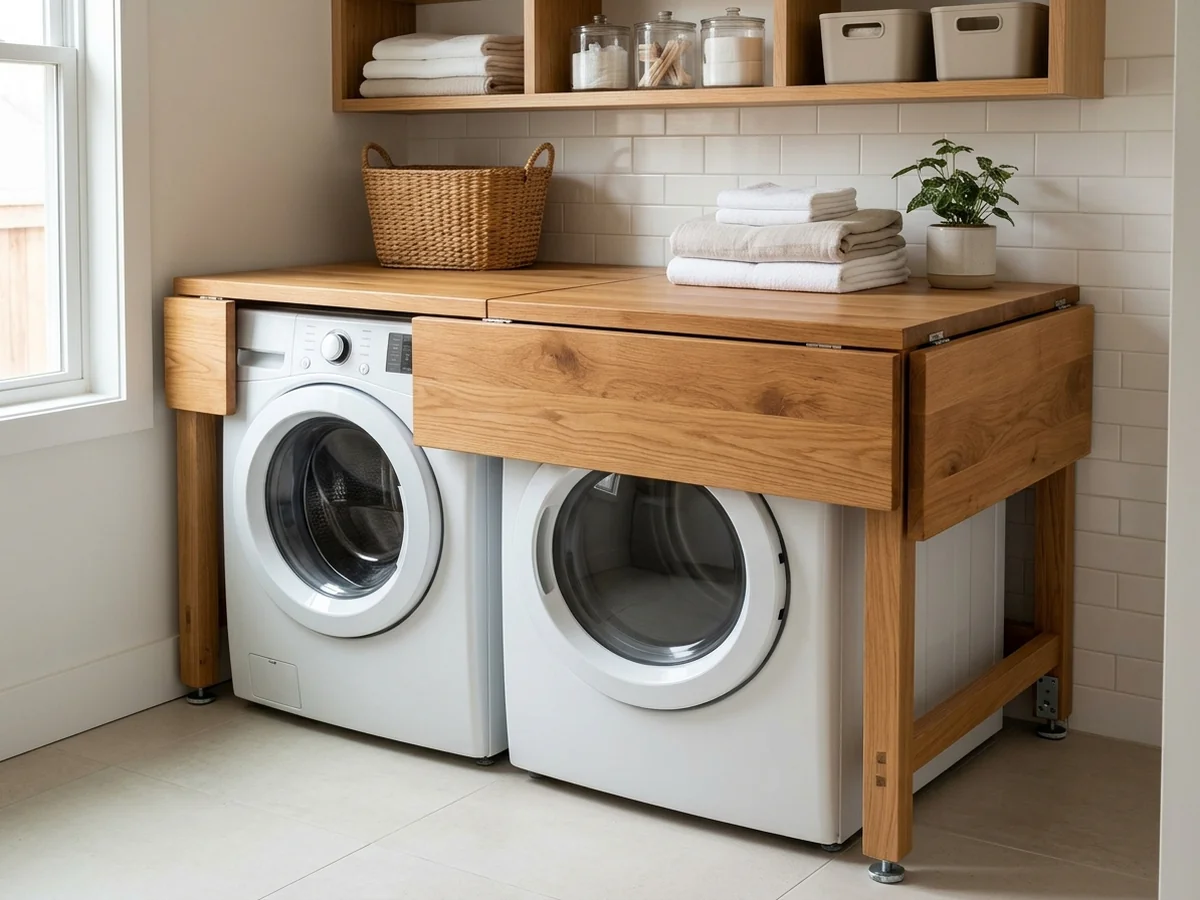
Keeping a custom laundry surface steady requires careful attention to floor alignment and appliance movement during heavy spin cycles. A solid structure combines adjustable base components with secure framing joints while leaving enough breathing room for your appliances. When building a removable wood folding countertop over laundry machines, managing uneven floors and vibration forces prevents shifting and structural strain.
Common guidance suggests that shims can be used under side support panels to ensure the countertop stays level on uneven floors. Working with your specific laundry room layout means tapping these small wedges gently into place until your washing machine and dryer platform sits completely flat. Ignoring minor floor slopes can cause the entire assembly to wobble when appliances run.
Typical building practices show that pocket hole screws can attach 1×3 bracing boards to vertical side support panels securely. This hidden fastening method creates clean joints without showing screw heads on the outside of your handmade laundry table. For those designing a diy laundry room folding counter, strong joinery ensures the side legs withstand daily folding tasks and downward pressure.
Maintaining proper vibration clearance is another critical factor to prevent your appliances from slamming against the wood during high-speed spin cycles. Front load washing machines move significantly during the final spin, meaning a tight fit leads to loud rattling and potential damage. Leaving a buffer zone around all sides absorbs kinetic energy safely.
- Insert tapered wedges beneath vertical supports to correct sloping foundation surfaces.
- Drill angled pilot holes into framing components for hidden fastener placement.
- Connect horizontal supports tightly to side panels using robust joinery techniques.
- Leave a small gap around all appliance edges to absorb kinetic energy safely.
Protecting Your Wood Countertop
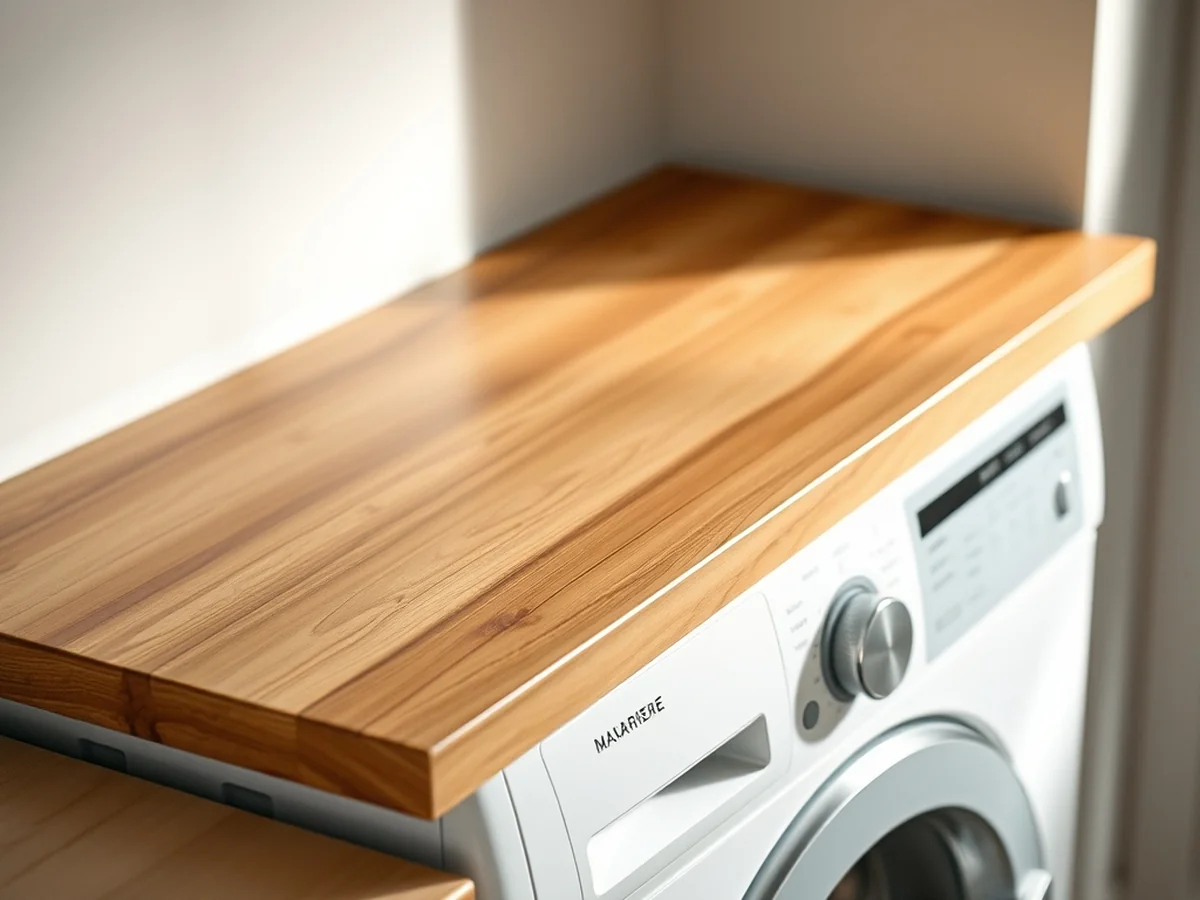
A laundry area is naturally prone to high humidity, soap spills, and condensation from cycles. Because wood is porous, it can absorb moisture, which often leads to warping, swelling, or unsightly water stains over time. To ensure your custom workspace remains flat and functional, you must prioritize a high-quality sealant. It is common practice to use spar urethane or polyurethane to shield the wood grain against the harsh environment created by active appliances. These finishes create a durable, moisture-resistant barrier that prevents liquids from soaking into the surface, keeping your workspace in top condition.
When preparing your surface, aim for a smooth finish before applying any protective coat. Sanding the wood thoroughly with progressively finer grits ensures that the sealer adheres evenly, which is critical for preventing moisture ingress. A common mistake is applying only one thick layer of finish. Instead, use multiple thin coats and sand lightly between applications to build a robust, professional-grade protective layer. Focus extra attention on the edges, especially if you have used plywood with edgebanding to simulate a thicker butcher block look, as these transition areas are the most vulnerable to water seepage.
Longevity depends on consistent maintenance habits. While a sealed surface is resilient, it is not impervious to standing water. Wipe up any detergent spills, stray water droplets, or damp lint immediately after folding clothes to prevent moisture from settling into corners or along the wall edges. Periodic inspections are also essential for a removable countertop over washer and dryer units. If you notice the finish starting to look dull, thin, or scratched, perform a quick spot-sand and apply a fresh coat of sealant to restore the barrier. By addressing minor wear immediately, you prevent the deeper water damage that often necessitates a full replacement of the countertop panel.
Avoiding Countertop Installation Errors
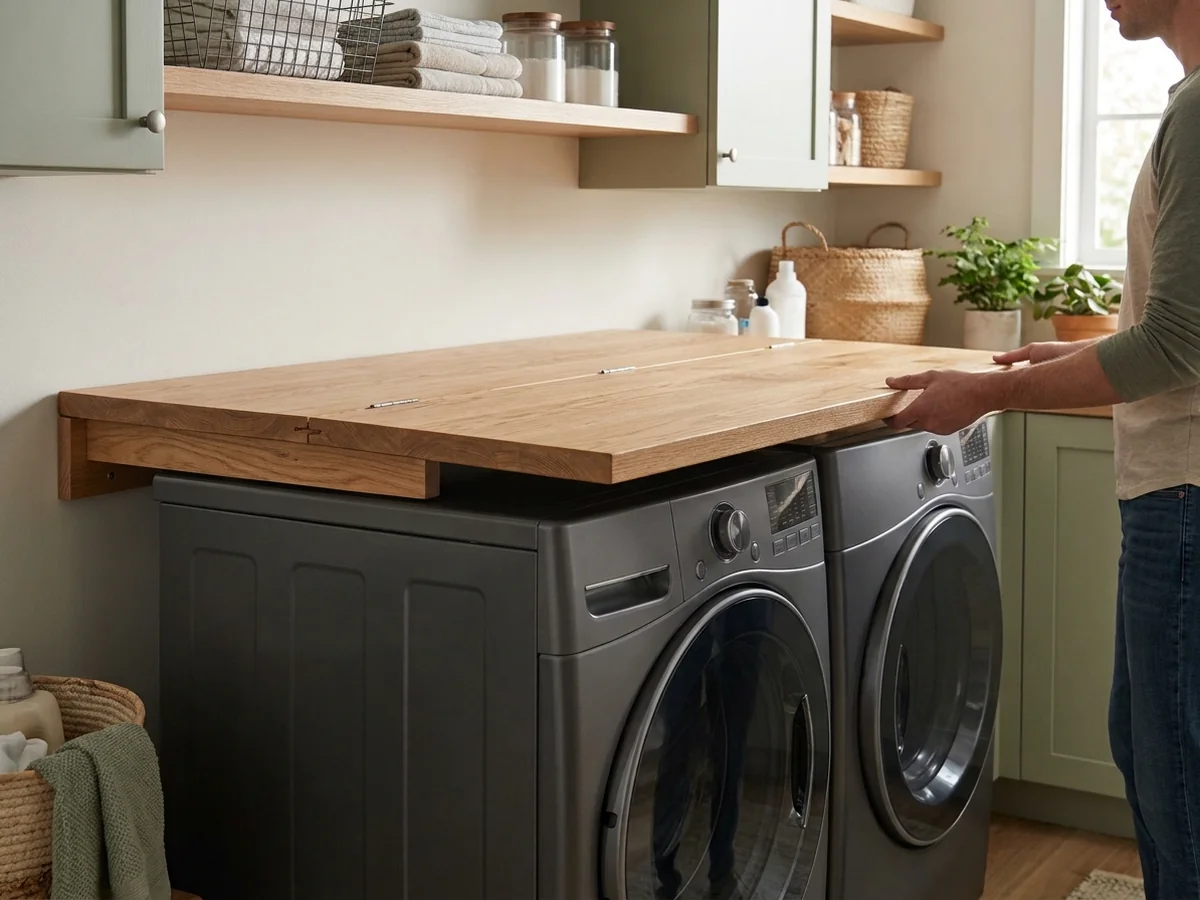
Preventing common mistakes during your laundry room upgrade ensures your custom setup remains functional, safe, and easy to adjust over time. Skipping crucial installation steps often leads to damaged appliances, warped surfaces, or frustrating maintenance issues later. When you take the time to plan your custom wood surface correctly, you protect both your investment in materials and the functioning of your washer and dryer.
One frequent oversight involves neglecting the physical dynamics of front load machines. Failing to leave enough gap for appliance vibration can cause heavy shaking to transmit directly into the wood and loosen structural joints. Always account for slight movements during spin cycles so the machines do not strike your removable wood folding counter directly. Another common pitfall is over-securing the unit to walls when removal is required. If you anchor the piece too permanently, routine appliance maintenance, repairs, or eventual replacement becomes unnecessarily difficult.
Moisture control is another critical area where errors happen. Failing to seal all sides of the wood allows ambient laundry room humidity to penetrate the material, which leads to warping and unsightly stains. It is typical practice to apply protective layers such as spar urethane or polyurethane to help guard against spills and steam. Additionally, neglecting to check floor levelness before placement can cause the entire wooden folding station to sit unevenly on top of your machines. Shims can be used under side support panels to ensure the countertop stays level on uneven floors without putting pressure on the appliance chassis.
Structural stability also requires careful attention during fabrication and placement. It is standard to use pocket hole screws to attach 1×3 bracing boards securely to vertical side support panels, as skipping this step can cause a homemade laundry folding counter to sag dangerously in the middle under heavy baskets of clothes. Furthermore, failing to cut panels accurately can ruin the final fit. A circular saw or track saw can be used to cut countertop panels to dimensions cleanly and accurately. Taking these precautions ensures your washer dryer countertop ikea alternative or custom plywood build remains sturdy, safe, and visually appealing for years to come.
When to Hire a Carpenter
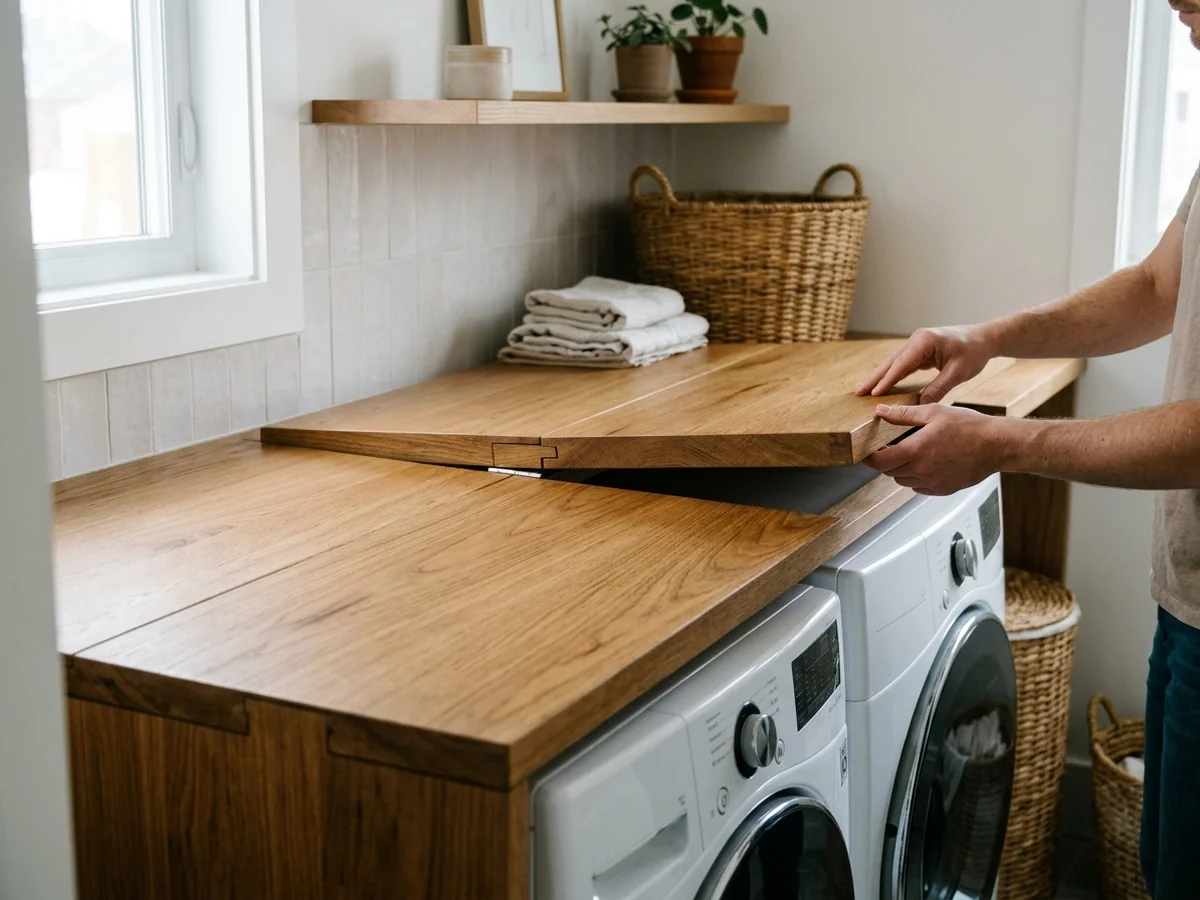
You should consult a professional if your laundry room walls are not square, if you lack experience with power tools, or if you need to integrate complex plumbing or electrical adjustments. While building a custom surface for your appliances is a common DIY project, a skilled carpenter can ensure the structure is perfectly level and securely anchored, especially if you are working with irregular room layouts.
Safety is the primary concern when operating power equipment like a circular saw or track saw. According to research published by the National Center for Biotechnology Information, these tools are effective for cutting panels to precise dimensions, but they demand your full attention. Always wear safety glasses and hearing protection. Keep your workspace free of debris and ensure your wood is properly clamped before starting any cut to prevent kickback.
Before beginning your project, contact your local building department to determine if you need a permit for these modifications. While most simple, non-permanent laundry room additions do not require municipal oversight, building codes can vary significantly by region. If your design involves permanent wall-mounted supports or significant structural changes, verifying your plans against local requirements prevents potential compliance issues later.
Consider bringing in an expert if you encounter the following situations:
- The wall studs are positioned in a way that makes attaching heavy-duty supports difficult.
- You need to build a custom side support leg that must account for heavy vibration from high-speed spin cycles.
- The laundry room has unique obstacles like exposed pipes or recessed electrical outlets that require specialized carpentry skills to navigate.
Hiring help is also wise if you choose heavy materials like solid butcher block, which requires specialized handling compared to lightweight plywood. A professional can also provide advice on the best sealing techniques, such as applying spar urethane or polyurethane, to ensure your surface withstands moisture. Relying on an expert ensures that your finished piece remains stable, functional, and aesthetically consistent with your home decor.
FAQ
Can I put a removable wood folding countertop over my washer and dryer?
Yes, you can install a removable wood folding countertop over front load machines to create a functional workspace while keeping access for maintenance. Building this as a standalone bridge structure ensures it rests on the floor or side supports rather than vibrating against your appliances.
What is the best material for a custom laundry surface?
Plywood is commonly used for these projects because it is lightweight enough to manage and move around while remaining a budget-friendly option. You can achieve a high-end look by applying 2-inch edgebanding to the exposed sides to mimic the thickness of a solid butcher block.
How do I ensure my laundry countertop stays level on uneven floors?
Common guidance suggests using shims under your side support panels to compensate for any slope in your laundry room floor. This simple adjustment prevents the countertop from wobbling and keeps your folding surface perfectly flat.
What is the best way to protect wood surfaces in a laundry room?
Applying spar urethane or polyurethane is a standard method to seal and protect wood laundry countertops from moisture and detergent spills. These finishes create a durable, wipeable barrier that keeps your wood looking fresh despite the humid environment of a laundry room.
How do I customize the countertop for my specific wall space?
A circular saw or track saw can be used to cut countertop panels to your exact room dimensions. If your walls are not perfectly square, a jigsaw is often used to trim excess wood for a snug fit against the wall.
How do I join the support components for the countertop?
It is common practice to use pocket hole screws to attach 1×3 bracing boards to your vertical side support panels. This creates a sturdy frame that supports the weight of the countertop without requiring permanent attachment to the walls.
Conclusion
The main decision point for your project is determining whether you require a permanent structure or a truly portable surface that allows easy access to your appliances for maintenance. Once you confirm your preferred functionality, your next step should be taking precise measurements of your laundry room to ensure your chosen removable folding countertop will clear the height of your machines and accommodate any necessary vibration gaps. After your dimensions are set, you can confidently select your materials and begin the assembly process to transform your utility space. A circular saw or track saw can be used to cut countertop panels to dimensions.
Sources: pmc.ncbi.nlm.nih.gov
You might also like: Can You Stack Any Dryer on Any Washer Without a Universal Stacking Kit