
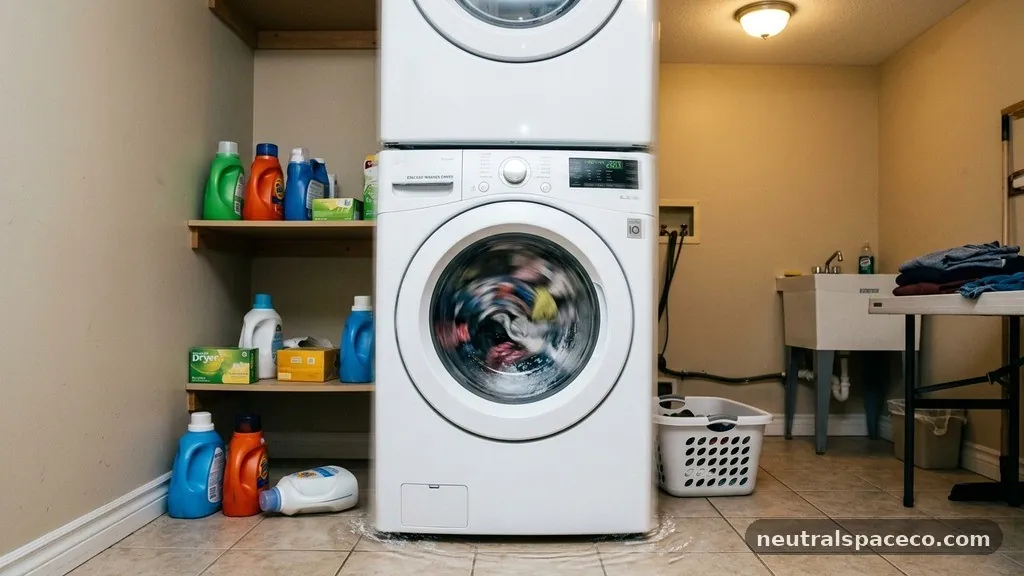
Does a Stacked Washer and Dryer Vibrate or Tip Over During High Spin Cycles?
Homeowners often worry about whether a stacked washer and dryer will vibrate or tip over during high spin cycles, especially when these units are installed in tight living spaces. While the sight of a machine shaking during a high-speed extraction can be alarming, modern appliances are engineered with sophisticated suspension systems to mitigate these movements. Understanding how kinetic energy transfers from the drum to the floor is key to ensuring your laundry tower remains stable.
By examining the mechanics of load balancing and proper installation techniques, you can determine if your setup is truly at risk. This article explores the reality behind these common concerns and provides practical steps for long-term appliance stability.
The Direct Answer: Will Your Machine Tip Over?

To address the core concern directly, the short answer is no; a properly installed stacked washer and dryer will not tip over during normal operation. Manufacturers design these units specifically to handle the intense vibrations generated by high-speed spin cycles. The total weight of a stacked unit is substantial, often exceeding 300 pounds, which creates a low center of gravity that resists tipping.
While minor shaking or “walking” is a common symptom of laundry room vibrations, a total collapse is virtually unheard of with modern hardware. The real risk lies not in the unit toppling, but in the long-term strain placed on your floor joists and internal machine components.
Understanding Spin Cycle Mechanics
The primary source of motion in any laundry appliance is the rapid rotation of the inner drum. During a high-speed spin, the machine reaches hundreds of revolutions per minute to remove water from clothing. This process utilizes centrifugal force to push water through the drum perforations, but it also creates significant drum oscillation if the internal weight is not distributed evenly.
When a load becomes clumped on one side, the drum suspension system must work harder to dampen the resulting kinetic energy. If the suspension springs or shock absorbers are worn, that energy transfers directly to the outer chassis of the machine.
The Crucial Role of the Stacking Kit
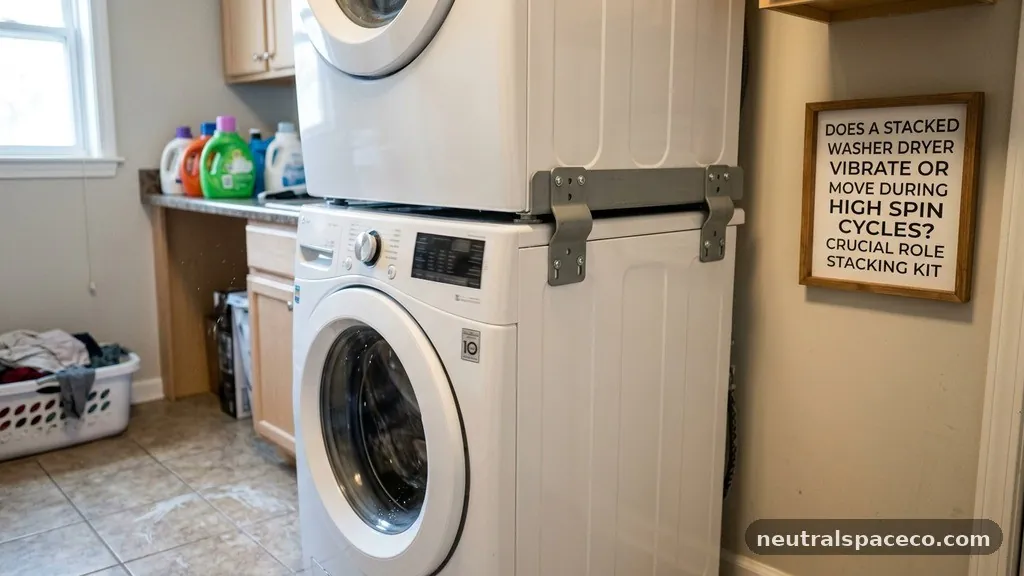
You should never simply place a dryer on top of a washing machine without a dedicated stacking kit. These kits serve as the primary structural link between the two appliances, effectively turning them into a single, cohesive unit. Most kits include heavy-duty metal mounting brackets that bolt the dryer frame to the top of the washer.
By creating a rigid connection, the kit ensures that any vibration occurring in the washer is distributed evenly throughout the entire tower. Without this specialized hardware, the dryer could shift or slide during aggressive cycles, leading to potential damage to the control panels or external surfaces.
Why Leveling Legs Are Your First Line of Defense
Many issues regarding movement during the spin cycle start with improper machine calibration at the floor level. Every front-load washing machine features adjustable leveling legs designed to ensure the unit sits perfectly flat on the ground. If even one leg is not making firm contact with the floor, the entire machine will pivot on that point during high-speed extraction.
You can verify this by checking the stability of the unit with your hands when it is empty. If you notice any rocking, you must adjust the legs until the chassis feels completely locked into place.
The Impact of Floor Surface Integrity
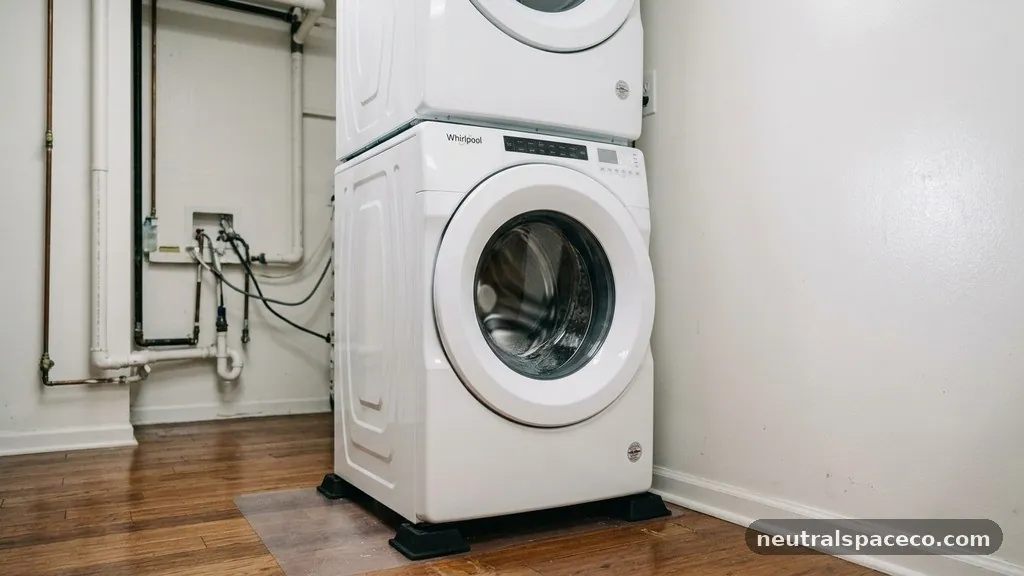
The surface beneath your laundry tower plays a significant role in how much energy is transferred during the spin cycle. Concrete floors provide the most stability because they do not flex under the weight of the machine. Conversely, wood flooring or flexible subflooring can amplify vibrations, leading to the sensation that the machine is moving more than it actually is.
If your laundry area is located on an upper floor, the floor joists may deflect slightly under the weight of a heavy load. This movement can create a feedback loop where the vibration causes the floor to bounce, which in turn causes the machine to vibrate more intensely.
Managing Unbalanced Loads Effectively
One of the most frequent causes of excessive shaking is an unbalanced load, which occurs when heavy items like towels or bedding clump together. Modern machines attempt to mitigate this by using internal load balancing sensors that detect uneven distribution before the spin cycle begins. If the machine cannot correct the balance, it may pause or display an error code to prevent structural damage.
You can help the machine by ensuring you don’t overload the drum, as this leaves no room for the clothes to redistribute themselves. Providing adequate space allows the drum to maintain a consistent speed without triggering excessive vibration dampening responses.
Using Anti-Vibration Pads for Added Stability
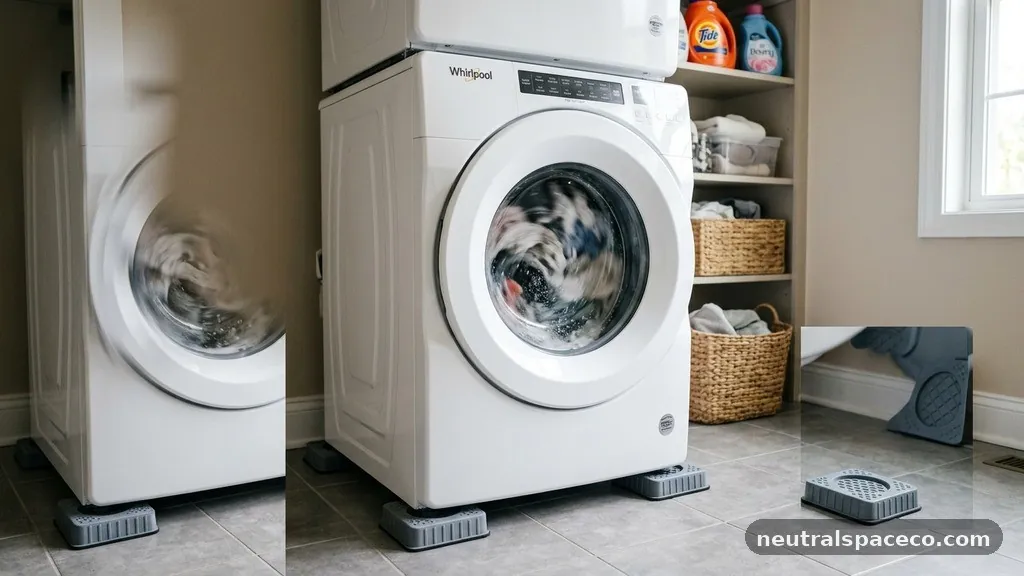
If your machine is properly leveled but still vibrates enough to be noisy or annoying, anti-vibration pads offer a simple, effective solution. These circular or square feet are made of high-density rubber that absorbs the kinetic energy before it reaches the floor. By placing these under each of the four leveling legs, you decouple the machine from the floor surface.
This is particularly useful in homes with older, less rigid flooring where structural dampening is harder to achieve. While they won’t fix a fundamentally broken suspension system, they do an excellent job of quieting the laundry room environment.
The Importance of Machine Calibration
Every manufacturer provides specific instructions on how to calibrate their machines to ensure internal sensors are reading the environment correctly. Machine calibration is an often-overlooked step that tells the washer how the weight of the drum should feel when empty. If the sensors are not calibrated, the computer may misinterpret the force of the spin, leading to erratic behavior during the cycle.
You can find detailed steps for this in your owner’s manual, which often involves running a specific diagnostic mode. A well-calibrated machine is significantly more efficient at identifying and managing its own internal vibrations.
Comparing Installation Methods

The method you choose to secure your appliances significantly impacts their long-term behavior. When evaluating your setup, consider the following factors that influence overall stability and safety.
| Installation Feature | Impact on Stability | Recommended Action |
|---|---|---|
| Leveling Legs | High | Ensure all four legs have firm floor contact. |
| Stacking Kit | Critical | Use manufacturer-specific metal brackets. |
| Anti-Vibration Pads | Moderate | Use on flexible or uneven flooring surfaces. |
| Floor Reinforcement | High | Add plywood underlayment for weak subfloors. |
Common Warning Signs of Mechanical Failure
While minor movement is normal, certain signs indicate that your appliance requires professional attention. If you notice that your laundry tower is physically shifting several inches during a cycle, the shock absorbers or drum suspension springs may have failed. Another red flag is a loud banging or clunking sound, which suggests that the drum is hitting the interior wall of the casing.
Ignoring these symptoms can lead to more severe damage, including the potential for the machine to tear itself apart internally. Regular maintenance, such as checking for loose heavy-duty fasteners, can prevent these issues from escalating.
Frequently Asked Questions
Is it normal for a laundry tower to sway slightly?
A slight, rhythmic sway is common during the high-speed spin cycle due to the nature of centrifugal force. This movement is usually absorbed by the suspension system and should not be confused with the machine actually tipping or sliding across the floor.
Can I install a washer and dryer on the second floor?
Yes, you can, provided the floor joists are structurally sound and designed to handle the combined weight of the appliances and the water load. It is often recommended to place the unit near an exterior wall or a load-bearing beam for maximum support.
What should I do if my machine makes a loud grinding noise?
A grinding noise often indicates that the drum bearings are wearing out or that there is debris trapped in the filter. You should stop the machine, unplug it, and consult the manufacturer’s troubleshooting guide or a professional technician.
Do I need to bolt the unit to the wall?
Most manufacturers do not require you to bolt the unit to the wall, but it can be done for extra peace of mind. If you choose to do this, use a wall-mounting bracket that allows for slight movement, as completely rigid anchoring can sometimes transfer vibrations into the wall structure itself.
How often should I check the leveling of my washer?
You should verify the level of your washer whenever you move it or if you notice an increase in noise or vibration. A quick check with a standard bubble level every six months can help ensure the machine remains correctly positioned.
Conclusion
Concerns about whether a stacked washer and dryer vibrate or tip over during high spin cycles are valid, but they are generally manageable through proper installation and maintenance. By using a certified stacking kit, ensuring the legs are perfectly level, and addressing floor flexibility, you can keep your laundry tower secure and quiet. While these machines generate significant kinetic energy, they are built to contain it within their own frames.
If you maintain your equipment and pay attention to how it performs under load, you can prevent most issues before they become serious. For further reading on appliance safety, you can review guidelines from the Consumer Product Safety Commission. Keeping your laundry space organized and your machines well-calibrated is the most effective way to ensure safety and longevity in your home.