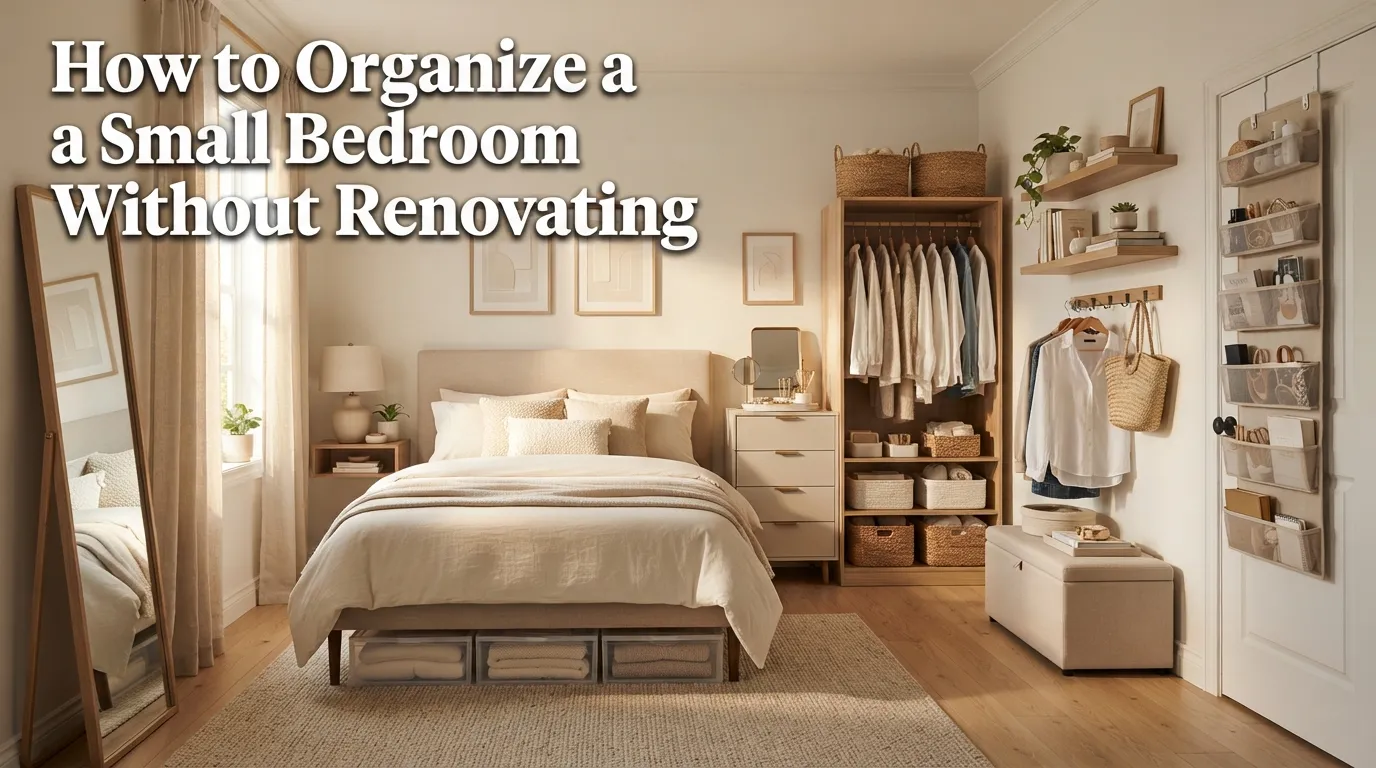
How to Organize a Small Bedroom Without Renovating
A small bedroom can become frustrating surprisingly fast. A few clothes on a chair, books beside the bed, extra bedding in the closet, and everyday accessories on the dresser can make the entire room feel crowded—even when you do not actually own that much.
The good news is that you do not need to knock down walls, install expensive built-ins, or start a major renovation to make a small bedroom work better. The most effective changes are often much simpler: using overlooked space, reducing unnecessary belongings, choosing furniture carefully, and giving frequently used items a consistent home.
Current small-space design guidance also emphasizes using multipurpose furniture, vertical storage, under-bed space, and flexible lighting rather than relying entirely on additional floor furniture. (Architectural Digest)
In my experience, the biggest mistake people make with a small bedroom is trying to solve every storage problem by adding another piece of furniture. That can actually make the room feel smaller. Instead, think about the space you already have. The area under the bed, the back of a door, the top of a dresser, unused wall height, and even the corners can become useful storage zones.
This approach is especially helpful for renters or anyone who does not want permanent changes. You can reorganize the room, edit your belongings, use freestanding storage, and introduce renter-friendly solutions without committing to construction.
The goal is not to make your bedroom look empty. It is to make every square foot work harder while keeping enough open space for the room to feel comfortable.
These ten ideas will help you create a bedroom that feels more organized, easier to maintain, and visually calmer—without a renovation.
Table of Contents
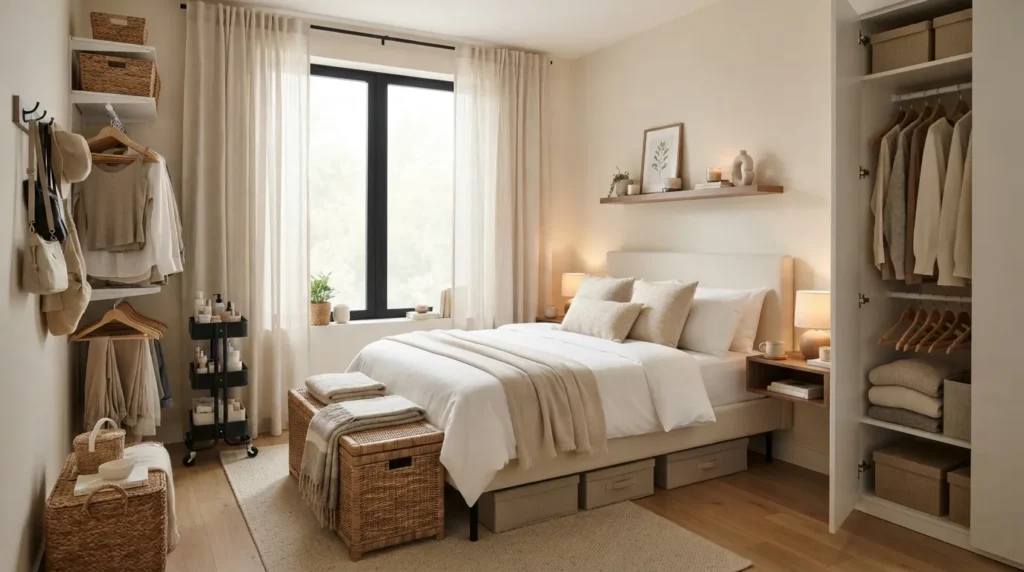
1. Under-Bed Storage
Turn the often-wasted space beneath your bed into practical hidden storage.
2. Vertical Wall Space
Use the height of your room to organize belongings without consuming valuable floor area.
3. Slim Nightstands
Replace bulky bedside furniture with compact pieces that still provide useful storage.
4. Door Storage
Put the back of your bedroom door to work for accessories, bags, shoes, and small items.
5. Closet Editing
Reduce excess clothing and arrange the remaining wardrobe so everything is easier to access.
6. Floating Shelves
Create lightweight storage and display areas while keeping the floor visually open.
7. Multiuse Furniture
Choose furniture that performs more than one job in a limited footprint.
8. Corner Solutions
Turn awkward corners into useful storage or functional zones.
9. Visual Simplicity
Use color, layout, lighting, and negative space to make organization feel effortless.
10. Daily Reset System
Build simple habits that keep your newly organized bedroom from becoming cluttered again.
1. Under-Bed Storage
Quick Benefits
- Uses otherwise wasted space
- Keeps seasonal belongings hidden
- Frees closet and dresser space
- Works without renovation
- Helps maintain a cleaner floor
Why It Works
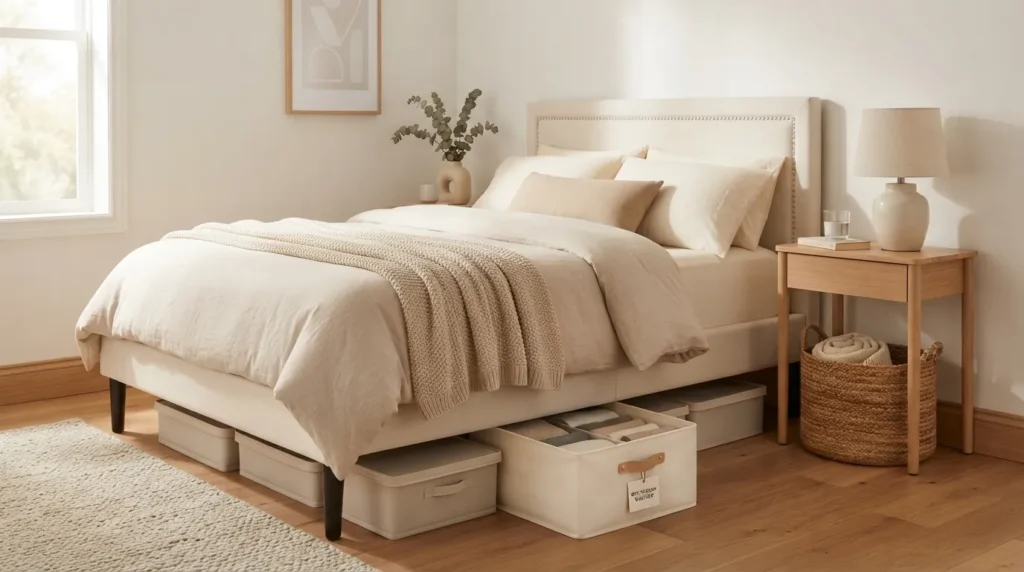
The space underneath a bed is one of the most valuable storage areas in a small bedroom because it does not require additional floor space. It is especially useful for belongings that you need occasionally but do not want occupying everyday storage.
Seasonal clothing, spare bedding, luggage, shoes, and keepsakes can all potentially live underneath the bed when stored appropriately. The important part is keeping the system organized rather than simply pushing random boxes underneath.
Clear containers can make contents easier to identify, while shallow fabric bins can be useful when you need to access items frequently. Storage solutions with handles or wheels can also make retrieving heavier containers less frustrating.
Before buying anything, measure the actual clearance beneath your bed. Storage containers should fit comfortably without scraping the frame or interfering with ventilation.
How To Style It
Start by pulling everything out from under the bed. This is an excellent opportunity to remove belongings you have forgotten about or no longer use.
Group the items into categories such as seasonal clothing, extra linens, shoes, luggage, and keepsakes. Give each category its own container rather than creating one giant miscellaneous box.
For a polished appearance, choose storage containers in a consistent material or color if they will occasionally be visible. Neutral fabric bins can blend beautifully with a modern bedroom, while clear containers are practical for items you access frequently.
Label containers on the front or side so you do not have to pull everything out to find one item.
If your bed already has drawers, use them according to frequency. Everyday or seasonal items can go in the easiest-to-reach drawers, while rarely needed belongings can occupy less accessible areas.
Keep a little breathing room around the containers. A completely packed space can make cleaning and retrieval unnecessarily difficult.
2. Vertical Wall Space
Quick Benefits
- Adds storage without using much floor space
- Makes use of overlooked areas
- Helps organize accessories
- Creates attractive display opportunities
- Works particularly well in narrow rooms
Why It Works
When floor space is limited, look upward. Vertical storage is one of the simplest ways to increase organization without making a small bedroom feel even more crowded.
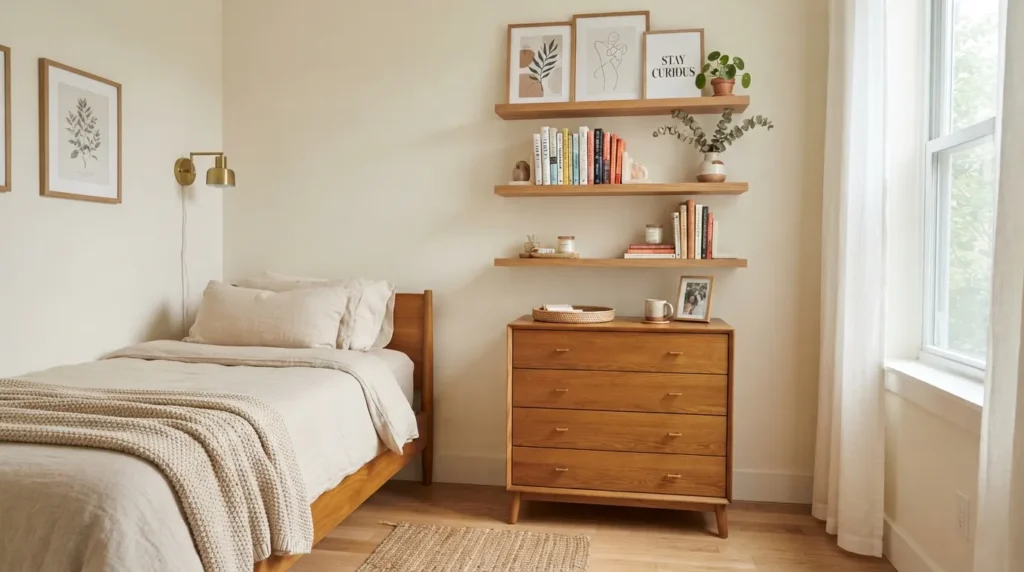
Walls above dressers, desks, nightstands, and other furniture often contain unused space. A few carefully positioned shelves or wall-mounted organizers can turn those empty areas into useful zones.
The key is restraint. Covering every wall with shelves and belongings can create the opposite effect, making the bedroom feel visually busy.
Instead, identify one or two vertical areas that can solve a specific storage problem.
For example, a narrow shelf can hold books and a few decorative objects. A compact wall organizer can keep jewelry accessible. Hooks can hold frequently used bags or hats.
Vertical storage also draws the eye upward, which can contribute to the perception of greater height.
How To Style It
Start by looking at the wall space you already have.
Above a dresser, consider a narrow picture ledge or shallow shelf. Above a desk, use vertical organizers for notebooks, supplies, or small decorative objects.
For renters, lightweight and appropriately rated adhesive solutions can be useful for small, lightweight belongings, provided they are suitable for your wall surface and used according to the manufacturer’s instructions.
Hooks are another simple option. Place them near the closet for frequently used bags, robes, hats, or scarves.
Keep the visual arrangement simple. A shelf does not need to be packed from end to end.
Try combining useful objects with a small amount of decor. For example, two books, a small ceramic vase, and a framed print can make a shelf feel finished without turning it into another clutter zone.
3. Slim Nightstands
Quick Benefits
- Frees valuable floor space
- Keeps bedside essentials accessible
- Reduces visual bulk
- Provides storage without a large footprint
- Makes narrow bedsides easier to navigate
Why It Works
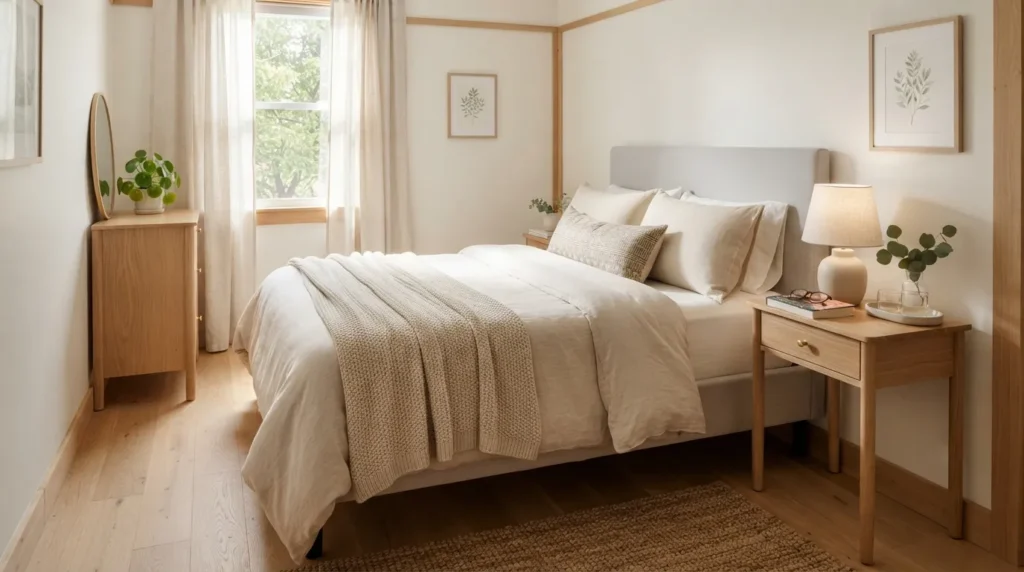
Nightstands can become surprisingly bulky in small bedrooms. A large bedside table may technically provide storage, but if it leaves only a narrow walking path beside the bed, it can make the entire room feel cramped.
A slim nightstand can provide the essentials without overwhelming the available space.
You do not necessarily need a traditional two-drawer nightstand. A narrow table with one drawer, a compact cabinet, a small pedestal table, or even a narrow shelf can perform the same basic function.
The goal is to give everyday objects—your phone, glasses, book, lamp, or water glass—a designated home.
Reducing bedside furniture also makes it easier to keep the area visually clean. Designers frequently recommend space-saving bedside solutions and wall-mounted lighting when surface area is limited. (Architectural Digest)
How To Style It
Measure the space between the bed and the nearest wall or furniture before choosing a nightstand. You want enough clearance to move comfortably around the bed.
If storage is important, choose a narrow piece with a drawer or cabinet. If you primarily need a surface, a compact table may be enough.
Consider replacing a traditional table lamp with a wall-mounted or appropriately installed plug-in sconce if your situation allows it. This frees the nightstand surface for essentials.
Keep the top simple: one lamp, a book, and perhaps a small tray.
A small tray is especially useful for containing jewelry, glasses, earbuds, or other tiny objects that tend to scatter.
If you have two sides of the bed, matching narrow nightstands can create symmetry. But if the layout does not allow equal furniture, prioritize function over symmetry.
A small bedroom does not need identical furniture on every wall. It needs furniture that fits.
4. Door Storage
Quick Benefits
- Uses an overlooked surface
- Adds storage without floor furniture
- Works for accessories and small items
- Keeps everyday belongings accessible
- Can be renter-friendly
Why It Works
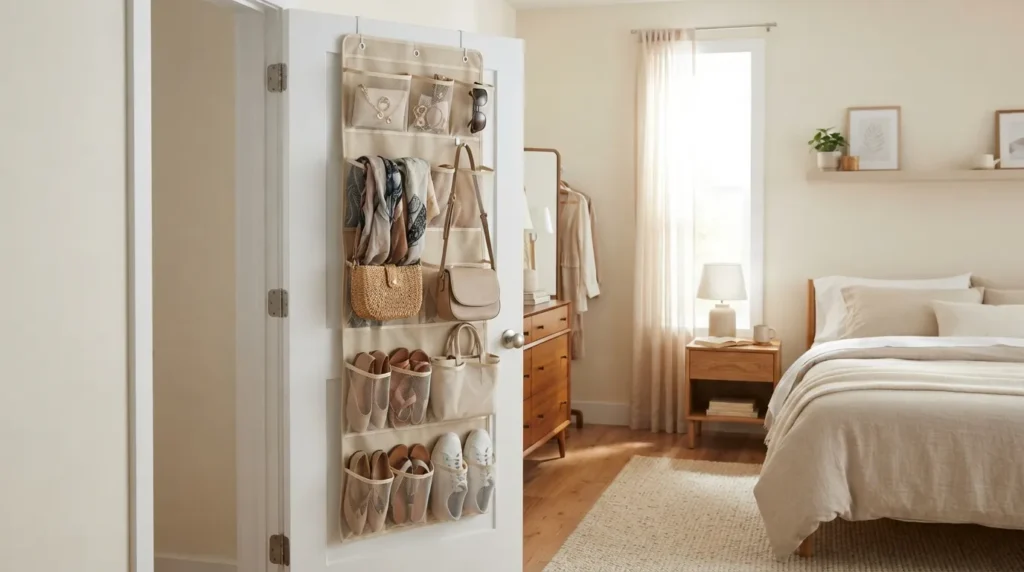
The back of a bedroom door is one of those spaces that is easy to overlook because it is not technically part of the room’s main floor plan. Yet it can provide useful storage for lightweight belongings.
Over-the-door organizers can hold shoes, accessories, hair tools, scarves, small bags, cleaning supplies, or other items depending on the organizer’s design and weight capacity.
This can be particularly helpful when your closet is small or your dresser drawers are already full.
The important thing is to use the door for the right category. Heavy objects can make the door difficult to operate and may strain hardware. Always follow the organizer’s weight recommendations.
The best door storage systems also keep items easy to see. If you cannot tell what is stored inside, the organizer can quickly become another source of clutter.
How To Style It
Choose one category for the door rather than mixing everything together.
For example, use an over-the-door shoe organizer exclusively for footwear or accessories. Use hooks for robes, hats, and bags.
If you are organizing jewelry, scarves, or hair accessories, smaller compartments can prevent everything from becoming tangled.
Keep frequently used belongings toward the easiest-to-reach sections.
For a more polished appearance, choose a neutral organizer that blends with the bedroom. If the door is visible from the main sleeping area, avoid creating a colorful collection of unrelated storage products.
Check that the organizer allows the door to close normally. Some designs can interfere with trim, handles, or door clearance.
This is one of the simplest ways to add storage without taking away from the limited floor area that makes a small bedroom challenging in the first place.
5. Closet Editing
Quick Benefits
- Creates immediate storage capacity
- Makes clothing easier to find
- Reduces duplicate purchases
- Improves closet visibility
- Makes everyday routines faster
Why It Works
Sometimes the bedroom does not actually have a storage problem—it has an excess problem.
When a closet is packed tightly, even a large wardrobe can feel as though it has nowhere to go. Clothes become difficult to see, drawers become overstuffed, and clean laundry may never make it back into its proper place.
Before buying additional organizers, edit the wardrobe.
Current organization advice similarly recommends removing excess and reviewing seasonal clothing before adding more storage systems. (Architectural Digest)
The goal is not to own a tiny wardrobe. It is to create enough breathing room that your existing clothing can be stored comfortably and accessed easily.
How To Style It
Start with obvious decisions: damaged clothing, uncomfortable pieces, items that no longer fit, and things you have not worn for a long time.
Then look for duplicates. If you own several nearly identical sweaters or multiple versions of the same type of shoe, decide which ones you actually reach for.
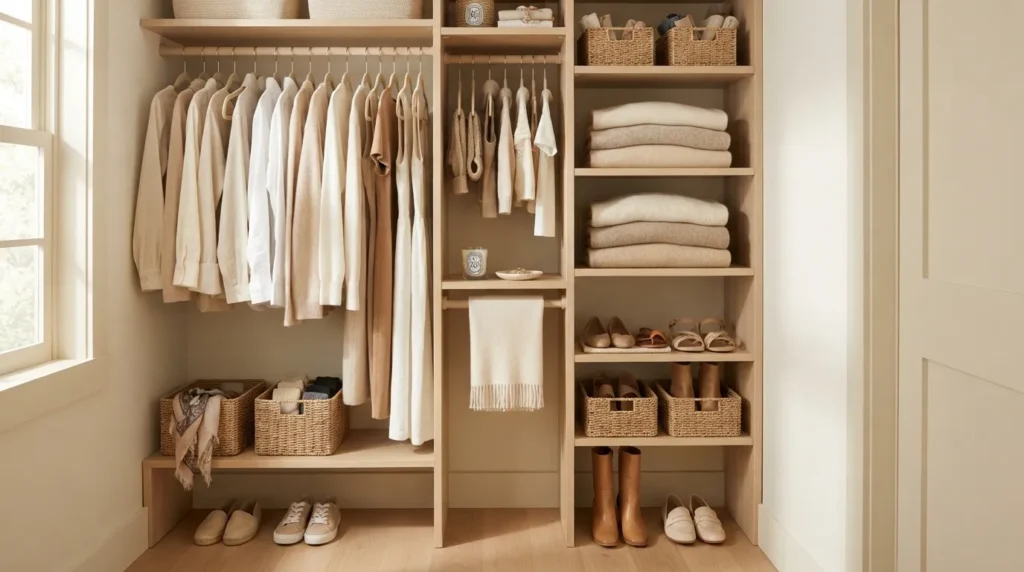
Group clothing by category. Depending on your preferences, you might arrange items by type, color, season, or frequency of use.
Use the easiest-to-reach closet areas for current-season clothing. Move less frequently used pieces to higher shelves or appropriate storage elsewhere.
Do not overfill hanging rods. Clothes should slide along the rod without requiring force.
If you need more capacity, consider slim hangers, but do not treat hangers as a substitute for editing. A thinner hanger can create useful space, but it cannot solve an excess-clothing problem indefinitely.
Finally, establish a simple one-in, one-out habit for categories that consistently grow.
6. Floating Shelves
Quick Benefits
- Uses wall space efficiently
- Keeps floors open
- Provides flexible storage
- Can replace bulky furniture
- Adds visual interest
Why It Works
Floating shelves can provide the storage function of a small bookcase without requiring the same amount of floor space. This makes them particularly useful in bedrooms where every few inches matter.
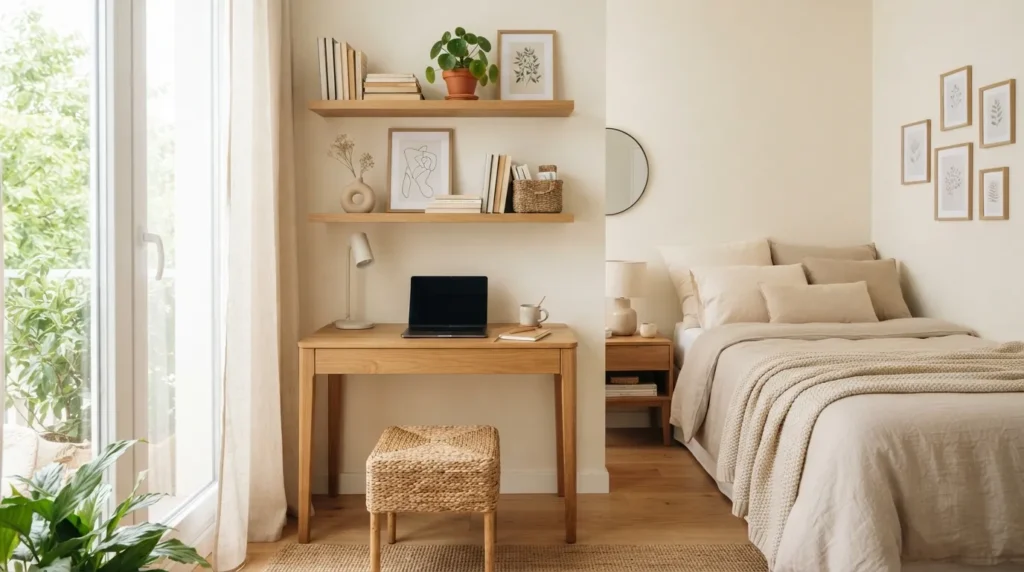
A narrow shelf can hold books, framed photos, a small plant, or a few everyday objects. Several shelves can create a compact vertical storage system.
The key to making floating shelves work is controlling what goes on them. Open storage displays everything, so it is important to keep the contents edited.
If you need hidden storage, baskets or attractive boxes can conceal smaller belongings while keeping the overall arrangement visually calm.
Shelves are especially useful above desks, beside closets, above dressers, or in awkward wall sections that are too narrow for traditional furniture.
How To Style It
Choose shelf depth according to what you intend to store. A shallow shelf is often enough for books, frames, and small decorative pieces.
Create visual rhythm by varying heights and shapes. For example, place a small stack of books beside a ceramic object and a small plant.
Avoid filling every inch.
Leave some empty shelf space so the room does not feel overloaded.
If you use baskets or boxes, choose matching or coordinating finishes. Natural woven baskets work well with warm bedrooms, while white or cream boxes can create a cleaner contemporary appearance.
For renters, use only installation methods appropriate for the wall, shelf weight, and lease restrictions. Freestanding alternatives may be safer when permanent installation is not allowed.
Always install shelves securely and follow the hardware manufacturer’s weight and mounting requirements.
7. Multiuse Furniture
Quick Benefits
- Reduces the number of furniture pieces
- Adds functionality without extra floor space
- Makes small bedrooms more flexible
- Provides hidden storage
- Supports multiple daily routines
Why It Works
In a small bedroom, every furniture piece should earn its footprint.
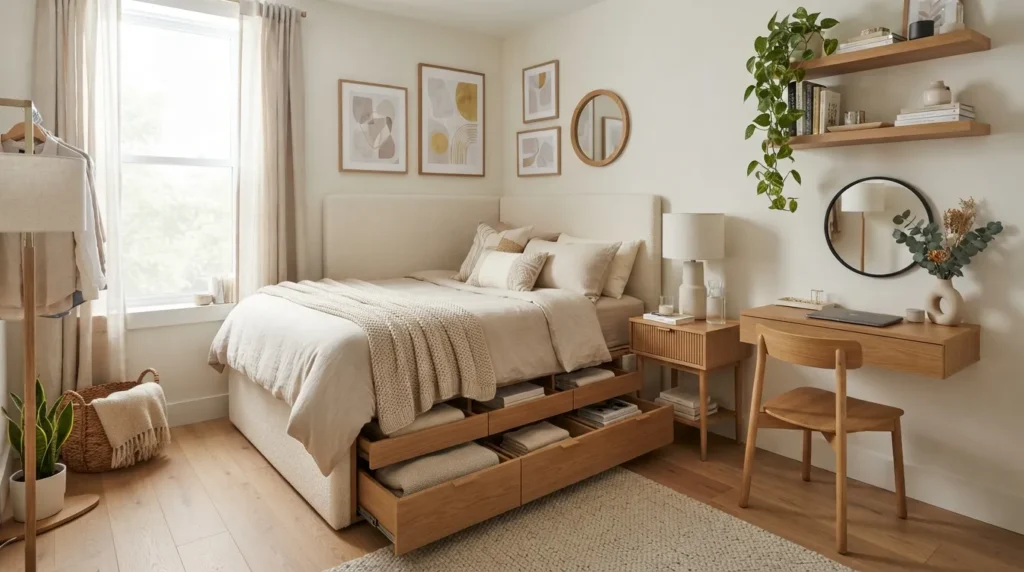
A storage ottoman can provide seating and hidden storage. A dresser can double as a bedside table. A desk can function as a vanity. A bed with built-in drawers can replace separate storage furniture.
This double-duty approach is increasingly useful as homes become more flexible and rooms are asked to support multiple activities. Recent design coverage also highlights multifunctional furniture as a practical way to preserve comfort and storage in small spaces. (Better Homes & Gardens)
The best multifunctional furniture does not feel like a compromise. It should perform both jobs naturally.
Before buying anything, consider the activities that actually happen in the bedroom. There is no benefit to adding a desk simply because it is a “small-space solution” if you never work in the room.
How To Style It
Think about your bedroom’s biggest needs.
If clothing storage is limited, a bed with drawers may be more useful than a decorative bench.
If you need a workspace, choose a compact desk with integrated drawers rather than adding a desk plus a separate storage cabinet.
If you need a vanity, a narrow desk or console can sometimes serve both purposes.
Keep multifunctional furniture visually simple. Too many compartments, shelves, and exposed storage can make a small room look busy.
Choose furniture that fits the scale of the room. Measure the full dimensions, including drawers and doors when open.
One of the best rules for a small bedroom is to maintain a comfortable walking path. A piece of furniture that technically fits but makes everyday movement awkward is not truly space-efficient.
8. Corner Solutions
Quick Benefits
- Makes awkward areas useful
- Adds storage without crowding the center
- Creates functional zones
- Helps eliminate dead space
- Works for many bedroom layouts
Why It Works
Corners are often treated as unusable simply because standard furniture does not fit neatly into them. In a small bedroom, however, even an awkward corner can become valuable.
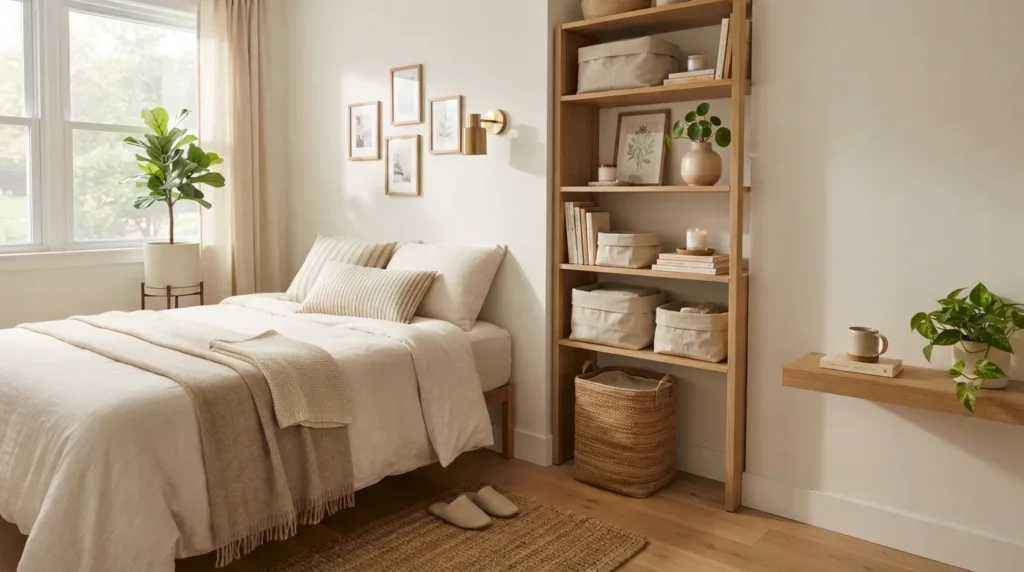
A tall narrow shelf can store books and decor. A small clothing rack can handle frequently worn pieces. A compact hamper can occupy a corner that would otherwise remain unused.
Corners can also help define zones. A small desk in one corner can create a work area without dividing the room with bulky furniture.
The trick is choosing furniture with a footprint that respects the corner rather than trying to force a standard-sized piece into it.
How To Style It
Start by measuring the corner’s width and depth.
If the corner is narrow, consider a tall, slim shelving unit. Use the lower shelves for practical storage and the upper shelves for less frequently used items.
For an empty corner near the closet, a compact laundry hamper may be useful. Choose one with a narrow footprint and a lid if you prefer to keep laundry visually contained.
If you need a workspace, a small corner desk can work well. Keep the chair proportionate to the desk and choose a design that can tuck underneath when not being used.
A corner reading area can also work if you already have enough storage. Use a compact chair rather than adding several pieces.
Avoid filling every corner simply because it is empty. Sometimes an empty corner is valuable because it provides visual breathing room.
9. Visual Simplicity
Quick Benefits
- Makes organization feel easier
- Reduces visual noise
- Helps the room appear more spacious
- Makes storage systems look intentional
- Creates a calmer atmosphere
Why It Works
Organization is not only about where belongings are stored. It is also about how much visual information the room presents.
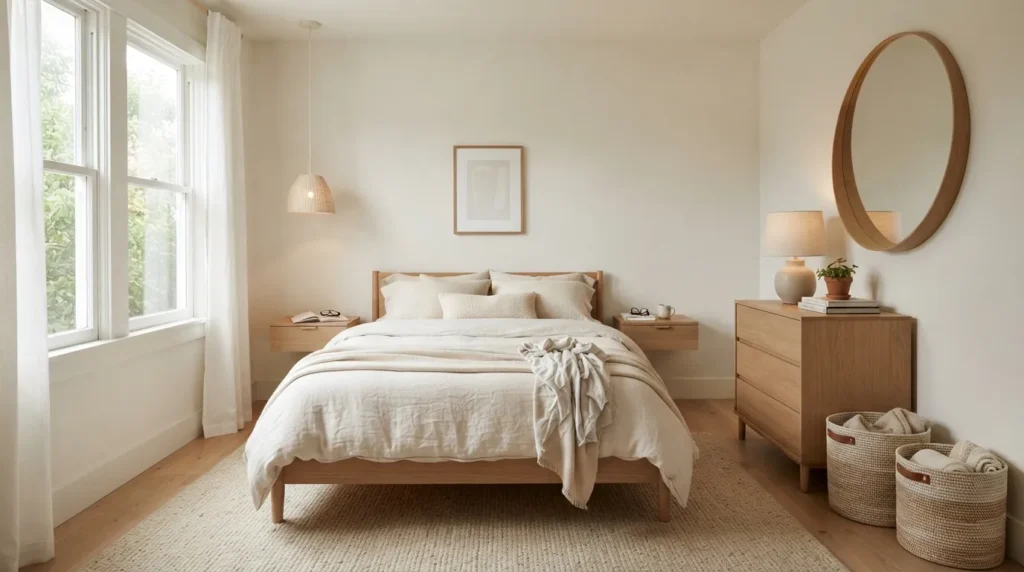
A bedroom with coordinated colors, fewer visible objects, and clear walking paths can feel much more spacious than a room of the same size filled with unrelated furniture and decorations.
This is why decluttering and organizing should happen together.
If open shelving is covered with dozens of objects, the room may still feel cluttered even if every object has a designated location.
A restrained palette can also help. Light colors and consistent materials can make storage pieces blend into the room rather than becoming a collection of competing visual elements. Designers commonly recommend light palettes, mirrors, strategic lighting, and open layouts to create a greater sense of space. (Martha Stewart)
How To Style It
Choose a simple base palette such as warm white, cream, beige, light gray, or soft taupe.
Then introduce one or two accent colors through bedding, artwork, or accessories.
Try to coordinate storage containers. You do not need everything to match exactly, but similar materials and tones create a calmer appearance.
Keep the floor as clear as possible. Open floor area makes a small bedroom feel easier to move through.
Use mirrors thoughtfully to reflect natural light and visually expand the room, but avoid placing them where they create uncomfortable reflections.
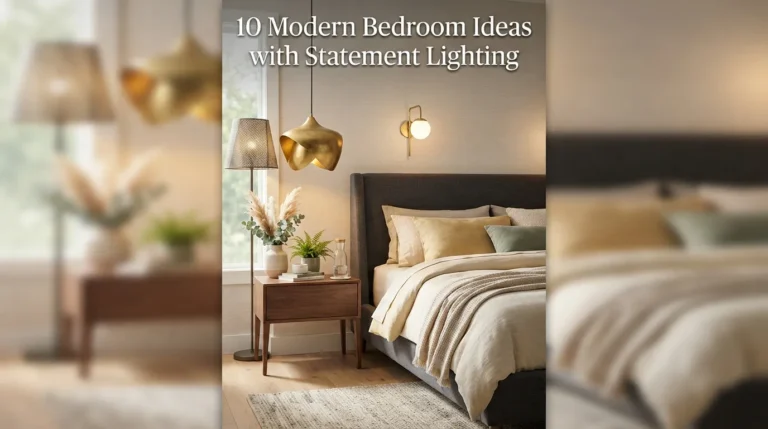
Lighting matters as well. A bedside lamp, wall-mounted fixture, or strategically placed floor lamp can create depth without requiring extensive decorative objects.
The final step is editing. Once everything is organized, remove anything that still feels unnecessary.
10. Daily Reset System
Quick Benefits
- Prevents clutter from returning
- Makes cleaning faster
- Keeps storage systems functional
- Reduces daily stress
- Requires only a few minutes
Why It Works
A beautifully organized bedroom can become cluttered again surprisingly quickly if there is no maintenance routine.
The solution does not need to be complicated. In fact, complicated systems are often the first ones to fail.
The best routine is one that fits naturally into your existing day.
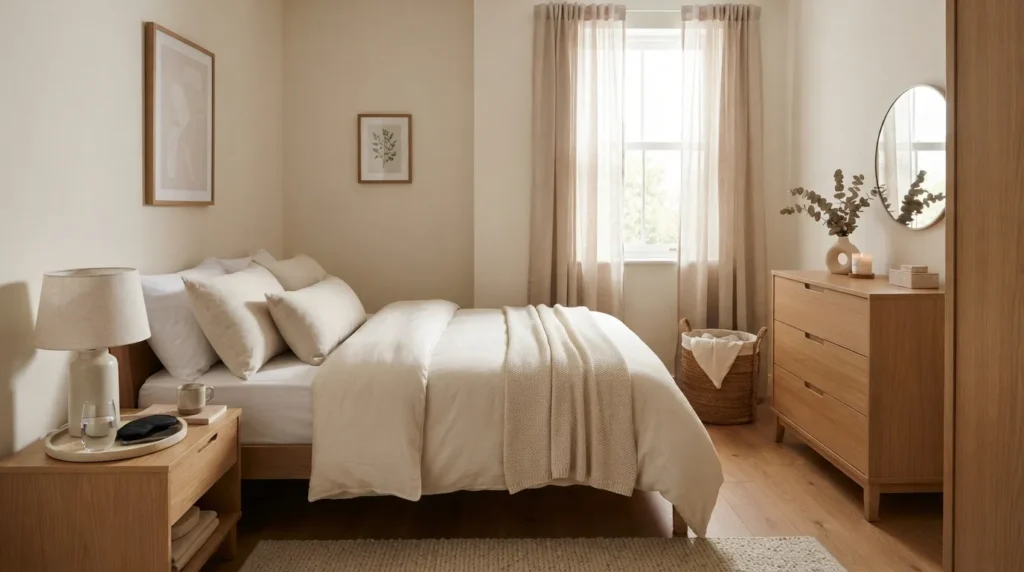
Put clothes away instead of leaving them on a chair. Return books after reading. Place jewelry in one designated tray. Put bags on the same hook every time. Clear the nightstand before bed.
These small actions prevent several days of accumulated clutter from becoming a larger weekend project.
A good organization system should make putting something away almost as easy as leaving it out.
How To Style It
Create a five-minute evening reset.
Start with the floor. Pick up clothing, shoes, bags, and anything that has drifted away from its designated location.
Then clear the nightstand and dresser.
Finally, check the chair or other common clutter zone.
Keep a small laundry basket where you naturally change clothes. If you tend to leave bags near the door, put a hook or basket there rather than expecting yourself to walk across the room every time.
Once a week, spend a few extra minutes checking the closet and storage areas.
If one category repeatedly becomes cluttered, do not simply clean it again. Ask whether the storage location is actually convenient.
Sometimes the problem is not your habit. It is the system.
A bedroom stays organized when the easiest option is also the organized option.
How To Organize A Small Bedroom Step by Step
If your bedroom feels completely overwhelming, do not start by buying storage products.
Start with the belongings.
Step 1: Clear the Floor
Remove laundry, shoes, bags, boxes, and anything that does not belong on the floor.
A clear floor immediately gives you more working space.
Step 2: Remove Obvious Clutter
Discard trash and gather items that belong elsewhere.
Do not organize things that should not remain in the bedroom.
Step 3: Edit Your Belongings
Look at clothing, accessories, books, and miscellaneous items.
Remove duplicates, damaged items, and belongings you no longer use.
Step 4: Identify Your Storage Problems
Ask what actually causes clutter.
Is it clothing?
Shoes?
Books?
Laundry?
Beauty products?
Work supplies?
The answer will determine which storage solution makes sense.
Step 5: Use Existing Space First
Before purchasing anything, use the areas already available:
- Under the bed
- Closet shelves
- Dresser drawers
- Back of the door
- Wall height
- Corners
Step 6: Add Only Necessary Storage
Once you know what is genuinely missing, choose storage that solves that specific problem.
Step 7: Protect Open Space
Do not fill every available area.
A small bedroom needs visual breathing room as much as it needs storage.
Step 8: Create A Reset Habit
Give every frequently used item a permanent home.
Then return it there consistently.
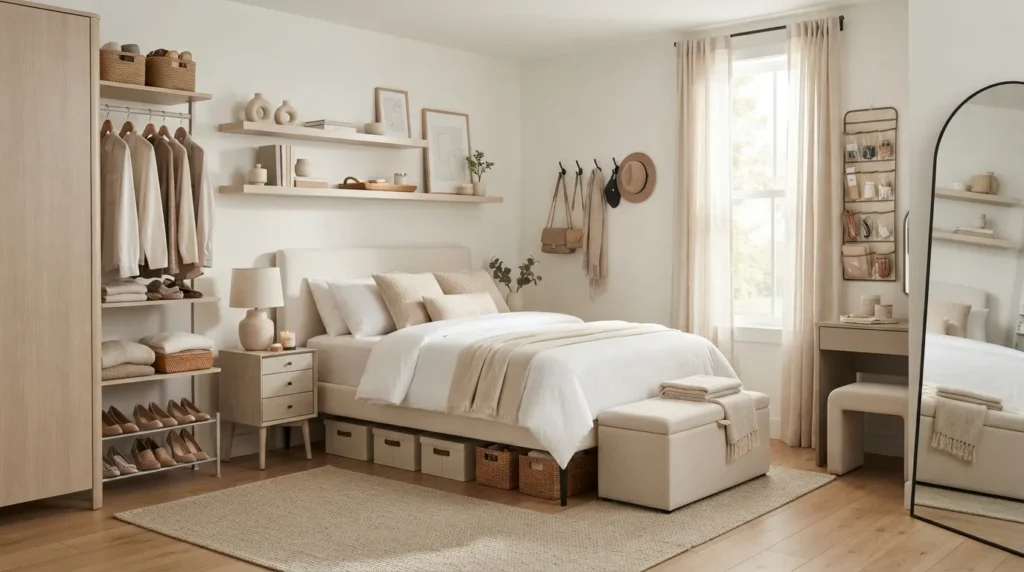
Small Bedroom Organization Mistakes To Avoid
Buying Storage Before Decluttering
This is one of the most common mistakes.
If you purchase bins before deciding what you actually own and use, you may simply create better-looking clutter.
Using Too Much Furniture
A dresser, nightstand, chair, storage cabinet, bookshelf, desk, and bench may all sound useful individually. Together, they may leave almost no walking space.
Filling Every Wall
Vertical storage is useful, but every wall does not need shelves.
Leave some surfaces visually quiet.
Ignoring Access
Storage is only useful when you can reach it.
Do not put everyday clothing in containers that require moving five other boxes.
Keeping Everything Visible
Open storage can quickly become visual clutter.
Use closed drawers, baskets, or boxes for small miscellaneous belongings.
Forgetting The Door
The back of the bedroom door can provide valuable storage for lightweight items without taking up floor space.
Choosing Furniture Without Measuring
Always measure the room and the furniture.
Remember to account for doors, drawers, closet openings, and walking paths.
FAQ
How can I organize a small bedroom without buying furniture?
Start by decluttering and using existing storage more efficiently. Use under-bed space, rearrange your closet, add simple organizers to drawers, use the back of the door, and group similar belongings together. You can also relocate items that do not need to live in the bedroom. Often, removing excess belongings creates more usable space than adding storage furniture.
How do I maximize space in a very small bedroom?
Use vertical space, under-bed storage, slim furniture, and multifunctional pieces. Keep the floor as clear as possible and avoid oversized furniture. A large mirror and lighter visual palette can also make the room feel more open. Most importantly, prioritize the belongings you actually use rather than trying to find storage for everything you own.
What should I put under my bed?
Under-bed storage works well for seasonal clothing, extra bedding, shoes, luggage, and other belongings you do not need every day. Use containers that fit the available clearance and label them so you can find items easily. Avoid storing anything that could be damaged by moisture or poor ventilation.
How do I organize clothes in a small bedroom?
Start by removing clothing you no longer wear, then group the remaining pieces by type, season, or frequency of use. Use appropriate hanging and folding methods, keep everyday clothing easy to reach, and consider storing seasonal pieces elsewhere when practical. Avoid overfilling the closet because tightly packed clothing becomes difficult to access.
How can I organize a small bedroom as a renter?
Focus on non-permanent solutions such as freestanding furniture, under-bed storage, over-the-door organizers, removable hooks where appropriate, baskets, slim shelving, and furniture with built-in storage. Always check your lease and follow manufacturer instructions for adhesive or wall-mounted products. The goal is to improve storage without making permanent changes.
How do I make a small bedroom look less cluttered?
Reduce the number of visible objects, coordinate storage containers, keep floors clear, and use a restrained color palette. Closed storage can hide small miscellaneous items, while open shelves should contain only a few intentional pieces. Lighting and mirrors can also help the room feel more open.
What is the best organization rule for a small bedroom?
Give every frequently used item a specific home and make that home convenient to reach. If putting something away is difficult, it is more likely to be left out. The best organization system is one that matches your actual habits rather than requiring you to constantly fight them.
Conclusion
Organizing a small bedroom without renovating is less about finding one magical storage hack and more about making smarter use of the space you already have.
Start by removing things you no longer need. Then look beyond the obvious floor area. Under the bed, behind the door, above furniture, inside the closet, and in unused corners can all become useful storage zones.
Choose furniture carefully, especially when space is tight. A slim nightstand, storage bed, compact desk, or multifunctional piece can often do the work of several larger items. At the same time, resist the temptation to fill every empty corner. Open space is part of good organization.
If you are renting, you have even more reason to focus on flexible solutions. Freestanding storage, baskets, over-the-door organizers, existing furniture, and appropriately used removable solutions can help you create a bedroom that feels significantly more functional without permanent changes.
And remember that organization is not a one-time event. A five-minute evening reset can protect the work you have already done and keep clutter from gradually taking over again.
Your bedroom does not need to be large to feel peaceful. It simply needs a layout that works, storage that makes sense, and enough breathing room to let you actually enjoy the space.
Start with one problem area today. Clear the floor, organize one drawer, or reclaim the space beneath your bed. Small changes can make a surprisingly big difference.
Related Articles
- 10 Small Bedroom Ideas That Make the Space Feel Bigger
- 11 Bedroom Organization Ideas for a Clutter-Free Space
- 10 Small Bedroom Storage Ideas Without Renovating
- 10 Cozy Bedroom Ideas for Small Spaces
- 11 Closet Organization Ideas for a More Functional Bedroom