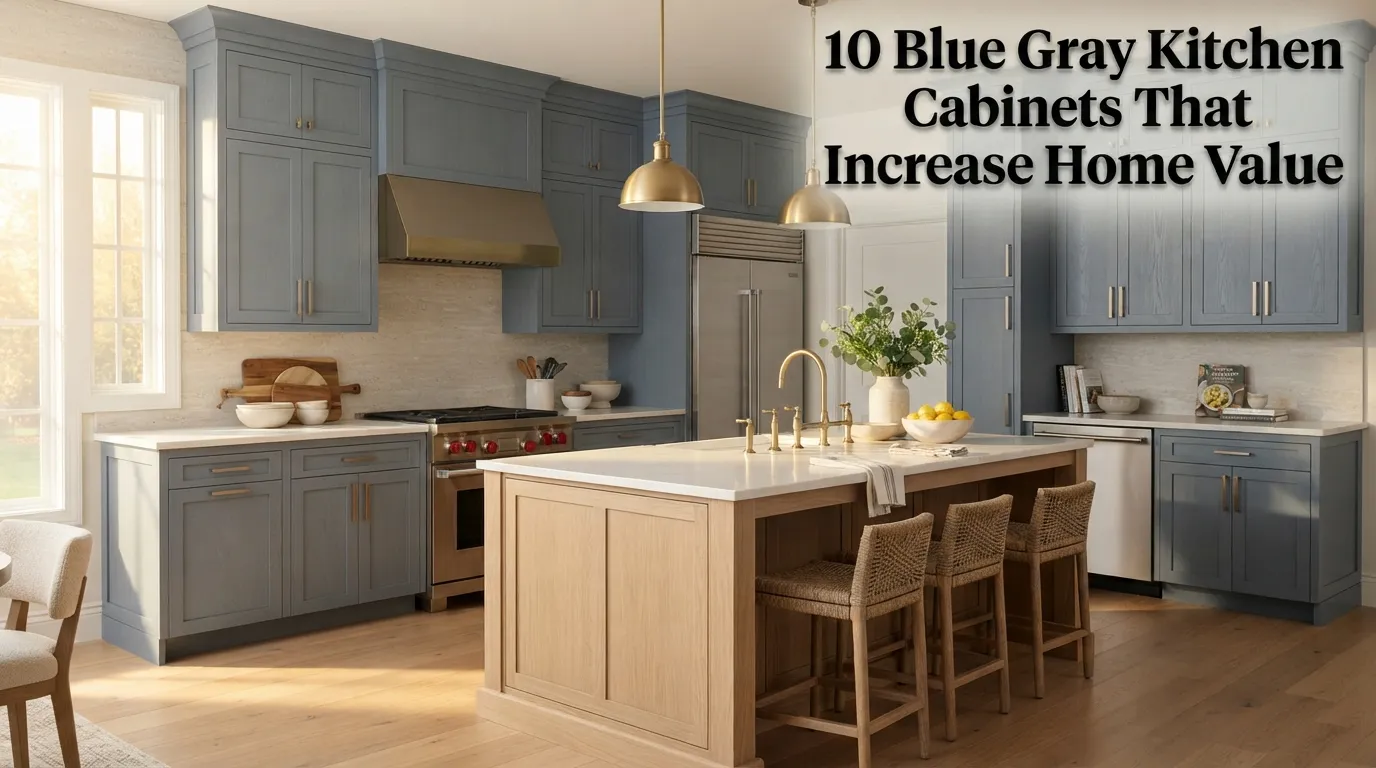
10 Blue Gray Kitchen Cabinets That Increase Home Value
If you’ve been scrolling through kitchen inspiration wondering whether that trendy blue-gray cabinet color you keep seeing is actually worth the investment, you’re asking the right question. I’ve walked through plenty of kitchen renovations, and blue gray kitchen cabinets are one of the rare design choices that check both boxes — they look stunning today, and they hold their appeal for buyers years down the road.
A mistake many homeowners make is chasing whatever color is trending at the moment without thinking about resale value. Bright, saturated colors can date a kitchen quickly, but blue gray sits in a sweet spot. It’s calming and sophisticated enough to feel timeless, while still reading as fresh and updated compared to an all-white or classic oak kitchen.
In my experience, kitchens with well-executed blue gray cabinetry consistently photograph beautifully, show well in person, and appeal to a wide range of buyer tastes — which matters enormously if resale value is part of your decision. That’s why many designers recommend this exact tone when clients ask for a color that feels both current and enduring.
This guide breaks down ten specific ways to bring blue gray cabinets into your kitchen, from finish choices to hardware pairings, so you can create a space that feels elevated now and holds its value later.
Table of Contents
- Slate Blue Shaker Style — A timeless cabinet door style that pairs perfectly with blue gray tones.
- Two Tone Cabinet Contrast — Balancing blue gray with a complementary second cabinet color.
- Brushed Brass Hardware — Warming up cool cabinet tones with the right metal finish.
- Matte Finish Cabinetry — Choosing a sheen level that feels modern and high-end.
- White Quartz Countertops — Pairing surfaces that make blue gray cabinets pop.
- Natural Wood Accents — Softening a cool palette with organic warmth.
- Farmhouse Sink Pairing — A classic combination that boosts buyer appeal.
- Open Shelving Display — Breaking up cabinet runs for visual interest.
- Subway Tile Backsplash — A budget-friendly way to complete the look.
- Dark Island Contrast — Using a deeper tone to anchor the room.
1. Slate Blue Shaker Style
Quick Benefits
- Timeless silhouette that never feels dated
- Appeals to a wide range of buyer tastes
- Works in both traditional and modern kitchens
- Easy to pair with multiple hardware styles
- Consistently appears in top resale-value kitchens
Why It Works
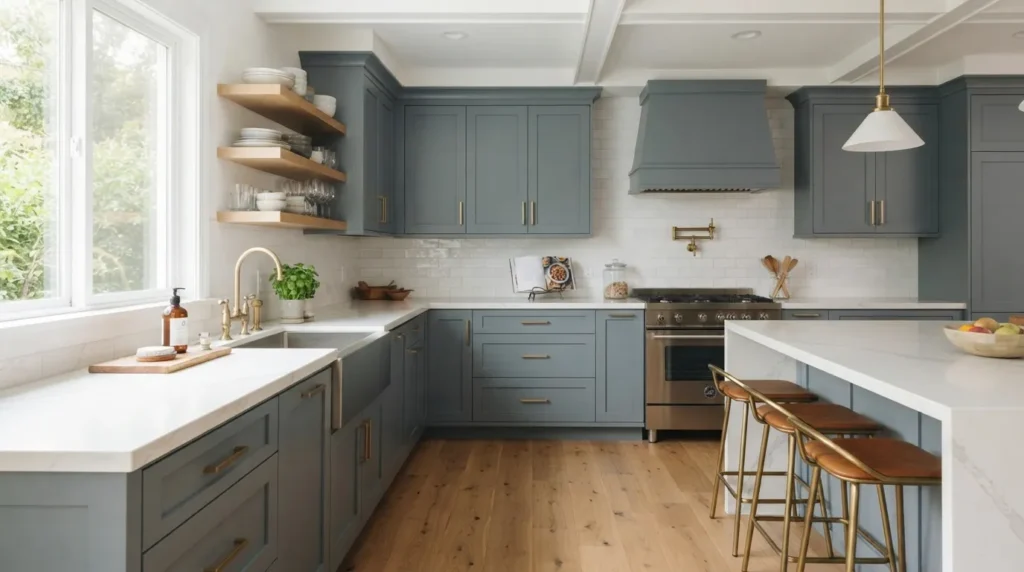
Shaker-style doors are the most requested cabinet style among buyers and designers alike, and pairing that classic silhouette with a slate-toned blue gray gives you the best of both worlds: familiar, resale-friendly shape with a color that feels current. I’ve noticed that kitchens combining shaker doors with blue gray finishes tend to show exceptionally well in listing photos, which matters more than people realize when it comes to actual sale price.
How To Style It
Choose a mid-tone slate blue gray rather than something too dark or too pastel — this keeps the kitchen feeling bright and functional. Stick with clean, recessed panel shaker doors instead of ornate detailing, which keeps the look current. Pair with simple, understated hardware so the door style and color remain the visual focus of the space.
2. Two Tone Cabinet Contrast
Quick Benefits
- Adds visual interest without overwhelming the space
- Highlights an island or focal wall
- Makes small kitchens feel more dynamic
- Increases perceived custom, high-end design
- Balances cool tones with warmer or lighter shades
Why It Works
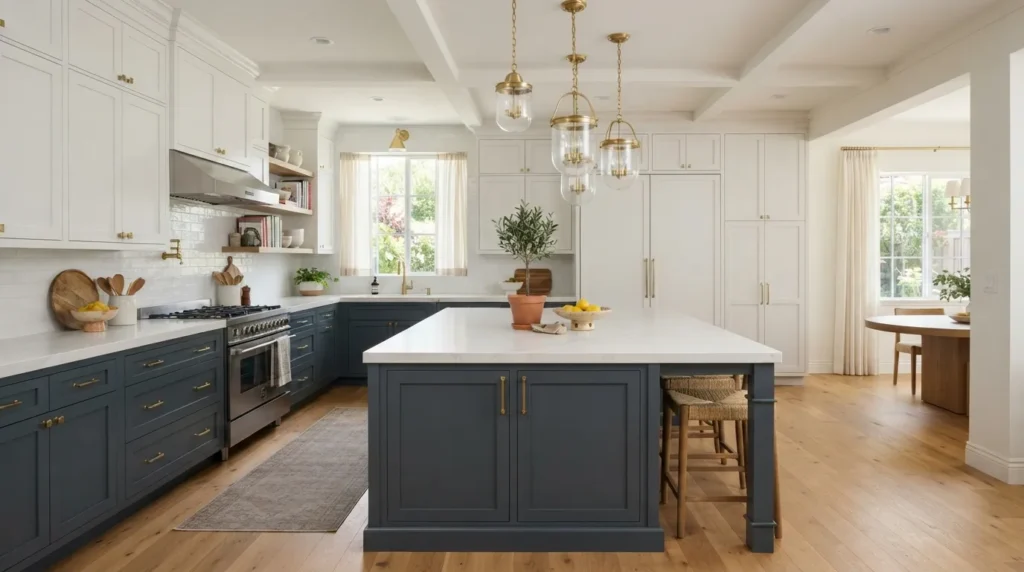
One thing that works especially well in kitchen design is using blue gray on lower cabinets or an island while keeping upper cabinets in a lighter neutral. This two-tone approach reads as intentional and custom-designed, which is exactly the kind of detail buyers associate with higher-end renovations. It also keeps the kitchen from feeling visually heavy, since the lighter tone above balances the deeper color below.
How To Style It
Apply blue gray to base cabinets and the island, then keep upper cabinets in white or soft cream to maintain brightness near the ceiling. If you prefer the reverse, blue gray uppers with white lowers can also work beautifully in kitchens with strong natural light. Keep countertops and backsplash neutral so they act as a bridge between the two cabinet tones.
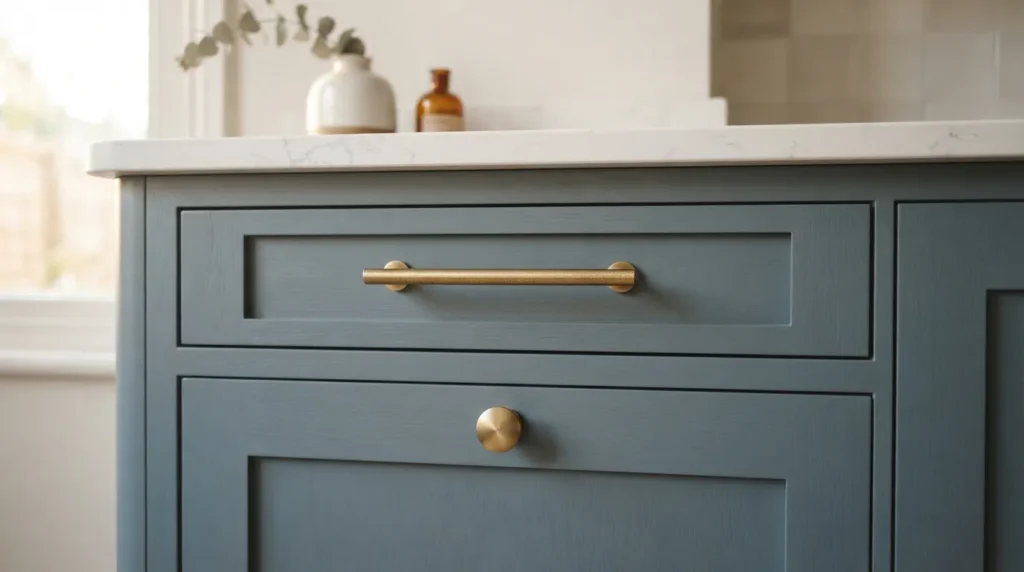
3. Brushed Brass Hardware
Quick Benefits
- Warms up cool-toned cabinetry
- Adds a subtle luxury feel
- Photographs beautifully for listings and Pinterest
- Works with both modern and traditional styles
- Elevates the kitchen without a full renovation
Why It Works
A common mistake is pairing blue gray cabinets with cool chrome or brushed nickel hardware, which can leave a kitchen feeling flat or overly cool. Brushed brass introduces warmth that balances the coolness of the cabinet color, creating a richer, more layered look. I’ve seen this small swap alone shift a kitchen from feeling sterile to feeling genuinely designed.
How To Style It
Choose brushed or satin brass over polished brass, which can read as dated or overly shiny. Use simple bar pulls on drawers and knobs on doors for a classic, cohesive look. Extend the brass tone to faucets and light fixtures where possible so the metal finish feels intentional throughout the whole kitchen rather than isolated to the cabinets.
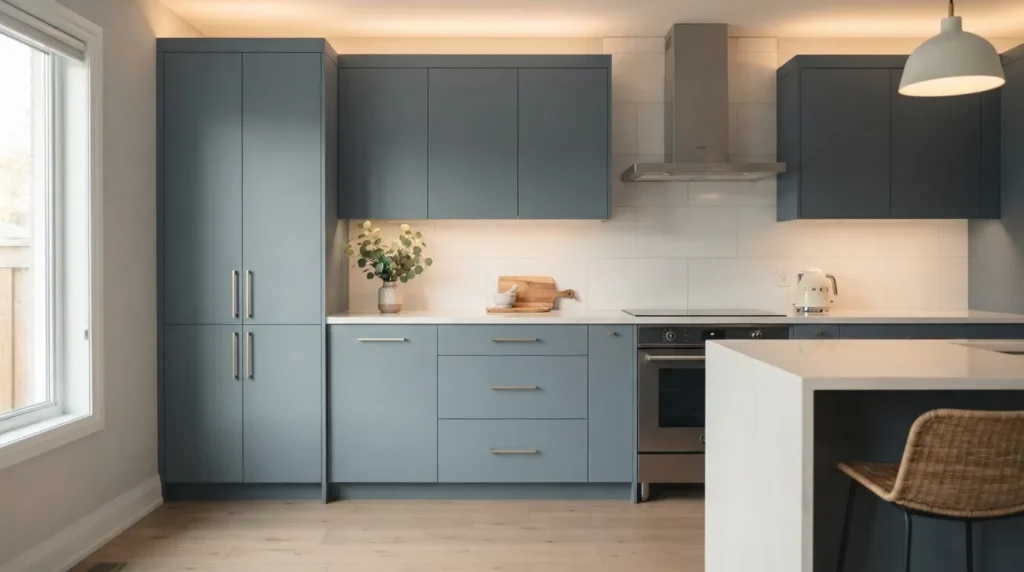
4. Matte Finish Cabinetry
Quick Benefits
- Creates a sophisticated, high-end appearance
- Hides fingerprints and smudges better than gloss
- Feels current and on-trend
- Softens the overall look of the kitchen
- Pairs well with both warm and cool accents
Why It Works
Matte and satin finishes have become the preferred choice in higher-end kitchens because they diffuse light rather than reflecting it sharply, which gives blue gray cabinetry a soft, velvety appearance instead of a stark, glossy one. In my experience, this finish choice alone can make a mid-range renovation photograph and feel like a significantly more expensive one.
How To Style It
Request a matte or low-sheen finish from your cabinet maker or painter rather than semi-gloss, which was more common in older kitchens. Matte finishes do require slightly more careful cleaning, so pair them with practical hardware placement to reduce direct hand contact on cabinet fronts. This finish works particularly well in kitchens with abundant natural light.
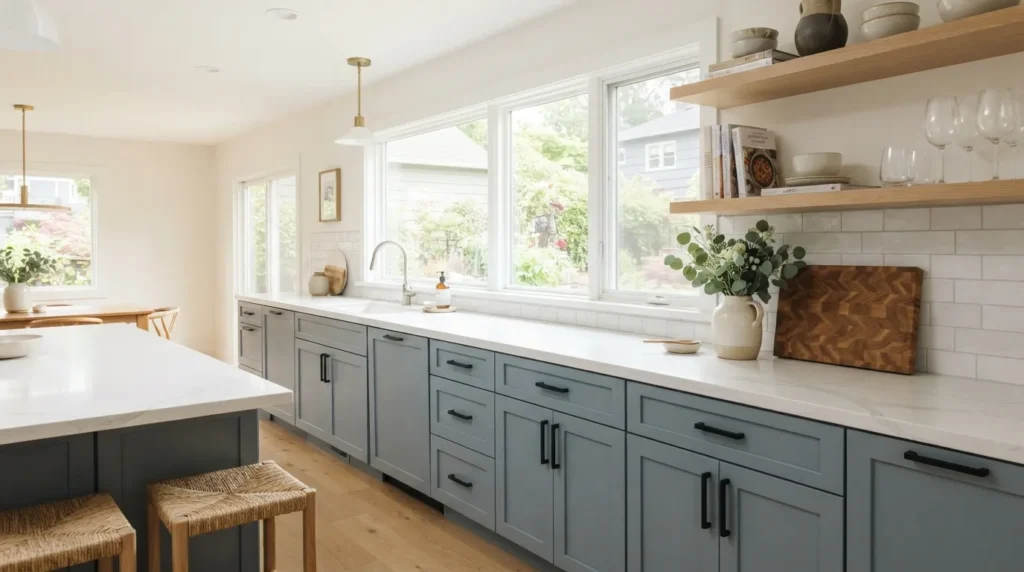
5. White Quartz Countertops
Quick Benefits
- Creates high contrast that makes cabinets stand out
- Extremely popular with buyers and appraisers
- Brightens the overall kitchen space
- Low maintenance compared to natural stone
- Timeless pairing that rarely goes out of style
Why It Works
If you’re anything like most homeowners, you already know white quartz is one of the most requested countertop materials in the country — and for good reason. Against blue gray cabinets, white quartz creates a crisp, high-contrast look that makes the cabinetry feel intentional and elevated rather than simply “colored.” This particular pairing consistently appears in kitchens with strong resale performance.
How To Style It
Choose a quartz with subtle veining rather than a busy, heavily patterned slab, which keeps the focus on the cabinet color. Extend the quartz to a matching backsplash for a seamless, high-end look, or keep the backsplash simple to let the countertop and cabinets do the visual work. Pair with light-colored grout to maintain the bright, clean aesthetic.
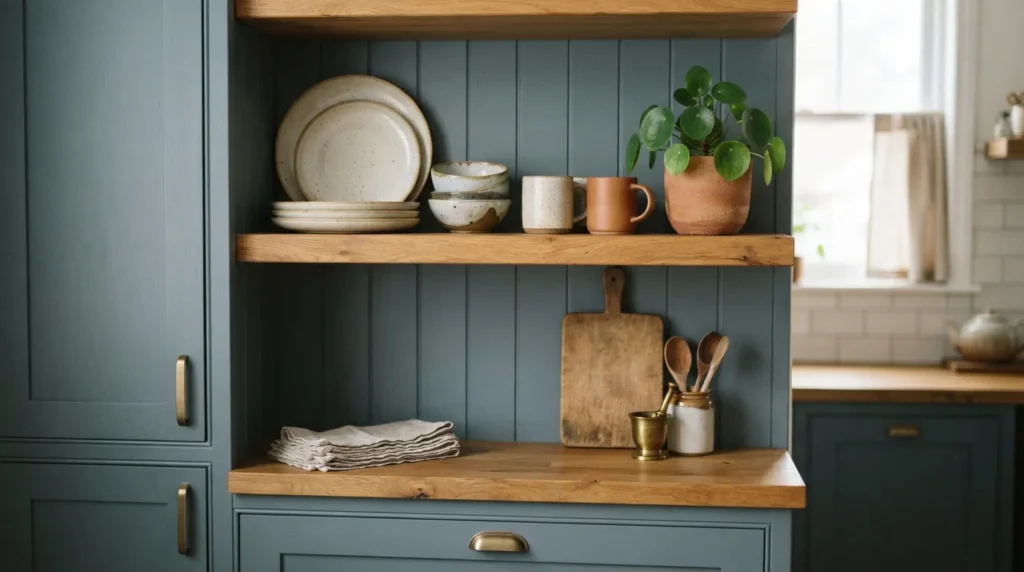
6. Natural Wood Accents
Quick Benefits
- Softens the coolness of blue gray tones
- Adds warmth and organic texture
- Prevents the kitchen from feeling too monochromatic
- Appeals to buyers who favor warm, welcoming spaces
- Works well through small, affordable additions
Why It Works
One simple trick I always suggest is introducing at least one natural wood element into a blue gray kitchen, whether that’s open shelving, a butcher block section, or wood bar stools. Wood grounds the cool palette and prevents the kitchen from tipping into feeling cold or sterile — a common complaint in kitchens that lean too heavily into gray and blue tones without any warmth to balance them.
How To Style It
A wood-topped island, open wood shelving, or a butcher block countertop section are all effective ways to introduce warmth without a major renovation. Bar stools with natural wood legs or woven seating also work well. Choose a wood tone with warm undertones — like oak or walnut — rather than something too orange or yellow-toned, which can clash with the cool cabinet color.
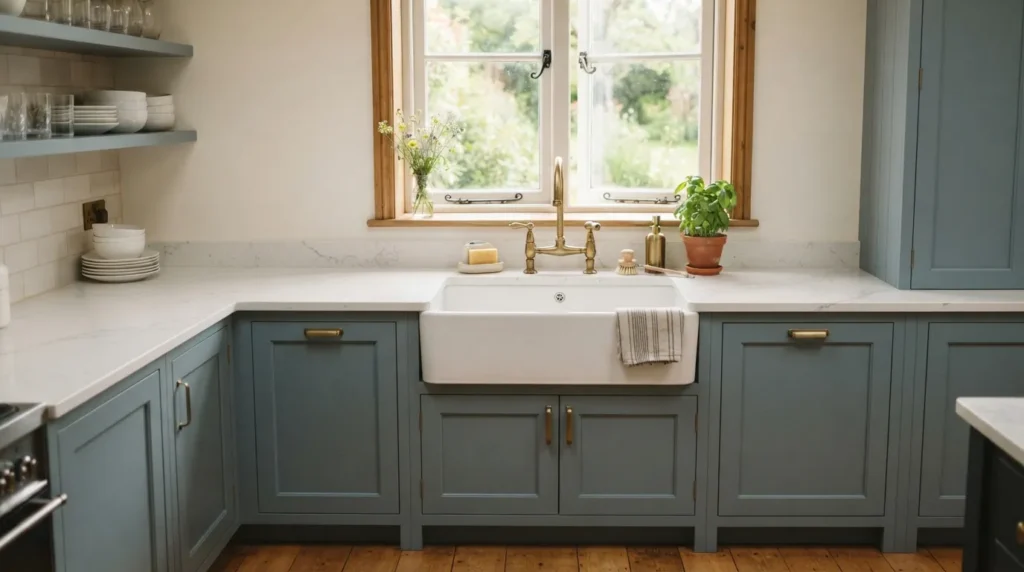
7. Farmhouse Sink Pairing
Quick Benefits
- A consistently high-demand feature among buyers
- Adds a classic, welcoming focal point
- Pairs naturally with blue gray shaker cabinets
- Increases perceived kitchen quality and craftsmanship
- Works in both modern and traditional layouts
Why It Works
That’s why many designers recommend a farmhouse (apron-front) sink as a natural companion to blue gray cabinetry — the deep, classic basin style echoes the same timeless quality as the cabinet color and door style. Farmhouse sinks consistently rank as one of the most desired kitchen features among home buyers, making this pairing a smart move for both daily function and long-term value.
How To Style It
Choose a white or off-white farmhouse sink to keep contrast crisp against the blue gray cabinetry below. Pair with a simple gooseneck faucet in your chosen hardware finish. Make sure surrounding cabinetry is reinforced properly to support the sink’s weight, and leave enough counter space on either side for functional daily use.
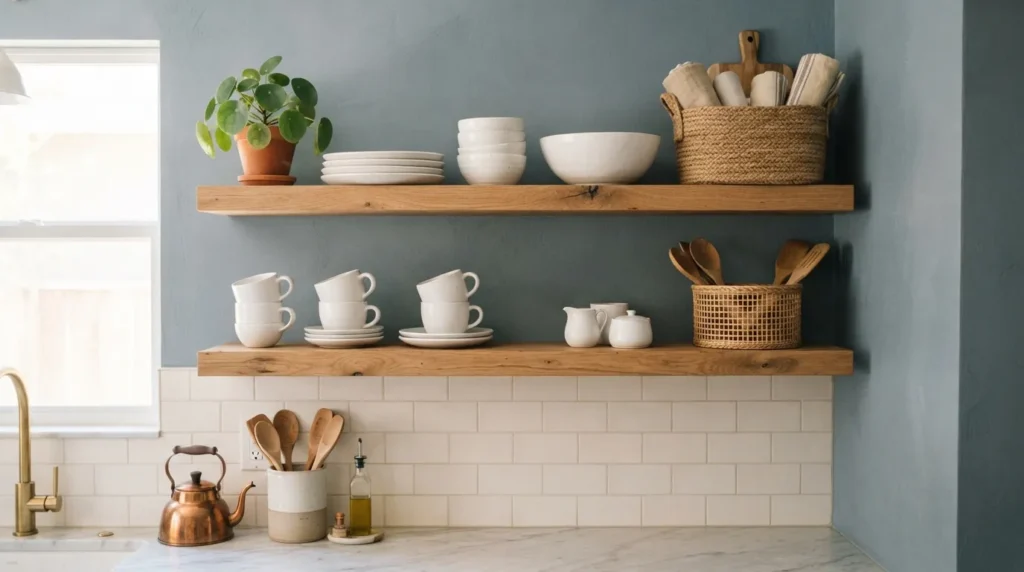
8. Open Shelving Display
Quick Benefits
- Breaks up long runs of cabinetry visually
- Adds personality and display opportunities
- Makes the kitchen feel more custom-designed
- Keeps frequently used items accessible
- Lightens the overall visual weight of the room
Why It Works
A common oversight in all-cabinet kitchens is that wall-to-wall uppers can start to feel heavy, especially with a deeper tone like blue gray. Replacing one or two upper cabinets with open shelving breaks up that visual density and gives the eye a place to rest. I’ve seen this idea transform kitchens that otherwise felt closed-in into spaces that feel airy and personal.
How To Style It
Choose one focal wall — often above a sink or coffee station — for open shelving rather than replacing all upper cabinets. Use matching or complementary wood tones for the shelves themselves to tie back to other natural wood accents in the room. Style shelves with a mix of everyday dishware, a small plant, and one or two decorative pieces, leaving breathing room between items.
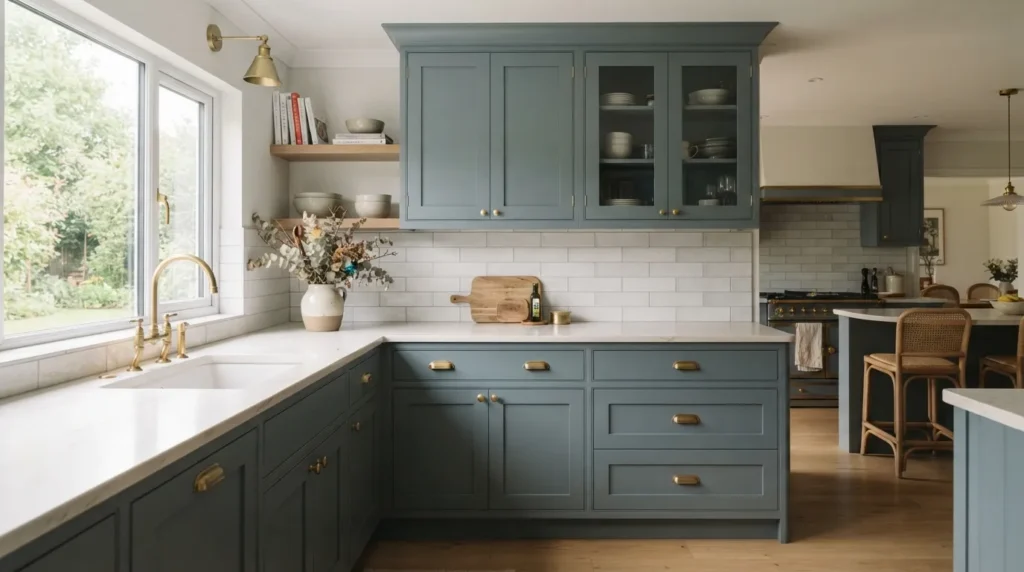
9. Subway Tile Backsplash
Quick Benefits
- Budget-friendly way to complete the kitchen look
- Timeless and universally appealing to buyers
- Easy to install and maintain
- Pairs with virtually any cabinet color
- Provides subtle texture without visual clutter
Why It Works
Subway tile remains one of the most requested backsplash choices for a reason — it’s affordable, classic, and never competes with a statement cabinet color like blue gray. Rather than pulling focus, a simple subway tile backsplash lets the cabinetry remain the star of the kitchen while still adding texture and a finished, polished look to the space.
How To Style It
A classic white subway tile in a running bond pattern is the safest and most resale-friendly option. For added interest, consider a herringbone layout or a soft off-white glazed tile with subtle texture. Keep grout light to maintain brightness, and avoid overly trendy tile shapes if resale value is a priority, since those can date more quickly than a classic subway layout.
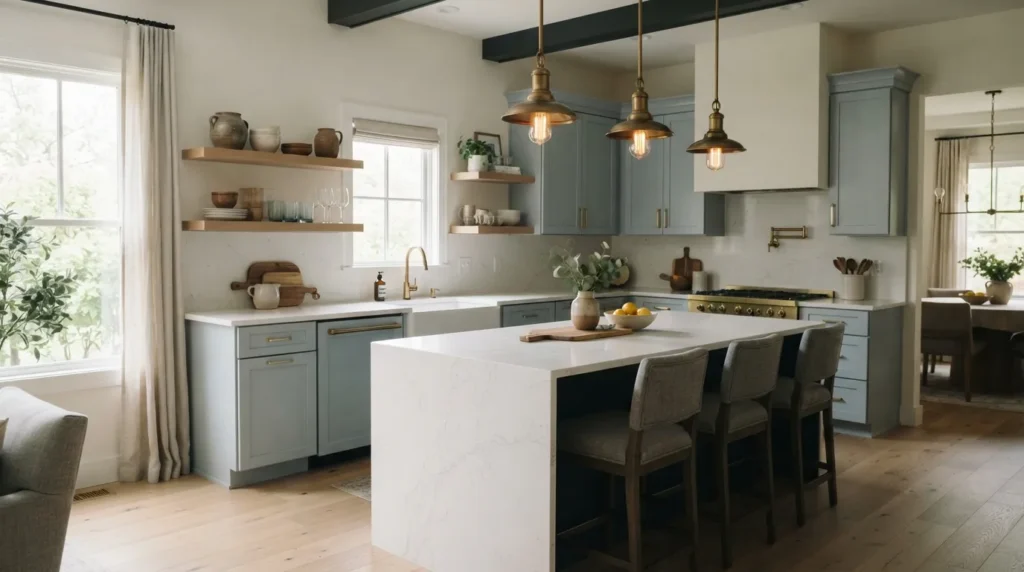
10. Dark Island Contrast
Quick Benefits
- Creates a strong visual anchor in the kitchen
- Adds depth and dimension to the color palette
- Makes the island feel like a custom feature
- Balances lighter perimeter cabinetry beautifully
- Appeals to buyers seeking a designer-style kitchen
Why It Works
Pairing blue gray perimeter cabinets with a deeper charcoal or navy-toned island is one of the most effective ways to create dimension in a kitchen. The contrast draws the eye toward the island as an intentional focal point, giving the whole room a layered, custom-designed feel rather than a single flat wall of color. In my experience, this contrast is one of the most consistently complimented design choices in blue gray kitchens.
How To Style It
Choose an island tone that’s noticeably deeper than your perimeter cabinets — charcoal, deep navy, or near-black all work well. Keep the island’s countertop consistent with the rest of the kitchen (typically white or light quartz) so the contrast stays intentional rather than disjointed. Add pendant lighting above the island to reinforce it as the room’s visual centerpiece.
Frequently Asked Questions
Do blue gray kitchen cabinets increase home value? Blue gray cabinets are considered one of the safer color trends for resale because they read as sophisticated and timeless rather than trendy. When paired with classic elements like shaker doors and white countertops, they tend to appeal to a broad range of buyers, which can positively influence perceived value.
Are blue gray cabinets going out of style? Blue gray has remained popular for several years now because it sits between trend and timeless. Unlike more saturated colors, it’s subtle enough to feel current without appearing tied to a specific short-lived design moment, which gives it more staying power than brighter cabinet colors.
What countertop color goes best with blue gray cabinets? White or light quartz with subtle veining is the most popular and resale-friendly pairing. It creates crisp contrast that makes the cabinet color feel intentional, while remaining neutral enough to appeal to a wide range of buyer preferences.
What hardware finish works best with blue gray cabinets? Brushed brass and matte black are both popular choices. Brushed brass adds warmth to balance the cool cabinet tone, while matte black creates a bold, modern contrast. Both tend to photograph well and feel current.
Should I paint all my cabinets blue gray or just some? A two-tone approach — blue gray on the island or lower cabinets with a lighter neutral on uppers — often feels more custom and dynamic than an all-over application. It also helps keep the kitchen feeling bright, especially in spaces with limited natural light.
Is a matte or glossy finish better for blue gray cabinets? Matte and satin finishes are currently preferred in higher-end kitchens because they create a softer, more sophisticated look. Glossy finishes can feel more dated and tend to show fingerprints and smudges more easily than matte options.
What backsplash works best with blue gray cabinets? Classic white subway tile remains the most versatile and resale-friendly option. It adds texture without competing with the cabinet color, keeping the overall look timeless rather than tied to a specific trend.
Conclusion
Blue gray kitchen cabinets offer a rare combination in home design — a color that feels genuinely fresh today while still holding broad, lasting appeal for future buyers. From the cabinet style you choose to the hardware, countertops, and small warm accents you layer in, every decision on this list works together to create a kitchen that feels elevated, welcoming, and worth the investment.
You don’t need to renovate the entire kitchen at once to see the impact. Start with one or two ideas and gradually build a space that reflects your style and supports everyday comfort — while quietly boosting the long-term value of your home.
Related Articles
- Modern Farmhouse Kitchen Ideas
- Best Kitchen Islands for Small Spaces
- White Quartz Countertop Styling Guide
- Budget-Friendly Kitchen Updates
- Two Tone Cabinet Color Combinations