How to Reach the Upper Dryer Controls If You Are Under 5-Foot-4
Reaching the upper dryer controls if you are under 5-foot-4 is a common challenge for many homeowners who utilize vertical laundry setups. When you are shorter than average, the standard height of a stacked appliance often places the interface well above your natural reach range. This mismatch between appliance ergonomics and user height can turn a simple laundry task into an frustrating daily chore.
By making a few targeted adjustments to your laundry room workflow and physical environment, you can regain control of your appliances without compromising safety. This article explores practical modifications and tools designed to improve your access to these elevated control panels.
Immediate Solutions for Better Reach
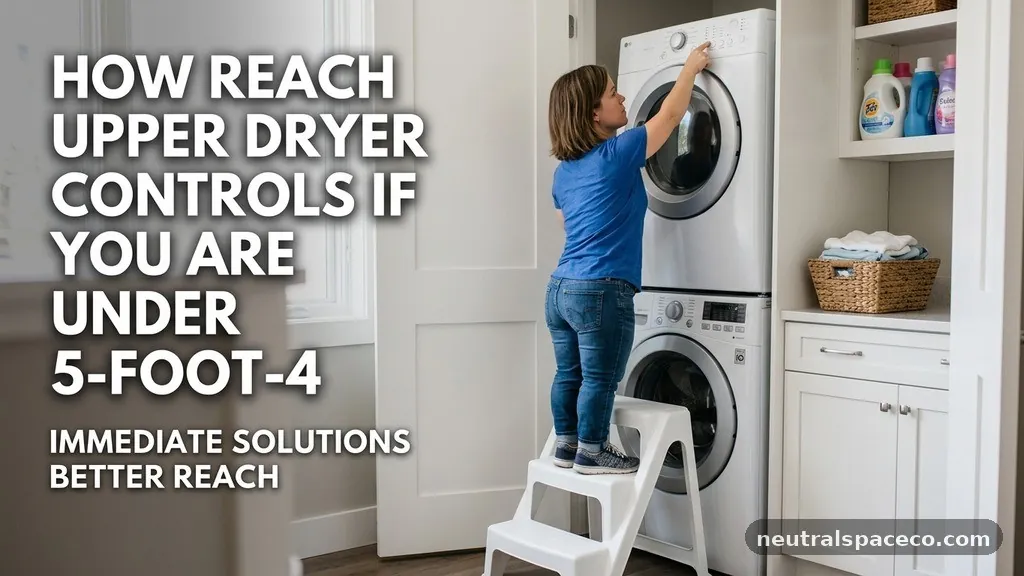
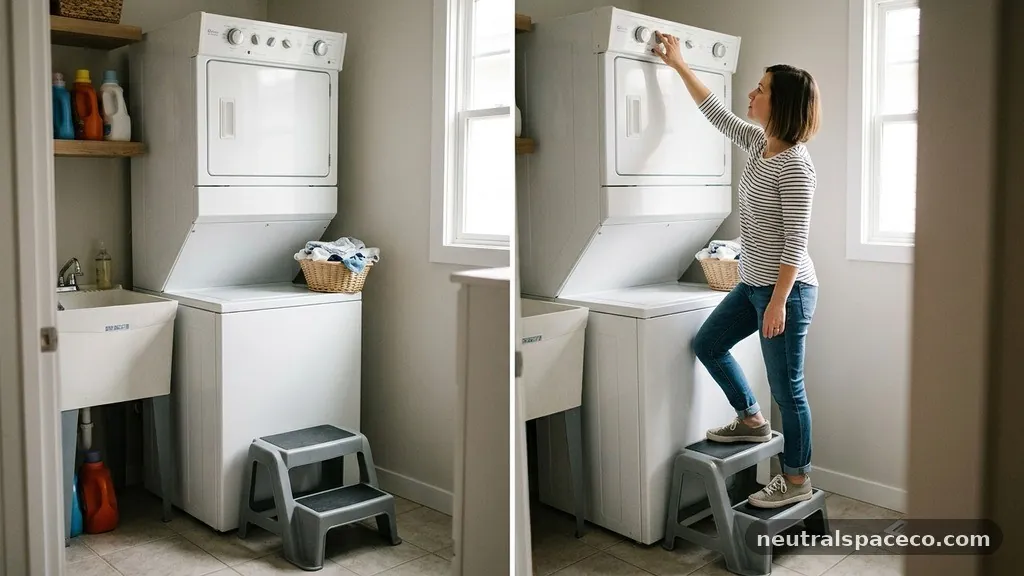
The most direct way to solve the problem of reaching the upper dryer controls if you are under 5-foot-4 is to introduce a stable, purpose-built elevation device. A heavy-duty, non-slip step stool is the most common tool used to bridge the height gap between the floor and the control panel.
Look for a model with a wide base and rubberized feet to ensure it remains stationary on slick laundry room flooring. If you have limited floor space, consider a foldable step stool that can be tucked away between the washer and the wall when not in use.
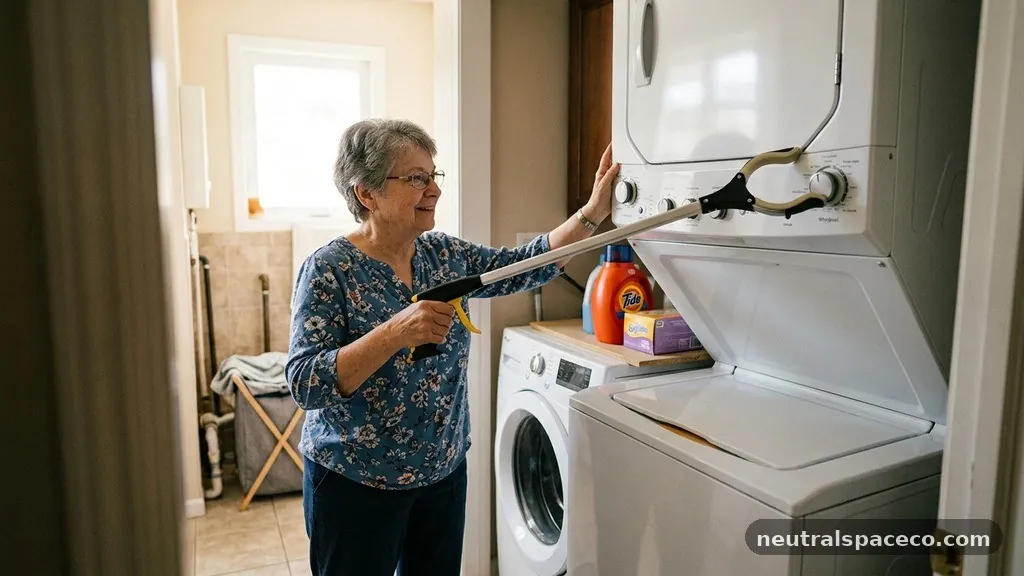
Another effective strategy involves the use of a reach extender or a specialized reach-assist device. These tools allow you to press buttons or turn dials on the dryer console without needing to stand directly in front of or beneath the unit. While they are useful for basic power and start buttons, they may be less effective for complex cycle selections.
Keep these tools stored in a magnetic holster attached to the side of the dryer for immediate access. This keeps your workspace organized while maintaining the functionality required for daily operation.
Selecting the Right Laundry Equipment
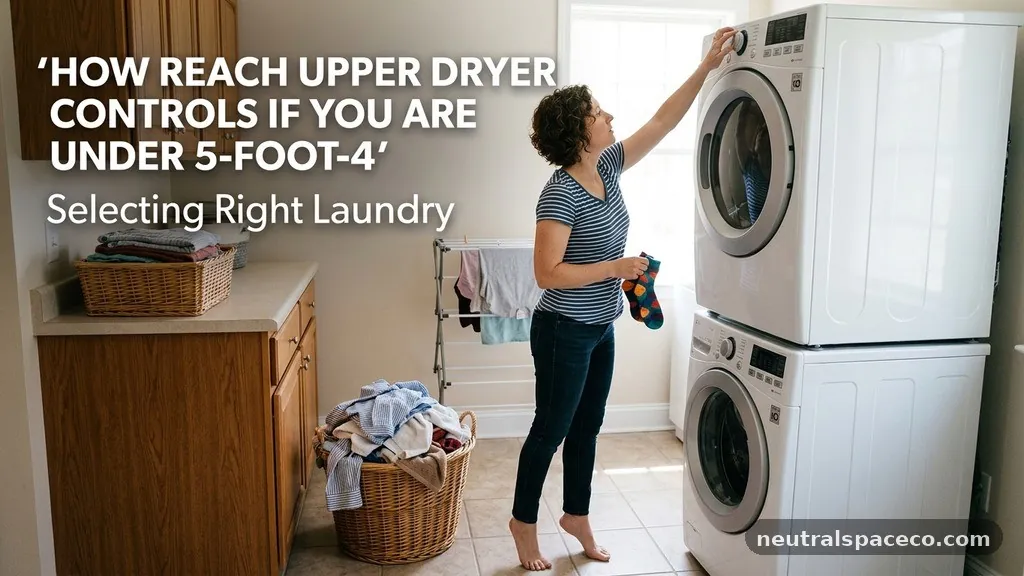
When shopping for new appliances, prioritize models that feature front-mounted controls or those specifically designed for vertical laundry setups. Many modern manufacturers have recognized that reaching the upper dryer controls if you are under 5-foot-4 is a significant pain point for consumers.
Some premium models offer a “reverse” or “flip” control panel feature, which allows the display to be mounted at the bottom of the dryer rather than the top. This design shifts the entire interface to a more comfortable, eye-level position for shorter users.
Always check the appliance height specifications before finalizing a purchase to ensure the total unit height fits your reach range. Standard stackable laundry units often reach heights of 75 inches or more, which can be daunting for someone under 5-foot-4. If you have the floor space, consider a side-by-side configuration instead of a vertical one.
This eliminates the need for reaching overhead entirely and provides a more ergonomic laundry design. If you must stack, look for units with low-profile stacking kits that minimize the total height of the assembly.
Modifying Your Laundry Room Layout
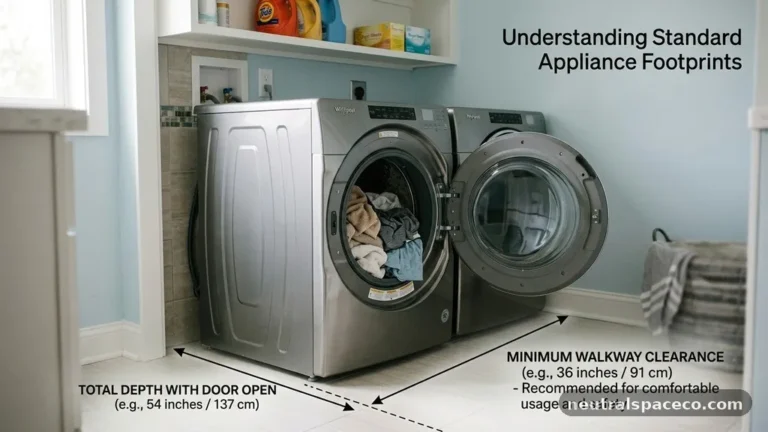
You can improve your reach by analyzing the placement of your appliances within the room. If your dryer is currently located in a tight corner, you may be losing valuable maneuverability that could otherwise help you stand closer to the unit.
Pulling the appliance forward by just a few inches can sometimes change the angle of your reach enough to make the controls accessible. Ensure that your dryer stacking kit is installed correctly to allow for this slight shift without compromising the stability of the units.
Consider the floor surface in your laundry area as part of the overall ergonomic accessibility. If you are using a step stool, the floor must be completely level and free of obstructions like loose rugs or power cords. A non-slip rubber mat can provide additional traction and safety when using a step tool.
If your laundry room is in a finished basement or a high-traffic area, ensure the lighting is bright enough to clearly read the control labels from a distance. Proper illumination reduces the need to lean in or stand on your tiptoes to decipher settings.
Utilizing Assistive Technology
Modern smart home integration offers a sophisticated way to manage appliances that are physically difficult to reach. Many high-end dryers now come equipped with Wi-Fi connectivity and dedicated smartphone applications.
By using your phone, you can select cycles, adjust heat levels, and monitor the remaining time without ever touching the actual dryer control panel. This is perhaps the most effective way to address the challenge of reaching the upper dryer controls if you are under 5-foot-4 because it removes the physical barrier entirely.
If your current dryer does not have smart features, you can often add a smart plug to manage the power supply or use voice-activated home assistants to start and stop cycles. While these systems cannot physically load or unload the laundry, they significantly reduce the frequency with which you need to interact with the high-mounted interface.
Integration with platforms like Google Home or Amazon Alexa allows you to issue commands while you are standing comfortably on the floor. Check the manufacturer’s website for specific app compatibility before investing in additional smart hardware.
Safety Considerations for Shorter Users
Laundry room safety is paramount when you are constantly reaching overhead or using elevation aids. Never attempt to climb on top of the washer to reach the dryer, as this can damage the appliance and poses a significant fall risk.
Ensure that your reach-assist devices are kept in good condition and are free from structural defects. If you find yourself frequently stretching or straining, it is time to reassess your setup rather than risking a muscle strain or a slip-and-fall accident.
Always keep the area around your laundry units clear of clutter to maintain a safe path for your step stool. If you have young children in the home, be especially careful with step stools that could be moved or used by them to reach dangerous areas.
Teach family members how to properly store the stool after use so it does not become a trip hazard for others. Implementing these habits creates a safer environment where reaching the upper dryer controls if you are under 5-foot-4 becomes a manageable, routine task rather than a daily struggle.
Comparing Common Accessibility Solutions
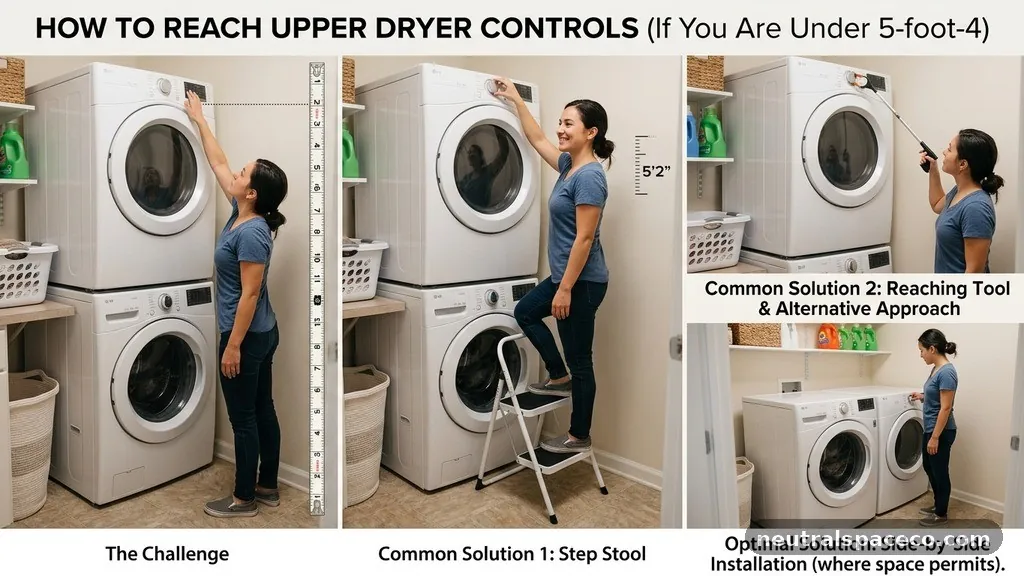
Understanding the effectiveness of different solutions helps you decide where to invest your time and money. The following table compares common methods used to improve access to elevated controls.
| Method | Effectiveness | Cost Estimate | Ease of Use |
|---|---|---|---|
| Step Stool | High | Low | Good |
| Smart App Control | Very High | Varies | Excellent |
| Rearranging Layout | Moderate | Zero | Moderate |
| Reach Extender | Low | Low | Fair |
Each of these methods serves a different need, and many users find that a combination of strategies works best. For example, using a smart app for daily cycles while keeping a step stool for occasional maintenance or filter checks provides a comprehensive approach to appliance accessibility. Evaluate your specific laundry room constraints to determine which of these options fits your home’s layout and your personal budget.
Understanding Appliance Ergonomics
Ergonomics in the laundry room focuses on minimizing physical stress during repetitive tasks. When you are under 5-foot-4, the standard height of vertical laundry units often forces you to work with your arms raised above shoulder level.
This posture can lead to shoulder fatigue and neck strain over time. By adjusting the environment so that the control panel orientation is more favorable, you can promote better posture and reduce the physical toll of laundry day.
When designing or modifying your space, consider the “reach range” of your primary laundry user. Ideally, the most frequently used controls should be located between 30 and 48 inches from the floor. Since many stackable units place the dryer controls well above this range, you must compensate by either lowering the unit or elevating the user.
Consult the Americans with Disabilities Act (ADA) design standards for general guidance on reach ranges, even if your specific laundry room is not legally required to meet these benchmarks. These standards offer excellent principles for creating a more accessible home environment for everyone.
Essential Tools for Your Laundry Room
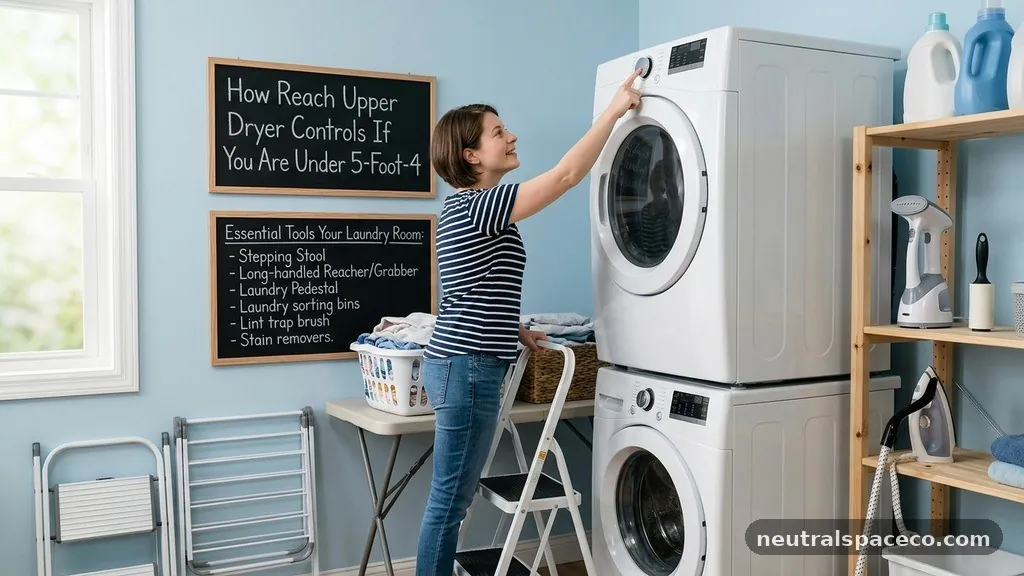
Equipping your laundry room with the right tools makes a substantial difference in your daily efficiency. A well-organized space should prioritize items that assist with both reaching and visibility. Below is a list of essential items that can help you manage your vertical laundry setup more effectively:
- Heavy-duty, non-slip folding step stool for safe elevation.
- Magnetic hooks or holsters for storing reach-assist tools on the dryer side.
- LED under-cabinet or stick-on lights to improve visibility of the console.
- Smartphone mount or stand near the laundry area for easy app monitoring.
- Non-slip floor matting to provide a stable base for your step stool.
- Labeling tape for high-contrast marking of the most-used cycle buttons.
These items are relatively inexpensive but provide significant relief for shorter users. By having these tools readily available, you eliminate the need to search for solutions every time you start a load of laundry. Maintaining a dedicated spot for each tool keeps your workflow consistent and reduces the physical effort required to operate your appliances.
Managing Upper Cabinet Interference
Many laundry rooms feature cabinets installed directly above the washer and dryer, which can further complicate access. These cabinets often limit the amount of space you have to maneuver a step stool safely.
If your cabinets are too low, you may find that you cannot stand upright even when using a stool. Consider relocating these cabinets or removing the doors to create more clearance for your arms and head while operating the dryer.
If moving the cabinets is not an option, try to store only rarely used items in the lowest shelf of the cabinet. This allows you to raise the cabinet or remove the bottom shelf entirely, providing more vertical space for your movements.
Sometimes, installing a slide-out drawer or shelf in the cabinet can help you store laundry supplies without needing to reach into the deep, inaccessible corners. Managing the space around your dryer is just as important as managing the dryer itself when it comes to long-term accessibility.
Frequently Asked Questions
Is it safe to stack a dryer on top of a washer if I am short?
Yes, stacking is safe provided you use a manufacturer-approved stacking kit and follow all installation guidelines. Ensure the unit is level and the legs are properly secured to prevent vibrations from causing instability. If you are concerned about height, ensure you have a safe, stable platform or stool nearby for accessing the controls.
Can I move the dryer controls to the bottom?
You cannot typically move the controls on a standard dryer yourself, as this requires internal wiring changes. However, you can purchase “flip control” dryers or models that are specifically designed with bottom-mounted interfaces. These units are built from the factory to be accessible for shorter users or those with limited mobility.
How do I know if my dryer is Wi-Fi enabled?
Check the front console of your dryer for a Wi-Fi icon or a “Smart” button. You can also look up your specific model number on the manufacturer’s website to see if it supports app connectivity. If your model is smart-enabled, downloading the official app will allow you to control most cycles from your phone.
What should I do if my reach is too limited for a step stool?
If a step stool is not a viable or safe option for you, focus on smart home technology to control the unit remotely. You can also look into professional laundry room modifications, such as lowering the platform the washer sits on, though this may require plumbing adjustments. Consult with an appliance technician to see if there are any approved ways to modify your specific setup.
How can I make the control labels easier to read?
Use high-contrast stickers or a label maker to highlight the most important buttons like “Start,” “Pause,” and your preferred cycle settings. Placing these labels on the lower edge of the control panel can make them easier to see from a distance. Proper lighting also plays a critical role in visibility, so consider adding a small, battery-powered LED light near the top of the unit.
Conclusion
Reaching the upper dryer controls if you are under 5-foot-4 is a challenge that many homeowners face, but it is entirely manageable with the right approach. By combining physical aids like a stable step stool with modern technology such as smartphone apps, you can easily maintain your laundry workflow. Focus on creating a safe and accessible environment by clearing obstacles, improving lighting, and choosing the right equipment for your height.
Taking these small, proactive steps will turn a daily source of frustration into a simple, efficient part of your home routine. Start by evaluating your current setup and identifying which of these modifications will provide the most immediate relief for your specific laundry configuration today.