Can You Stack Any Dryer on Any Washer Without a Universal Stacking Kit?
Deciding whether you can stack any dryer on any washer without a universal stacking kit is a common dilemma for homeowners looking to save vertical space. While the temptation to simply place one machine on top of another is strong, the reality involves significant physical forces that require careful consideration. Many people wonder if they can bypass the manufacturer’s specific hardware to simplify their installation process.
This article explores the technical, safety, and mechanical implications of attempting to stack laundry appliances without a proper interface. By understanding these risks, you will be better prepared to manage your laundry room ergonomics while ensuring your home remains safe from potential structural issues or equipment damage.
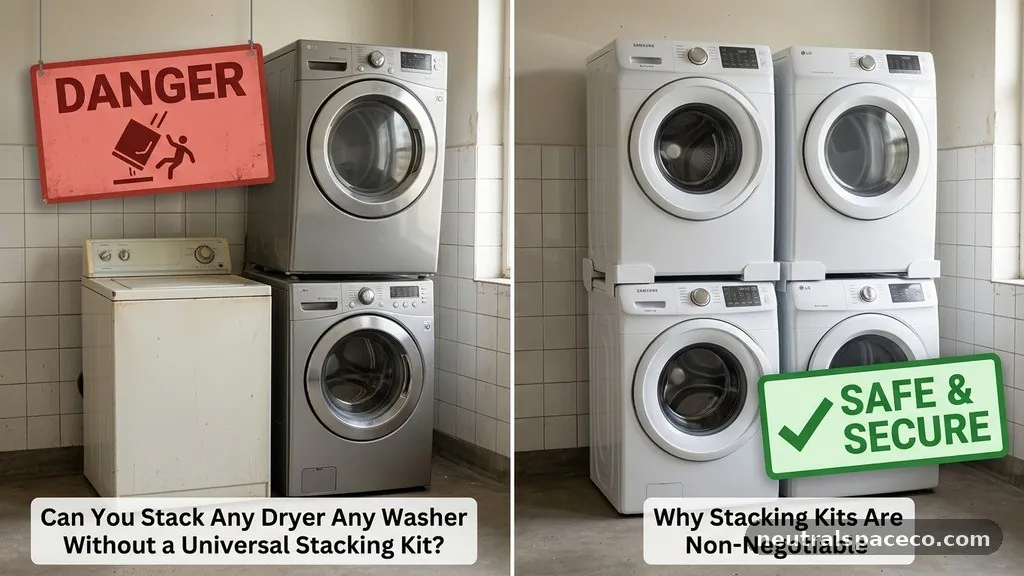
The short answer is no, you should not stack a dryer on top of a washer without using a manufacturer-approved stacking kit or a professional-grade interface. While it might seem physically possible to balance the units, the lack of a secure mounting bracket introduces severe risks during operation.
Dryers are heavy, and washers undergo intense movement during their spin cycle, which can cause the top unit to shift, slide, or even fall. Relying on gravity alone is insufficient, and attempting to DIY a solution often results in mechanical failure or personal injury.
Why Stacking Kits Are Non-Negotiable
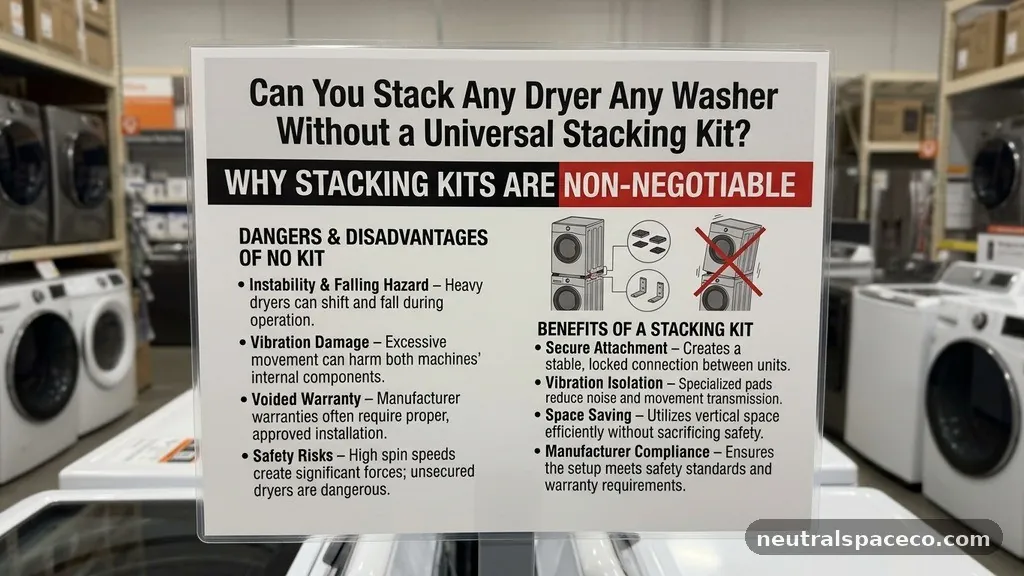
A stacking kit acts as the essential bridge between two disparate appliances, ensuring that the dryer remains firmly attached to the washer’s top panel. These kits include specific hardware designed to handle the weight distribution of the dryer while absorbing the kinetic energy generated by the washer.
Without this connection, the dryer is effectively a loose weight sitting on a vibrating platform. Over time, the vibration works to loosen even the most carefully placed items, leading to a situation where the dryer could eventually slide off.
The mechanical connection provided by a kit also ensures that the two machines act as a single, unified unit. When you secure the brackets, you are effectively bolting the dryer to the washer’s structural frame.
This prevents independent movement during high-speed agitation. Manufacturers design their kits to align perfectly with the screw hole placements on the specific appliance chassis, which is critical for maintaining the integrity of the machine’s outer shell.
Mechanical Dangers of Unsecured Stacking
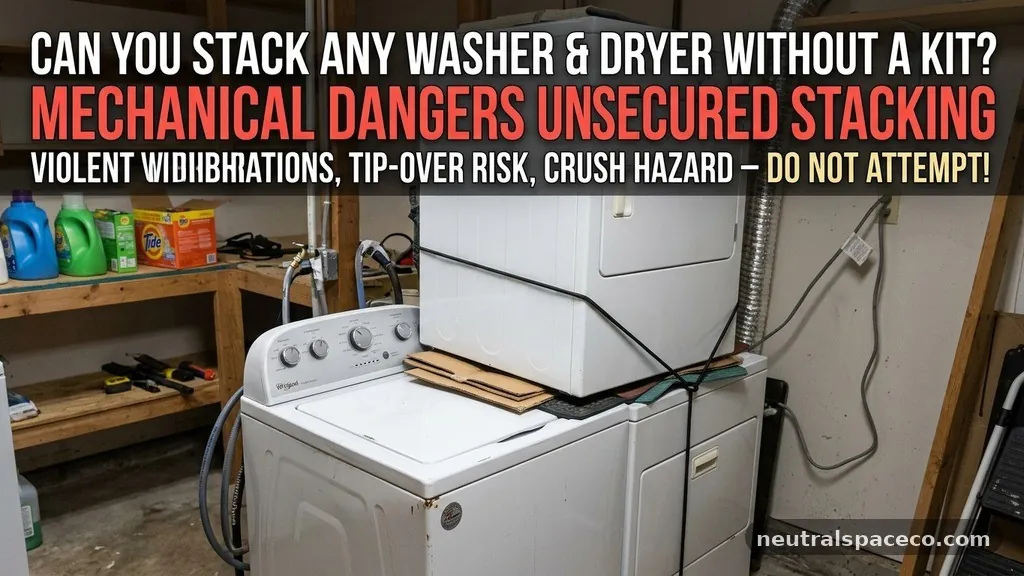
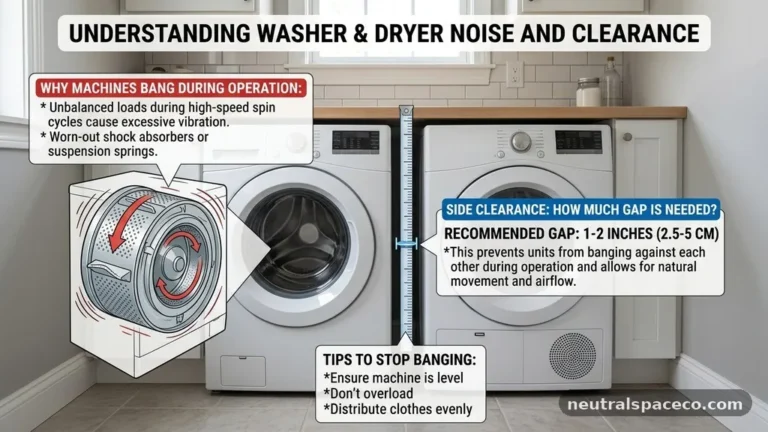
The primary concern with stacking without a kit is the potential for catastrophic mechanical failure. During a high-speed spin cycle, a washing machine generates significant centrifugal force, which creates intense vibration that travels through the entire appliance.
If the dryer is not physically locked into place, this vibration acts as a catalyst for movement. The dryer will gradually “walk” across the top of the washer, which can lead to it tipping over entirely.
This movement is not just a risk to the appliances themselves but also a major safety hazard to anyone in the laundry room. A falling dryer can weigh over 100 pounds, posing a serious threat of injury.
Furthermore, the constant friction of an unsecured dryer against the top of the washer will likely damage the finish of both units. In many cases, the vibration can cause internal components of the dryer to shift or break, leading to costly repairs that are rarely covered by a manufacturer warranty.
The Role of Vibration and Kinetic Energy
Understanding the physics involved in modern laundry equipment is key to why stacking requires such precision. Modern high-efficiency washers are designed to spin at very high revolutions per minute to remove as much water as possible from clothing.
This process creates a tremendous amount of kinetic energy that must be managed by the suspension system of the washer. When you add a heavy dryer on top, you are changing the center of gravity of the entire stack.
If the stack is not perfectly level and secured with a rigid bracket, that kinetic energy is transferred inefficiently, which can lead to mechanical damage or excessive noise. Even if the dryer does not fall, the internal rattling caused by a loose connection can damage the sensitive electronics or heating elements inside the dryer.
Proper installation involves not just the kit, but also the use of rubber vibration pads to isolate the machine from the floor. This combination ensures that the energy is dissipated correctly rather than shaking the entire appliance stack.
Appliance Compatibility and Chassis Design
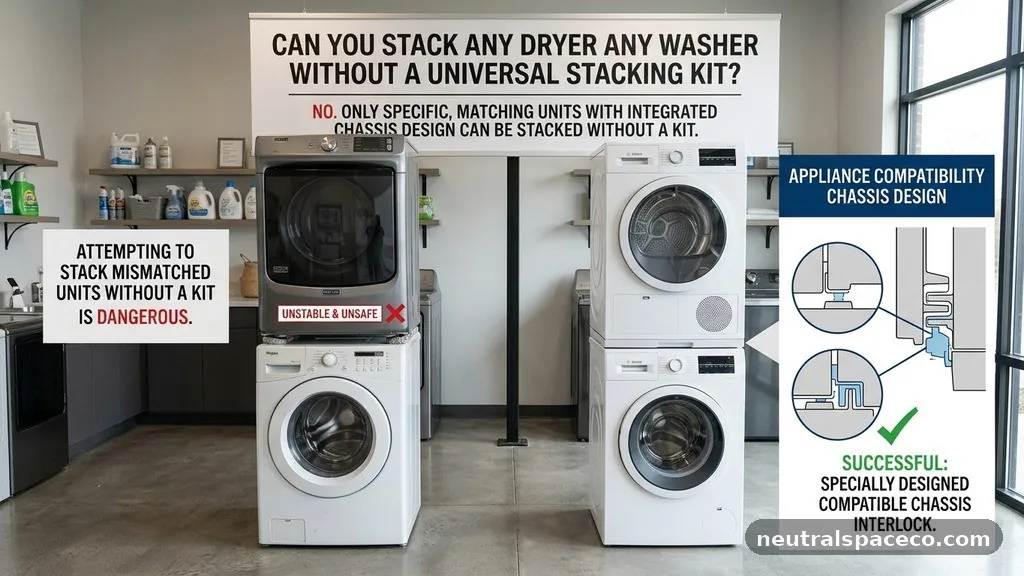
You cannot assume that any dryer will fit on any washer because manufacturer dimensions and chassis designs vary wildly. Even within the same brand, different model lines have different top-panel configurations that dictate how a stacking kit must be attached.
Stacking a brand-A dryer on a brand-B washer is almost impossible without a custom interface, which is rarely recommended by professionals. Each manufacturer engineers their machines with specific weight-bearing capacities in mind.
When you mix and match brands, you run the risk of the dryer’s feet not aligning with the washer’s top panel, or the weight distribution being uneven. This creates localized stress points on the washer’s top cover, which is often made of relatively thin metal or plastic.
If the weight is not spread out across the structural load-bearing points of the washer, you could cause the top panel to buckle or crack. This is a common failure point that is easily avoided by using the correct, brand-specific stacking kit.
Impact on Manufacturer Warranty
Most appliance warranties are contingent upon the equipment being installed according to the manufacturer’s official guidelines. If you choose to stack your units without the recommended hardware, you are essentially voiding your warranty from the moment of installation.
Should the dryer fall or the washer’s top panel sustain damage, the manufacturer will likely refuse any claims for repair or replacement. This leaves you solely responsible for the cost of fixing the damage, which can often exceed the price of the machines themselves.
Furthermore, if an improperly stacked unit causes damage to your home, such as a dented floor or broken laundry room fixtures, your homeowner’s insurance may also deny a claim based on negligence. It is always best to consult the user manual for your specific models before attempting any installation. If the manual states that a specific kit is required, treating it as optional is a significant financial and safety risk.
Laundry Room Ergonomics and Space Management
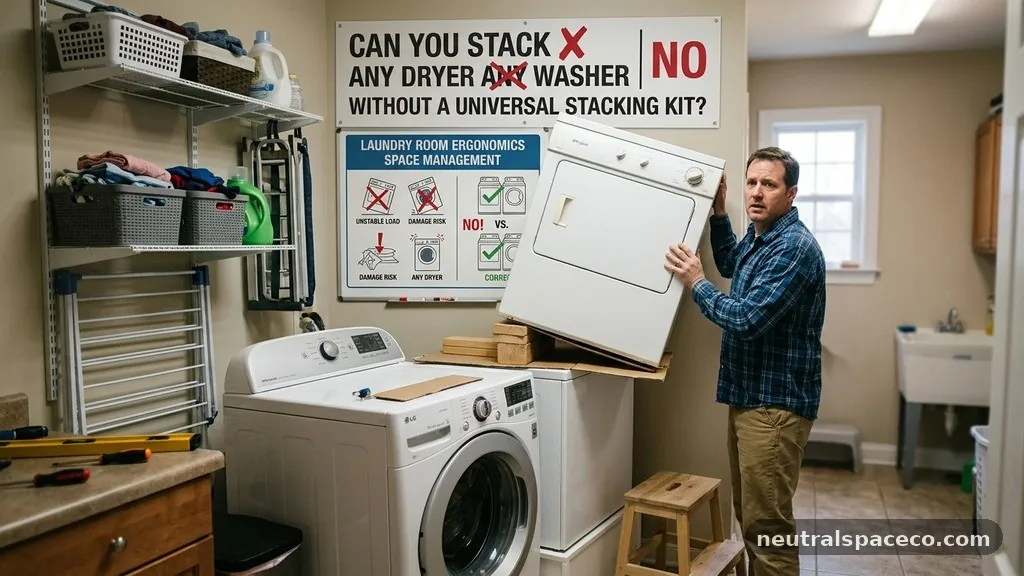
Maximizing your laundry room ergonomics is about more than just fitting the machines into a small space. It involves ensuring that the controls are accessible and that the doors of both units can be opened fully without obstruction.
When you stack appliances, the dryer controls can end up quite high, which might make it difficult for some users to operate the machine safely. You should consider the height of the stack before deciding on this configuration.
If vertical stacking is impossible due to height constraints or the lack of a matching kit, consider alternative layouts. You might be able to utilize a side-by-side configuration if you have enough floor space.
If you are worried about the machines sitting directly on the floor, you can use a laundry pedestal to raise them to a more comfortable working height. This approach provides a stable base without the risks associated with stacking, and it often provides useful storage space underneath the units.
Comparison of Installation Methods
When choosing how to organize your laundry area, it is helpful to compare the stability and safety of different installation methods. The following table highlights the differences between various approaches to appliance placement.
| Method | Stability | Hardware Required | Safety Risk |
|---|---|---|---|
| Manufacturer Stacking Kit | High | Bolt-on Brackets | Low |
| Custom/Homemade Interface | Low | Varies | High |
| Side-by-Side | Very High | None | Very Low |
| Pedestal Risers | Medium | Mounting Hardware | Low |
Each method offers different benefits, but the manufacturer-provided kit is the only acceptable way to achieve a vertical stack. If you are struggling with limited space, always prioritize the hardware designed by the company that built the machines.
Alternatives to Vertical Stacking
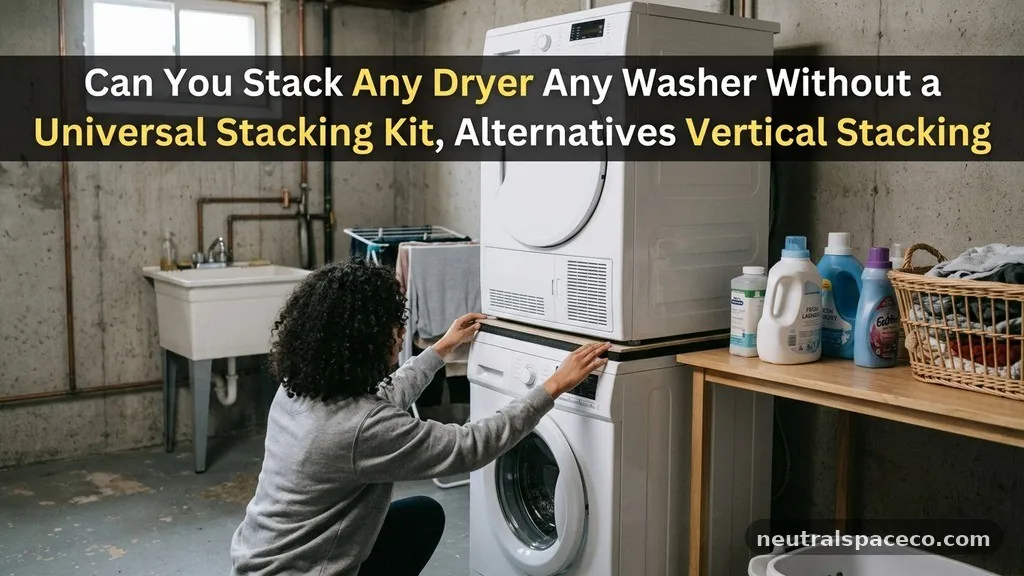
If you find that your current models are not compatible for stacking, there are several ways to manage your laundry room footprint without resorting to dangerous DIY hacks. One of the most effective solutions is to use pedestal drawers. These units raise your washers and dryers to a height that is easier on your back while providing a solid, secure base that is designed to handle the weight and vibration of the appliances.
Another option is to rethink your room layout entirely. Sometimes, simply moving a shelf or a cabinet can free up enough floor space to accommodate a side-by-side setup, which is always the most stable configuration.
You can also look into specialized storage solutions that fit around your appliances, such as over-the-washer shelving units that do not actually touch the machines. These additions allow you to make the most of your vertical space without interfering with the mechanical stability of your laundry equipment.
Professional Consultation and Installation
Before modifying your laundry setup, it is often wise to seek professional consultation. A licensed appliance technician can assess whether your floor stability is adequate to handle a stacked configuration.
They can also verify if your specific washer and dryer models are truly compatible for stacking. Many retailers offer professional installation services that include the purchase and setup of the correct stacking kit, which is often the safest route for most homeowners.
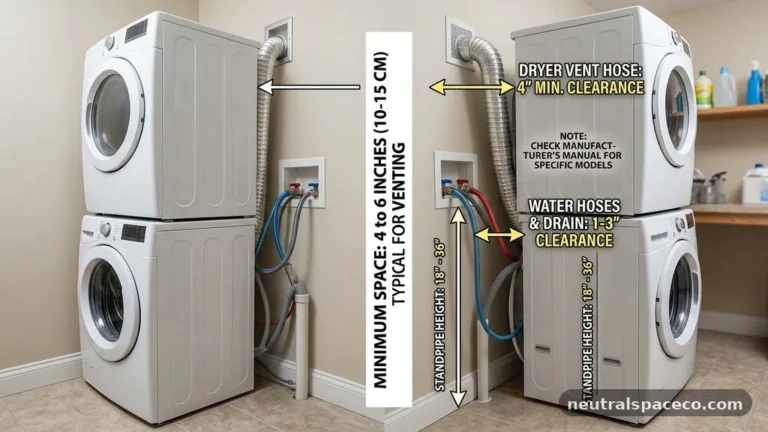
Professionals have access to resources like the Consumer Product Safety Commission to check for any recalls or known issues with specific models. They can also ensure that the electrical and venting connections are handled correctly, which is vital for fire safety. Taking the time to get a professional opinion can save you from the stress and expense of dealing with a damaged machine or a hazardous installation later on.
Frequently Asked Questions
Can I use rubber pads instead of a stacking kit?
No, rubber pads are designed for vibration dampening, not for securing one appliance on top of another. They will not prevent the dryer from sliding off the washer during the intense spin cycles that modern machines perform.
What happens if I ignore the stacking kit requirement?
Ignoring the requirement increases the risk of the top unit sliding, falling, or causing mechanical failure. You will also void your manufacturer warranty, meaning any damage caused by the improper setup will be your financial responsibility.
Are universal stacking kits safe to use?
“Universal” kits are often less reliable than manufacturer-specific kits. They are designed to fit a wide range of models, which means they may not provide the tight, secure fit required for your specific appliance chassis.
Can I stack a different brand dryer on my washer?
Mixing brands is highly discouraged. Stacking kits are engineered for specific screw hole placements and load-bearing points of a single manufacturer. Attempting to mix brands will lead to poor fitment, instability, and a high risk of damage.
What if my washer is not “stackable”?
If your washer is not explicitly labeled as stackable by the manufacturer, you should never attempt to place a dryer on top of it. Some washers are not designed to support the weight of a dryer, and doing so can result in the top panel collapsing.
Conclusion
Successfully managing a laundry room requires balancing the need for space with the necessity of safe, stable appliance operation. While the question of whether you can stack any dryer on any washer without a universal stacking kit often comes from a desire for convenience, the technical reality is that you must use a proper, manufacturer-approved kit to avoid severe risks. Mechanical failure, damage to the appliance chassis, and potential injury are all real consequences of unsecured stacking.
By choosing to follow the recommended installation procedures, you protect your investment and ensure your laundry area remains a safe environment. If your current machines are not compatible, exploring side-by-side configurations or pedestal solutions remains the best way to optimize your space without compromising on safety.