
How to Decorate a Living Room That Feels Cozy
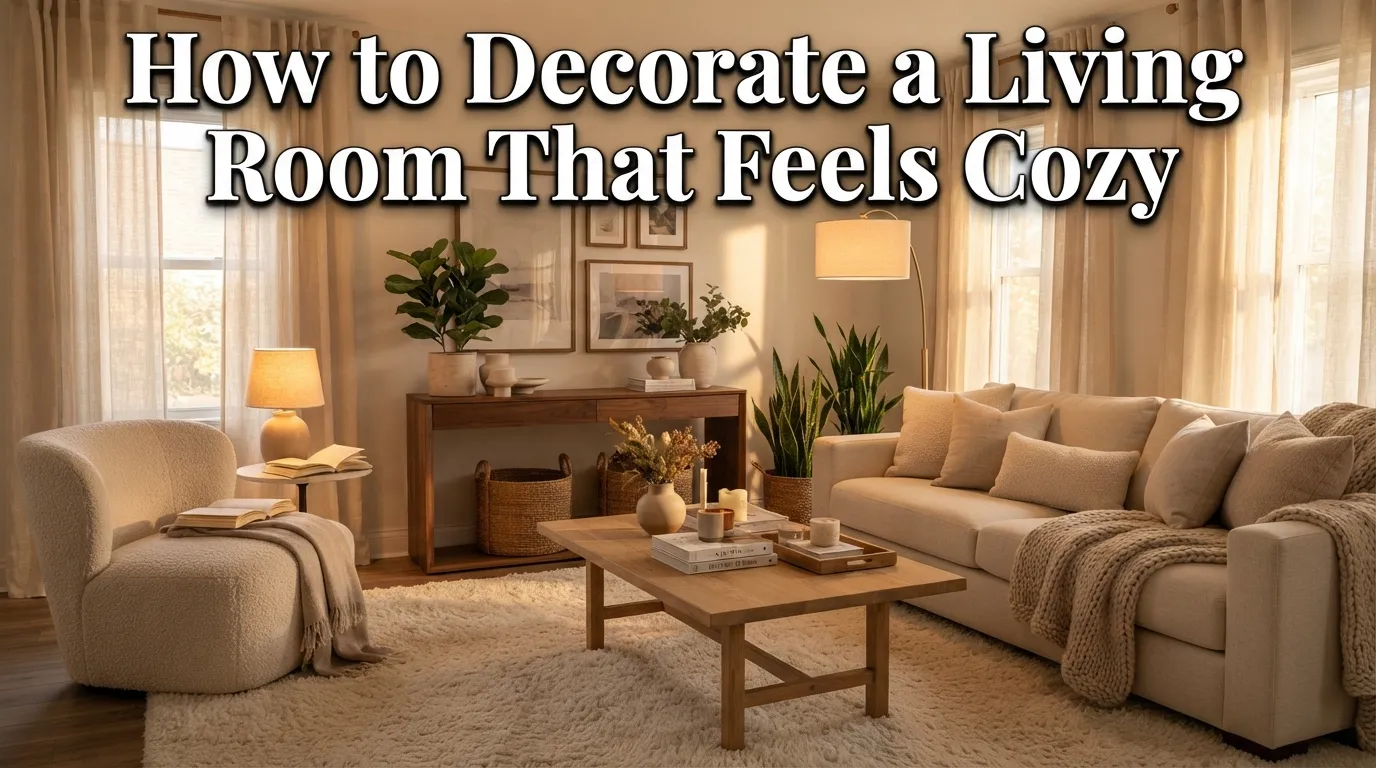
Cozy is one of those words everyone uses in decorating and almost nobody defines. Ask ten people what makes a living room feel cozy and you’ll get ten different answers — a fireplace, soft blankets, dim lighting, a certain color palette. In my experience, cozy isn’t really about any single element. It’s about how several small decisions work together to make a room feel like it wants you to stay in it.
A mistake many homeowners make is assuming coziness is something you either have or you don’t, based on the bones of the room. A living room with high ceilings, hard flooring, and lots of natural light can absolutely feel cozy. So can a small, dim apartment living room. The difference has less to do with square footage or architecture and more to do with layering — texture on texture, warm light instead of harsh light, and a layout that actually encourages conversation instead of facing everyone toward a wall.
I’ve noticed that the living rooms people describe as their favorite room in the house are rarely the most expensive ones. They’re the ones with a few worn-in textiles, warm lighting in more than one spot, and furniture arranged to feel like a gathering space rather than a showroom. That’s the kind of cozy that actually gets used, not just photographed.
This guide breaks down ten practical, tested ways to bring genuine coziness into a living room, regardless of its size, layout, or existing style. Each idea explains why it works and how to bring it into your own space, whether you’re starting a full redesign or just want to warm up a room that already has good bones.
Table of Contents
- Layered Ambient Lighting — Replacing harsh overhead light with warm, layered sources.
- Textured Throw Layering — Building warmth through blankets and pillows.
- Warm Neutral Palette — Choosing wall and furniture colors that invite you in.
- Conversational Furniture Layout — Arranging seating to encourage connection.
- Natural Wood Accents — Grounding the room with organic materials.
- Area Rug Anchoring — Defining and softening the floor space.
- Soft Curtain Framing — Using window treatments to soften hard light.
- Candlelight and Scent — Adding a sensory layer beyond the visual.
- Personal Touches Display — Making the room feel lived-in and specific.
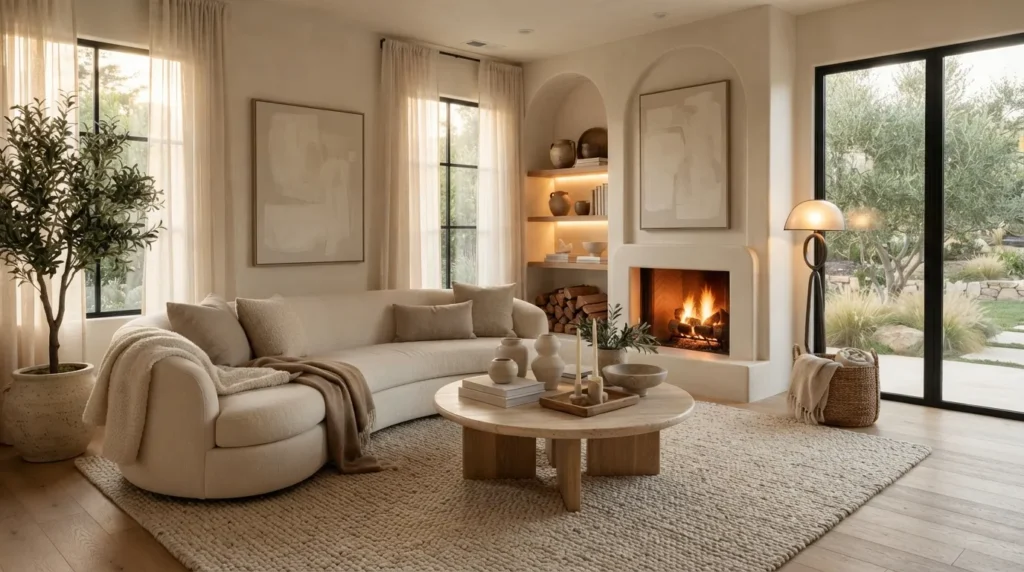
- Fireplace or Focal Warmth — Anchoring the room around a natural gathering point.
1. Layered Ambient Lighting
Quick Benefits
- Instantly softens the mood of the room
- Reduces harsh shadows from overhead lighting
- Allows the room to adapt from day to evening
- Cheap and easy to implement without renovation
- Flatters furniture, art, and skin tone alike
Why It Works
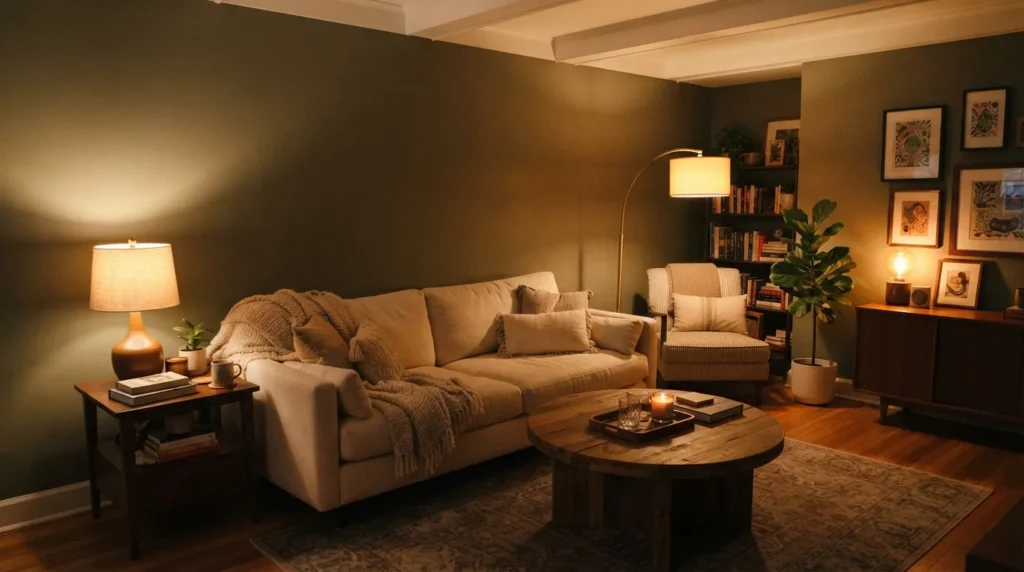
A single overhead fixture is the number one reason a living room feels cold instead of cozy, no matter how nice the furniture is. In my experience, this is the single most important idea on this list, because lighting affects the mood of a room more than almost any other decor choice. Designers layer light across at least three sources — ambient, task, and accent — the same way they would in a bedroom or bathroom, and living rooms benefit even more given how much time is spent in them.
How To Style It
Add at least two table lamps or a floor lamp in addition to any overhead lighting, positioned in different corners of the room to eliminate flat, even shadows. Swap any cool white bulbs for warm white (2700K–3000K), which reads as significantly more inviting once the sun goes down. A dimmer switch on the main overhead fixture allows the room to shift from bright and functional during the day to soft and relaxed in the evening without needing to touch a single lamp.
2. Textured Throw Layering
Quick Benefits
- Adds immediate visual and physical warmth
- Inexpensive compared to furniture upgrades
- Easy to rotate seasonally
- Works with any existing color scheme
- Encourages actual daily use of the sofa
Why It Works
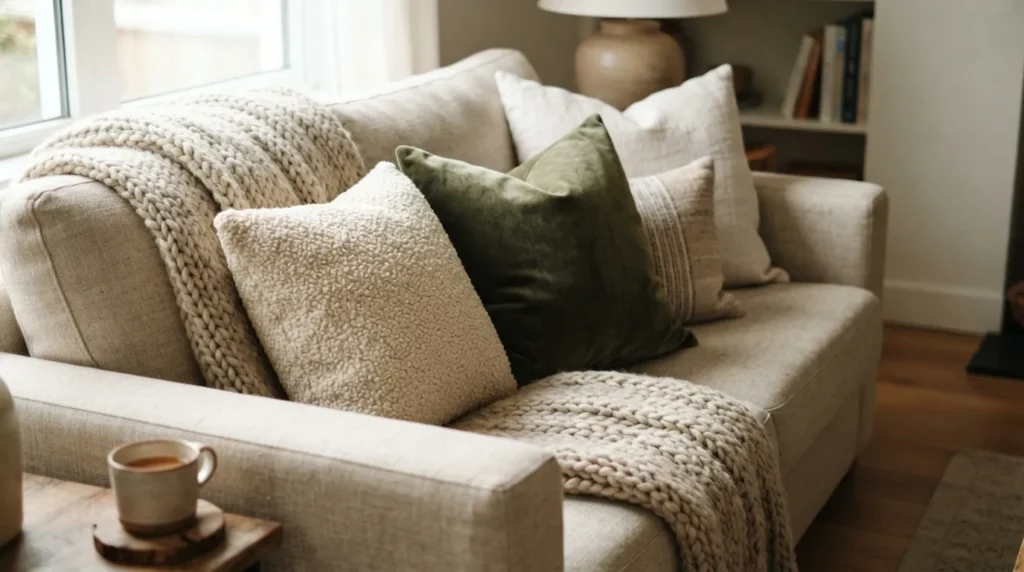
A sofa with no throws or pillows almost always reads as unfinished, even if the furniture itself is high quality. One thing that works especially well in cozy living rooms is layering at least two or three different textures — a chunky knit throw, a smooth linen pillow, a bit of velvet or boucle — even within a single, controlled color palette. That’s why many designers treat textiles as one of the first and cheapest ways to warm up a room.
How To Style It
Drape a folded or casually draped throw over the arm or back of the sofa rather than laying it flat, which reads as more lived-in and intentional. Layer three to five pillows in varied textures and slightly varied tones within the same color family, avoiding an exact matching set, which tends to look more formal than cozy. Swap in heavier wool or knit textiles for winter and lighter linen or cotton blends for warmer months to keep the room feeling seasonally appropriate.
3. Warm Neutral Palette
Quick Benefits
- Creates an inviting backdrop for everything else
- Hides wear better than stark white
- Pairs easily with any accent color
- Feels timeless rather than trend-dependent
- Sets the emotional tone of the entire room
Why It Works
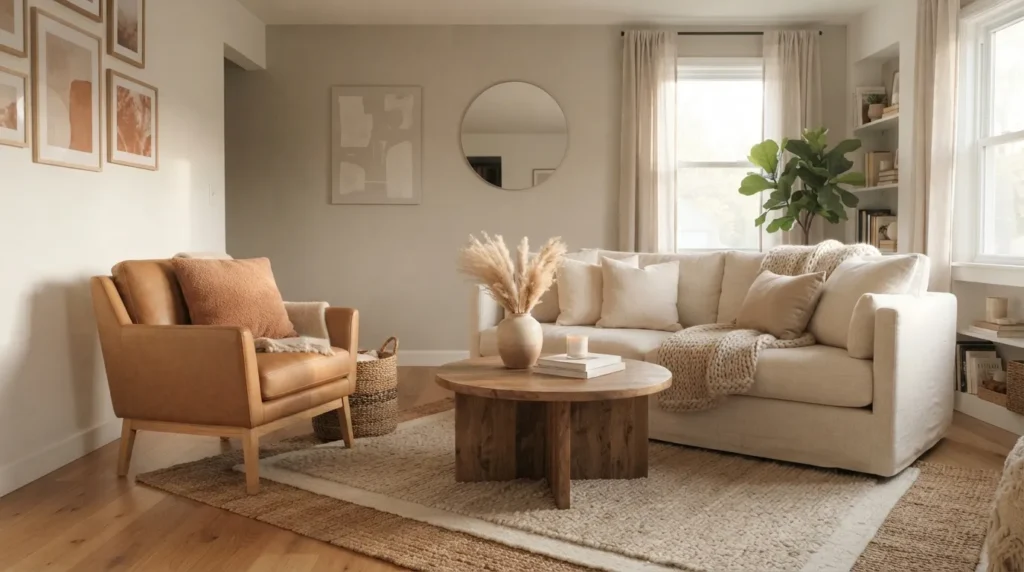
Color has an outsized effect on how a room feels, and cool tones — icy whites, blue-grays, stark grays — tend to read as clean but not particularly warm. A palette built around warm neutrals like cream, warm greige, terracotta, or soft camel does more to create an inviting mood than almost any other single decision. A mistake many homeowners make is choosing wall color based purely on trend photos without considering how a cool undertone will feel in the room’s actual lighting.
How To Style It
Test paint swatches on the actual wall at different times of day before committing, since natural light dramatically changes how a color reads. If a full repaint isn’t in the budget, warm up an existing cool-toned room through furniture, rugs, and textiles instead of the walls themselves. Introduce one or two deeper accent tones, like a rust or deep olive, in a single piece — a chair, an area rug, or a set of pillows — to prevent the palette from feeling flat.
4. Conversational Furniture Layout
Quick Benefits
- Encourages actual interaction and connection
- Makes the room feel more intentional
- Works in both large and small footprints
- Reduces the “everyone facing the TV” feel
- Improves how the room functions for guests
Why It Works
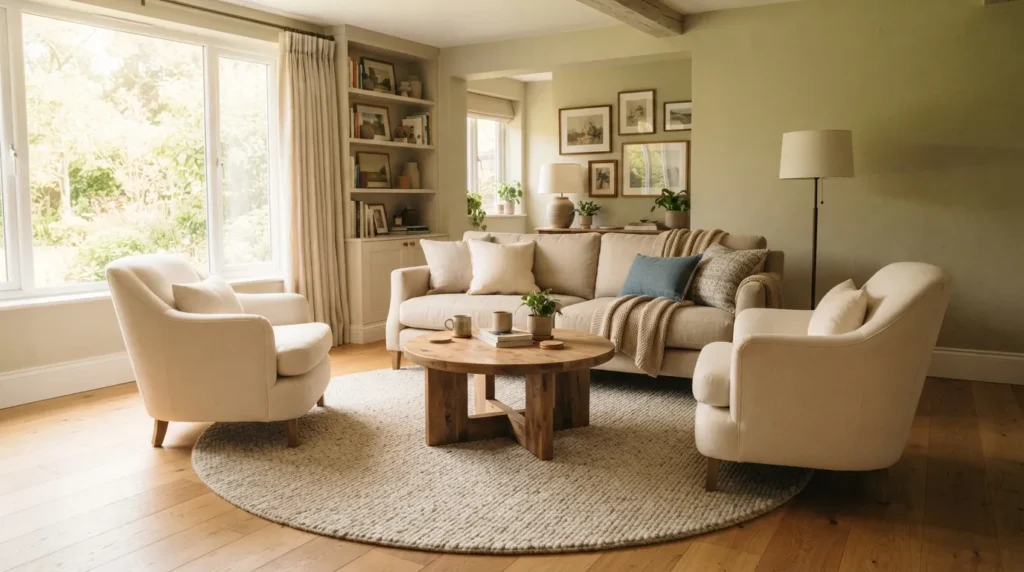
A living room arranged entirely around a television, with all seating facing one direction, tends to feel more like a waiting room than a gathering space. I’ve seen this idea transform rooms more than a full furniture replacement would, simply by turning a chair fifteen degrees or pulling the sofa a foot away from the wall to create a proper seating circle. Coziness is inherently social — a layout that faces people toward each other supports that instinct architecturally.
How To Style It
Arrange the main seating pieces — sofa, chairs, or a sectional — to face each other or angle inward rather than lining everything up against the walls. Keep coffee table distance to roughly 14 to 18 inches from seating so it remains functional without crowding the walking path. If the television is a priority, position it so it can still be seen from an angle within the conversational layout, rather than making it the sole organizing point of the room.
5. Natural Wood Accents
Quick Benefits
- Warms up cold or overly modern spaces
- Adds texture without adding visual clutter
- Grounds the room with organic material
- Pairs with nearly any color palette
- Balances hard surfaces like glass or metal
Why It Works
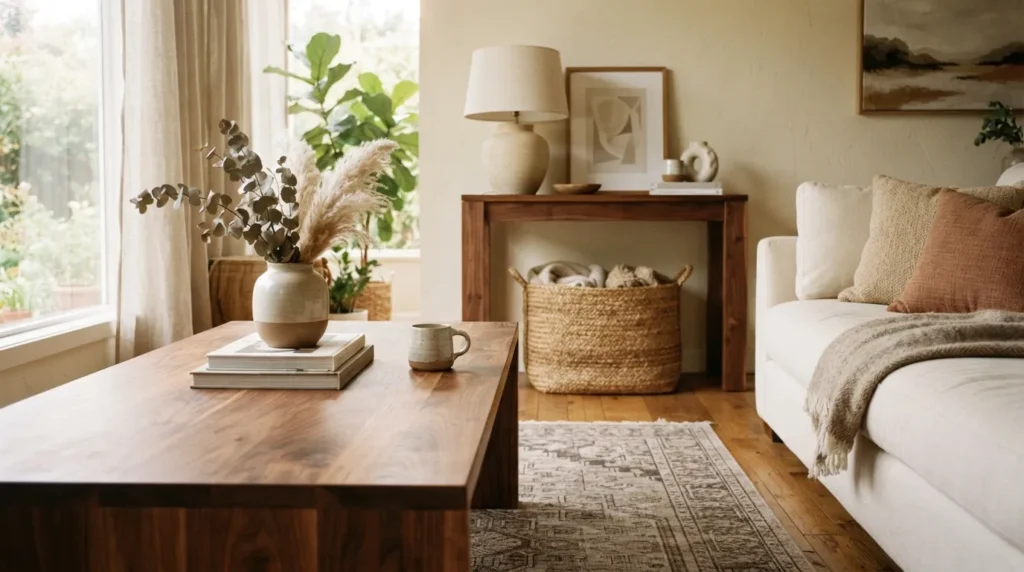
Rooms built entirely from smooth, cool materials — glass coffee tables, metal light fixtures, leather seating — can start to feel sterile without something organic to balance them. Natural wood does that balancing work reliably, the same way it does in bedrooms and bathrooms. That’s why many designers recommend at least one substantial wood element, like a coffee table or media console, as a foundational piece in any cozy living room.
How To Style It
A wood coffee table, console, or shelving unit in a warm tone — walnut, oak, or acacia — anchors the room and pairs naturally with textiles and neutral walls. If your existing furniture leans heavily toward metal and glass, introduce wood through smaller accessories first: a wooden tray, a set of nesting side tables, or a picture frame, before committing to larger furniture changes. Mixing a few different wood tones is generally fine as long as the undertones — warm or cool — stay consistent throughout the room.
6. Area Rug Anchoring
Quick Benefits
- Defines and grounds the seating area
- Adds warmth and softness underfoot
- Hides hard flooring and absorbs sound
- Ties the room’s color palette together
- Makes a large room feel more intimate
Why It Works
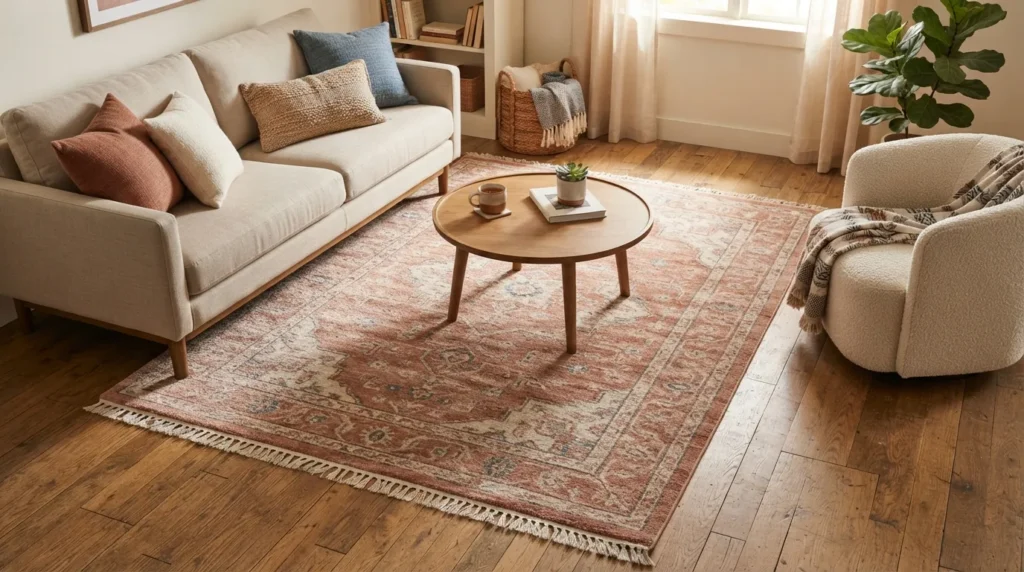
An area rug does more than add softness underfoot — it visually defines the seating area as an intentional space rather than furniture scattered across an open floor. Hard flooring without a rug tends to feel echoey and cold, both literally and visually. A mistake many homeowners make is choosing a rug too small for the seating arrangement, which makes the whole layout feel disconnected rather than anchored.
How To Style It
Size the rug so at least the front legs of your major seating pieces sit on it, rather than floating the rug entirely underneath the coffee table alone. Choose a plush, higher-pile rug for maximum coziness underfoot, or a flatweave in a warm tone if you have pets or heavy foot traffic. A patterned or textured rug in warm, muted tones hides wear better than a solid pale color and adds visual depth without overwhelming the rest of the room.
7. Soft Curtain Framing
Quick Benefits
- Softens harsh natural or artificial light
- Adds height and softness to the walls
- Frames windows in a finished, curated way
- Improves privacy and evening ambiance
- Inexpensive relative to other upgrades
Why It Works
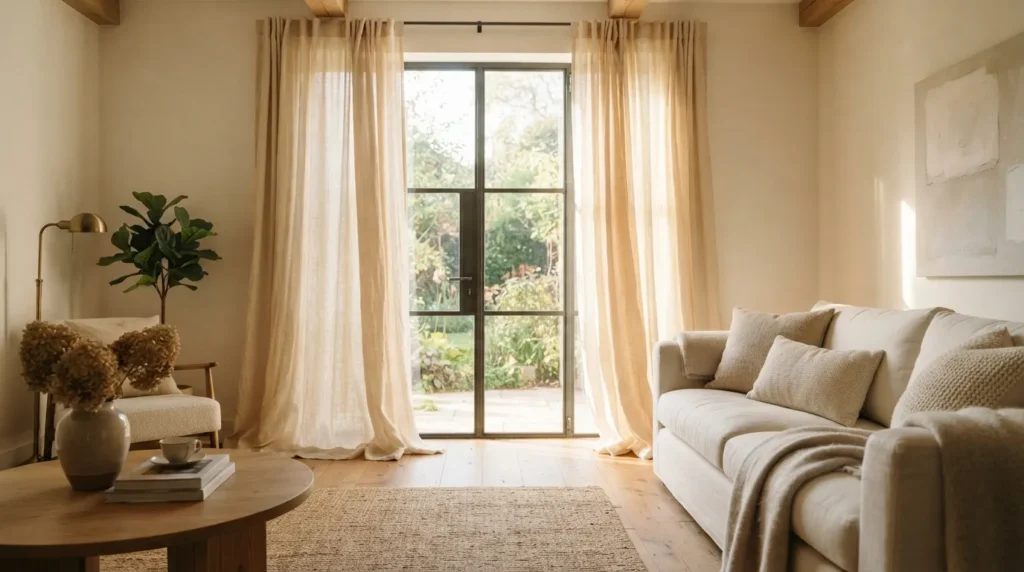
Bare windows, or windows dressed only in hard blinds, tend to make a room feel more functional than comfortable. Soft curtains add fabric texture at eye level and above, softening what would otherwise be a hard architectural edge in the room. One simple trick I always suggest is hanging curtain rods slightly higher and wider than the window frame itself, which makes the ceiling feel taller and the window feel larger, both of which contribute to a cozier overall proportion.
How To Style It
Choose curtains in a soft, textured fabric like linen or a linen blend, in a warm neutral or a deep, muted accent tone that complements the room’s palette. Hang panels so they just graze the floor, or pool slightly for a more relaxed, layered look. If privacy or light control is a concern, layer sheer curtains underneath heavier drapes, allowing the sheers to filter daylight softly during the day while the heavier panels close fully in the evening.
8. Candlelight and Scent

Quick Benefits
- Adds a sensory layer beyond the visual
- Cheap and easy to change seasonally
- Enhances the mood created by ambient lighting
- Makes the room feel more finished to guests
- Works alongside every other idea on this list
Why It Works
Visual coziness is only part of the equation — scent and the soft, flickering quality of candlelight contribute a sensory dimension that lighting and textiles alone can’t fully replicate. In my experience, this is often the very last detail people add, but it’s frequently the one guests comment on first, since scent registers before anything else in a room.
How To Style It
Group two or three candles of varying heights on a tray on the coffee table or console rather than scattering single candles throughout the room, which reads as more intentional. Choose warm, comforting scents — vanilla, sandalwood, amber, or a light woodsy blend — over anything too sweet or sharp for a living space meant for extended time. If leaving candles unattended is a concern, flameless LED candles paired with a reed diffuser achieve a similar warm, ambient effect.
9. Personal Touches Display
Quick Benefits
- Makes the room feel specific to you
- Adds warmth that decor alone can’t replicate
- Encourages a lived-in, welcoming feel
- Costs little to nothing to implement
- Gives the room a sense of story
Why It Works
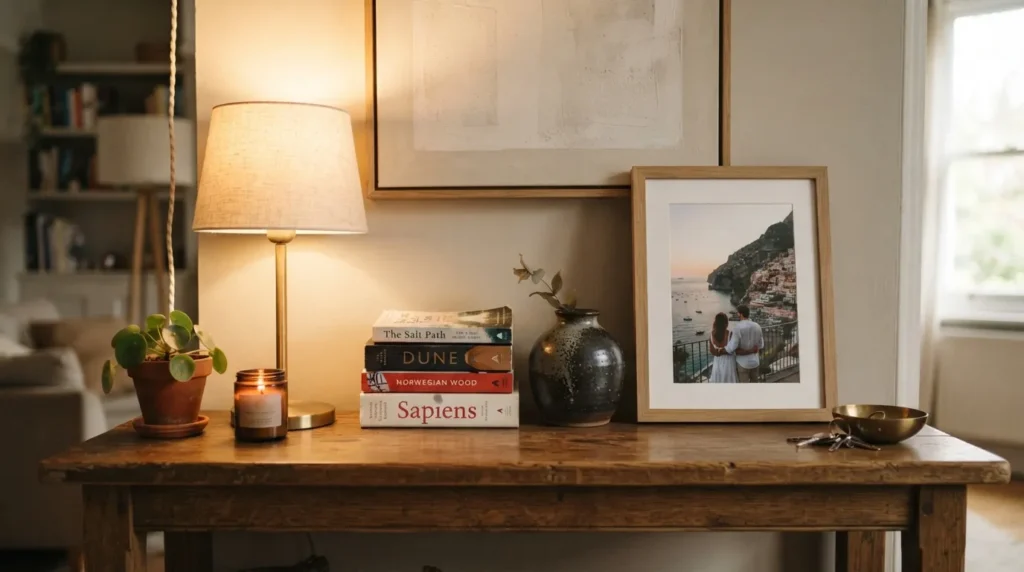
A living room styled entirely from a catalog, with no personal objects at all, can look polished but rarely feels cozy in practice. I’ve noticed that the detail people respond to most in someone else’s living room isn’t usually the furniture — it’s the small, specific things: a stack of well-loved books, a framed photo, a piece of pottery from a trip. A mistake many homeowners make is treating personal items as clutter to hide rather than as an essential layer of coziness.
How To Style It
Choose a handful of meaningful objects — books, art, travel finds, family photos — and group them intentionally on a shelf, console, or coffee table rather than scattering them randomly throughout the room. Rotate seasonal or sentimental items in small groupings of two or three, which reads as curated rather than cluttered. Balance personal items with simpler decor pieces around them so the display feels considered rather than overwhelming.
10. Fireplace or Focal Warmth
Quick Benefits
- Creates a natural gathering point
- Reinforces the room’s cozy identity visually
- Works with or without a functioning fireplace
- Anchors furniture layout around genuine warmth
- Elevates the room’s overall sense of purpose
Why It Works
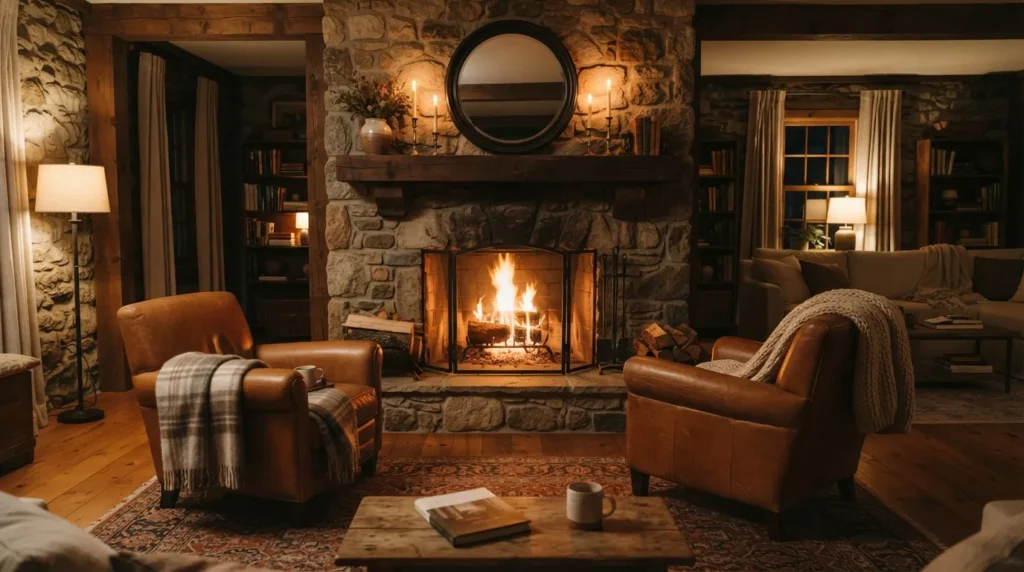
Rooms built around a literal or visual source of warmth tend to feel cozier almost by association, which is part of why fireplaces have remained a design focal point for centuries. That’s why many designers recommend organizing the furniture layout around the fireplace, or a fireplace-adjacent focal point, wherever one exists, rather than defaulting to the television as the room’s central feature.
How To Style It
If you have a working or decorative fireplace, arrange the primary seating to face or angle toward it, using the mantel as a styling opportunity with art, candles, or a mirror above. If there’s no fireplace, an electric insert or a simple faux mantel can recreate the same focal warmth without construction. In rooms without any fireplace option at all, a large piece of warm-toned art or a well-styled media console can serve a similar anchoring function for the seating layout.
Frequently Asked Questions
What makes a living room feel cozy instead of just decorated? Layering — multiple light sources, varied textures, and a furniture layout that encourages conversation — is what separates a cozy room from one that simply looks nice in photos. No single element creates coziness on its own; it comes from several small choices working together.
What colors make a living room feel the coziest? Warm neutrals like cream, greige, terracotta, and soft camel tend to feel more inviting than cool tones like icy white or blue-gray. Even a room that can’t be repainted can be warmed up through rugs, textiles, and furniture in these tones.
How many lamps does a cozy living room need? At least two additional light sources beyond a single overhead fixture, positioned in different corners of the room, help eliminate harsh shadows and create a warmer, more layered glow throughout the space.
Can a small living room still feel cozy? Yes, and in some ways small rooms have an advantage, since warmth and intimacy come naturally with less square footage to fill. The same principles — layered lighting, texture, and a conversational layout — apply regardless of size.
Does furniture arrangement really affect how cozy a room feels? Yes. Seating arranged to face each other, rather than all facing a television or a wall, supports the social, gathering-focused feeling that coziness relies on, even before any decor is added.
How do I make a modern living room feel warmer without losing the style? Introduce natural wood, layered textiles, and warm lighting rather than changing the furniture itself. These additions soften a modern room’s clean lines without compromising its overall aesthetic.
What’s the cheapest way to make a living room cozier? Swapping to warm-toned lightbulbs and adding a couple of throw pillows or a blanket are the lowest-cost changes with a noticeable effect. Both can be done in an afternoon without any special tools or a large budget.
Conclusion
A cozy living room isn’t built from one big purchase — it’s built from layers. Warm, varied lighting instead of a single overhead bulb. Textiles that invite touch. A furniture layout that faces people toward each other instead of a wall. None of these changes require a full renovation, and most can be done gradually, one small addition at a time.
Start with one or two ideas and gradually build a space that reflects your style and supports everyday comfort. A single lamp, a well-chosen throw, or a rearranged chair can shift how the whole room feels, long before anything bigger changes.
Related Articles
- Cozy Bedroom Ideas
- Small Living Room Layouts
- Neutral Home Styling Tips
- How to Decorate a Bedroom with Modern Furniture
- DIY Accent Wall Ideas