10 DIY Garden Projects with Raised Beds
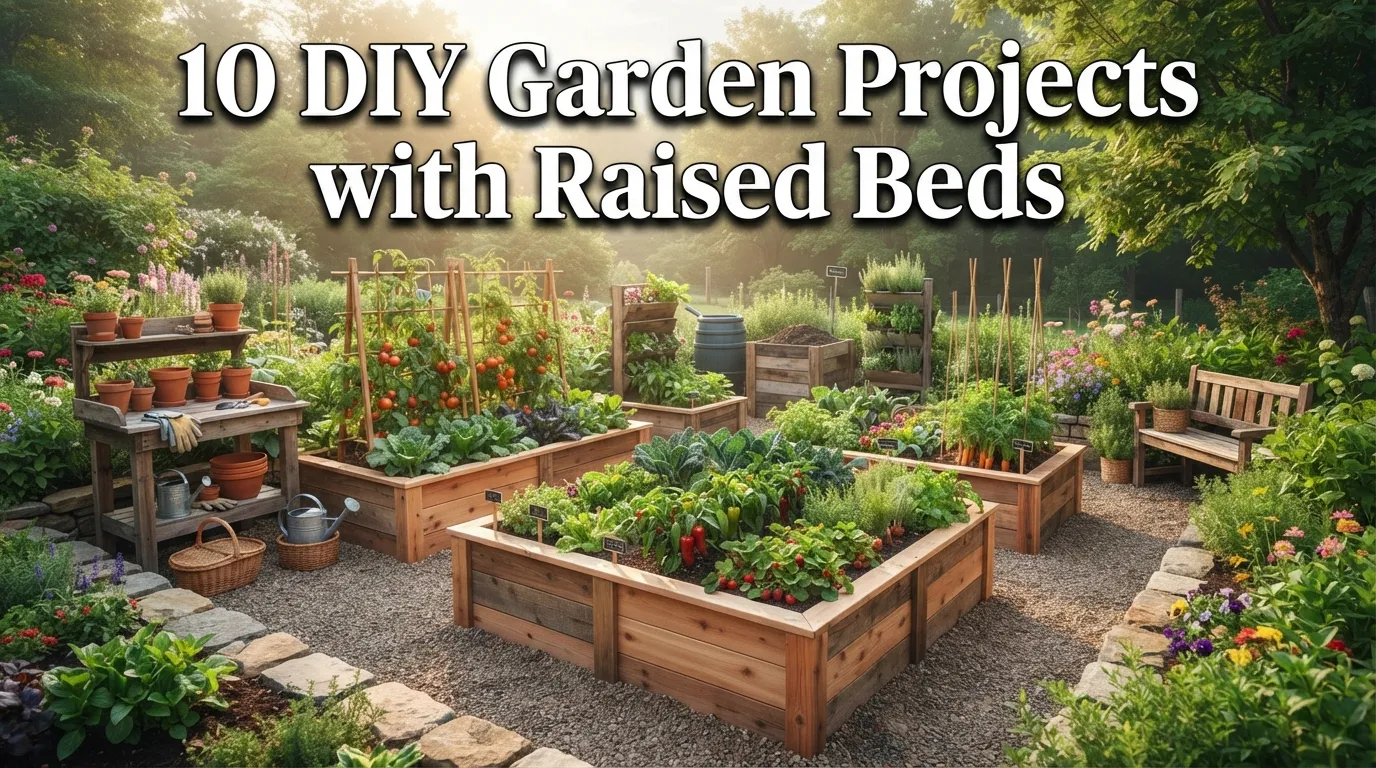
A raised bed can do much more than give you a neat place to grow vegetables. In a small backyard, suburban garden, side yard, or even a compact rental-friendly outdoor space, raised beds can help define planting areas, improve organization, and make the garden feel intentionally designed.
What I especially like about raised-bed gardening is how flexible it can be. You can build a simple rectangular bed from untreated lumber, create a more decorative garden using stone or brick, or combine several beds into a layout that gives you room for vegetables, herbs, flowers, and pollinator-friendly plants.
You also do not need an enormous backyard to make raised beds work. A few carefully positioned beds can create a productive garden while leaving enough room for walking, entertaining, or relaxing. The key is planning the layout before you start building.
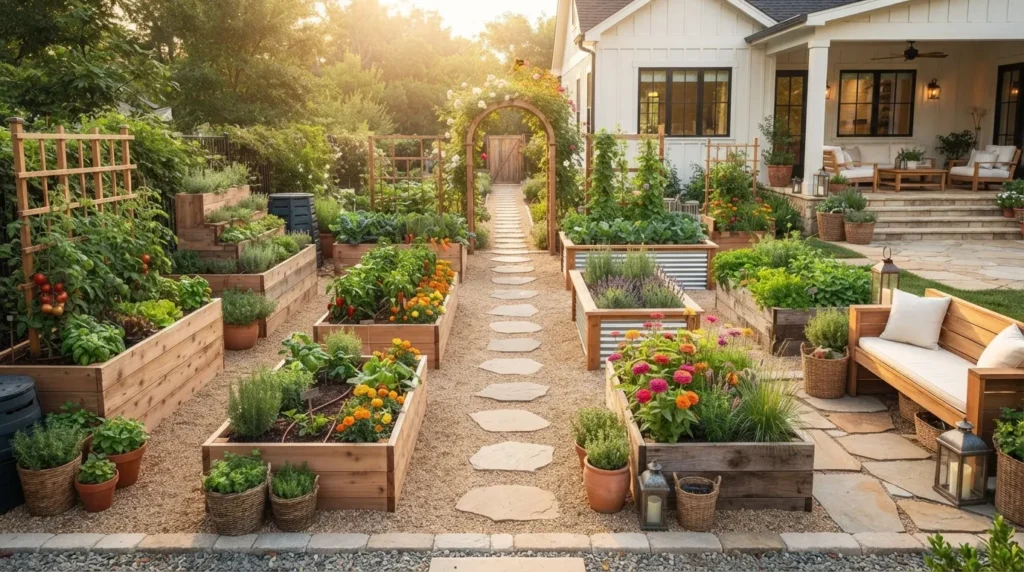
For many gardeners, raised beds also make it easier to organize plants by purpose. One bed might hold tomatoes and peppers, another could become an herb garden, while a smaller bed could be reserved for lettuce and other cool-season crops. Adding trellises, arches, pathways, or borders can turn these practical growing spaces into attractive garden features.
Before starting any project, think about sunlight, drainage, access, water availability, and the mature size of the plants you want to grow. Use suitable untreated or garden-safe materials, and choose soil and compost appropriate for edible plants.
The projects below range from simple beginner-friendly builds to more decorative ideas that can become the focal point of a backyard garden. Whether you want a productive vegetable garden or a Pinterest-worthy outdoor space filled with greenery, these raised-bed ideas can help you get started.
Table of Contents
1. Classic Wood Beds
Build simple rectangular raised beds that provide an organized foundation for vegetables and herbs.
2. Tiered Garden Beds
Use multiple levels to create visual interest while making productive use of sloped or compact spaces.
3. Herb Garden Boxes
Create dedicated raised beds for culinary herbs that are easy to access and maintain.
4. Trellis Raised Beds
Combine vertical growing with raised beds to maximize planting space for climbing crops.
5. Pollinator Beds
Turn a raised bed into a colorful habitat filled with flowers that attract beneficial pollinators.
6. Corner Garden Beds
Use an overlooked backyard corner to create a productive and visually appealing growing zone.
7. Brick Raised Beds
Give your garden a more permanent appearance with durable brick edging and structured planting areas.
8. Reclaimed Wood Beds
Create a rustic garden feature using suitable reclaimed materials while keeping the design simple.
9. Raised Salad Garden
Dedicate a compact bed to lettuce, greens, radishes, herbs, and other quick-growing crops.
10. Flower-Filled Beds
Combine ornamental flowers with edible plants to create raised beds that are both productive and beautiful.
1. Classic Wood Beds
Quick Benefits
- Beginner-friendly construction
- Easy to customize
- Creates organized planting zones
- Works in many backyard styles
- Simple to expand later
Why It Works
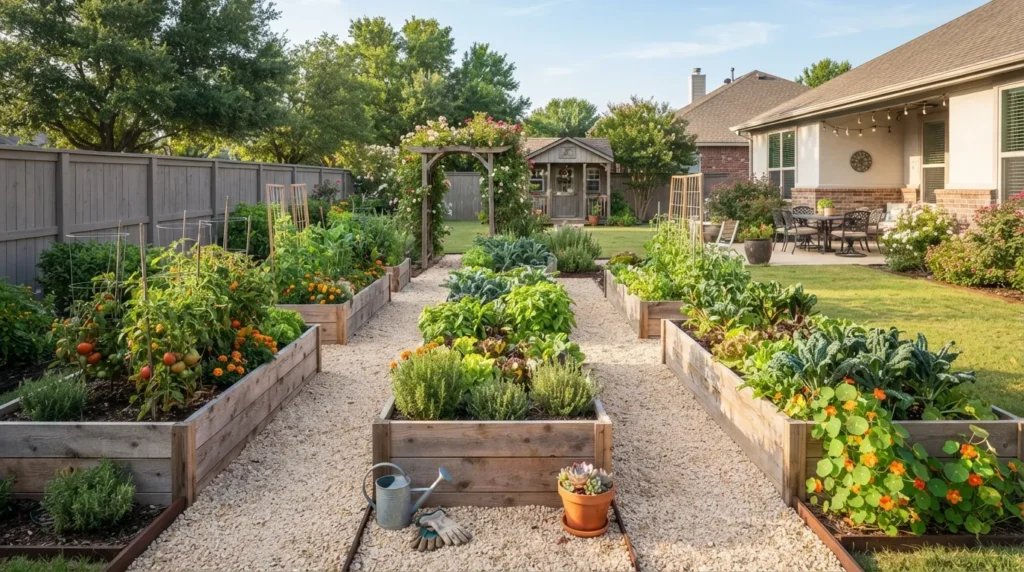
Classic wooden raised beds are popular for a reason: they are straightforward, versatile, and easy to incorporate into almost any garden.
A rectangular bed gives you a defined growing area while keeping paths and planting zones organized. It also allows you to prepare the soil within a specific space rather than working with the entire yard.
For beginners, a simple rectangular shape is often the easiest place to start because it requires fewer complicated cuts and makes planting straightforward.
The design can look rustic, modern, farmhouse-inspired, or completely minimalist depending on the wood, surrounding materials, and plants.
One important consideration is material selection. For edible gardens, choose appropriate untreated lumber or products specifically intended for garden use, and avoid wood with unknown chemical treatments.
How To Style It
Start by choosing a location that receives enough sunlight for the crops you want to grow.
Mark the footprint before building anything. A bed that is too wide can make the center difficult to reach without stepping into the soil.
Construct a simple rectangular frame using suitable untreated boards and secure the corners appropriately.
Fill the bed with quality garden soil and compost suited to the plants you intend to grow.
Leave enough space between beds for comfortable walking, watering, harvesting, and maintenance.
For a polished appearance, surround the beds with gravel, mulch, grass, or a simple pathway.
You can build one bed initially and add additional matching beds later as your gardening experience grows.
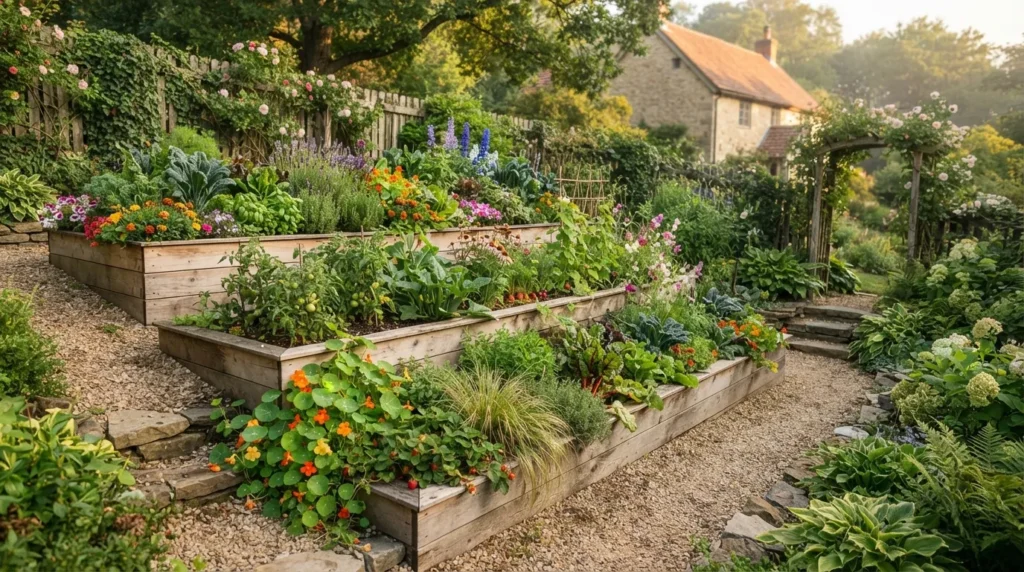
2. Tiered Garden Beds
Quick Benefits
- Adds visual dimension
- Works well in uneven areas
- Creates multiple planting levels
- Makes small gardens more productive
- Provides an attractive focal point
Why It Works
Tiered raised beds are especially useful when a garden has a slope or when you want to maximize planting space without spreading beds across a large area.
Different levels create a layered appearance that can make a garden feel more established. They also allow you to separate plants according to their size, sunlight requirements, or growing habits.
A tiered layout can be as simple as two stacked rectangular beds or a more elaborate staircase-style structure.
The most important consideration is stability. Raised beds filled with soil become extremely heavy, so every level needs to be designed and supported appropriately for the site.
How To Style It
Choose the number of tiers according to the available space.
For a small backyard, two or three levels may provide plenty of visual interest.
Place taller plants toward the rear or upper section and shorter crops toward the front where they remain accessible.
You can use flowers on one tier, herbs on another, and vegetables on a third.
Surround the structure with mulch or gravel to create a clean transition between the raised beds and the rest of the garden.
If the garden is naturally sloped, use the tiers to follow the terrain rather than forcing an unnatural arrangement.
Make sure each level has adequate drainage and that retaining structures are properly secured for the soil loads involved.
3. Herb Garden Boxes
Quick Benefits
- Keeps herbs easy to reach
- Creates a dedicated growing space
- Works in compact gardens
- Adds fragrance and texture
- Makes harvesting convenient
Why It Works
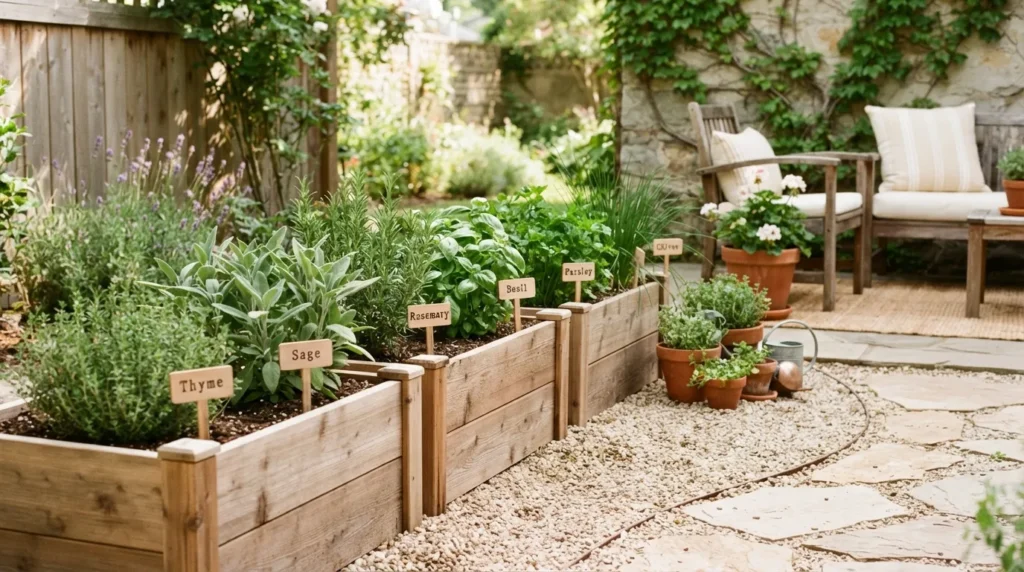
A raised herb garden is one of the easiest ways to create a productive garden feature without needing a huge amount of space.
Herbs are particularly convenient near the kitchen or outdoor entertaining area because they can be harvested frequently.
A dedicated bed also makes it easier to group plants with similar growing requirements.
Basil, parsley, cilantro, thyme, rosemary, oregano, sage, and chives can all become part of a useful herb garden, although individual varieties have different light, water, spacing, and seasonal needs.
The visual appeal is another advantage. Herbs provide a mixture of soft foliage, upright stems, flowers, and varied textures.
How To Style It
Choose a raised bed that is easy to access from all sides.
Place taller herbs where they will not shade smaller plants.
Use a combination of upright and spreading herbs to create visual variation.
Add a simple garden marker for each plant if you are growing several varieties.
A narrow gravel pathway around the bed can make harvesting easier and prevent muddy shoes.
Consider placing the herb bed near a patio or kitchen entrance if sunlight and growing conditions are suitable.
Keep frequently harvested herbs close to the easiest access point.
For perennial herbs, check their mature size and winter hardiness for your region before planting.
4. Trellis Raised Beds
Quick Benefits
- Adds vertical growing space
- Saves valuable ground area
- Supports climbing crops
- Creates a garden focal point
- Adds height and structure
Why It Works
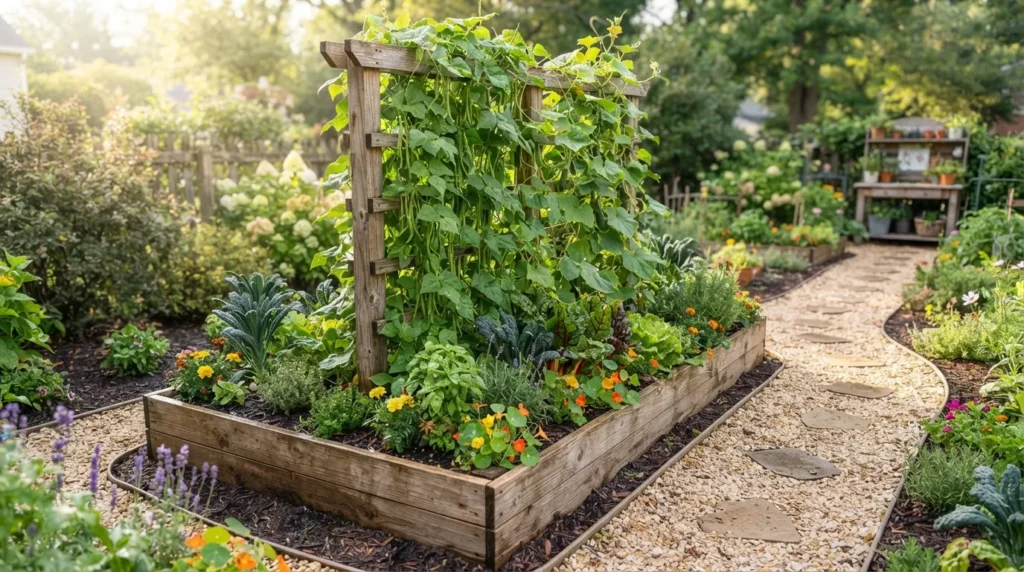
When horizontal space is limited, growing upward can make a raised bed significantly more productive.
A trellis gives climbing plants a place to grow vertically instead of spreading across the soil or nearby pathways.
Cucumbers, peas, beans, and certain vining plants can benefit from appropriate support, although each crop should be matched with a trellis system capable of supporting its mature size and weight.
Vertical structures also make a raised bed more visually interesting.
Instead of seeing only a low rectangle filled with plants, you get layers: soil-level foliage, medium-height crops, and climbing greenery.
How To Style It
Install the trellis securely before the plants become large and heavy.
A simple wooden grid can work for lighter climbers, while heavier crops may require a stronger structure.
Place the trellis on the appropriate side of the bed based on your local sun exposure so it does not unnecessarily shade shorter plants.
Use climbing plants as the primary vertical feature and keep the rest of the bed relatively simple.
For a Pinterest-worthy garden, repeat the trellis material in another garden feature such as a gate, planter, or edging.
Make sure the structure is firmly anchored and designed for outdoor conditions.
The result can function as both productive garden infrastructure and a beautiful architectural feature.
5. Pollinator Beds
Quick Benefits
- Adds vibrant color
- Supports pollinator-friendly gardening
- Creates seasonal interest
- Attracts beneficial insects
- Makes raised beds more ornamental
Why It Works
Raised beds do not have to be reserved exclusively for vegetables.
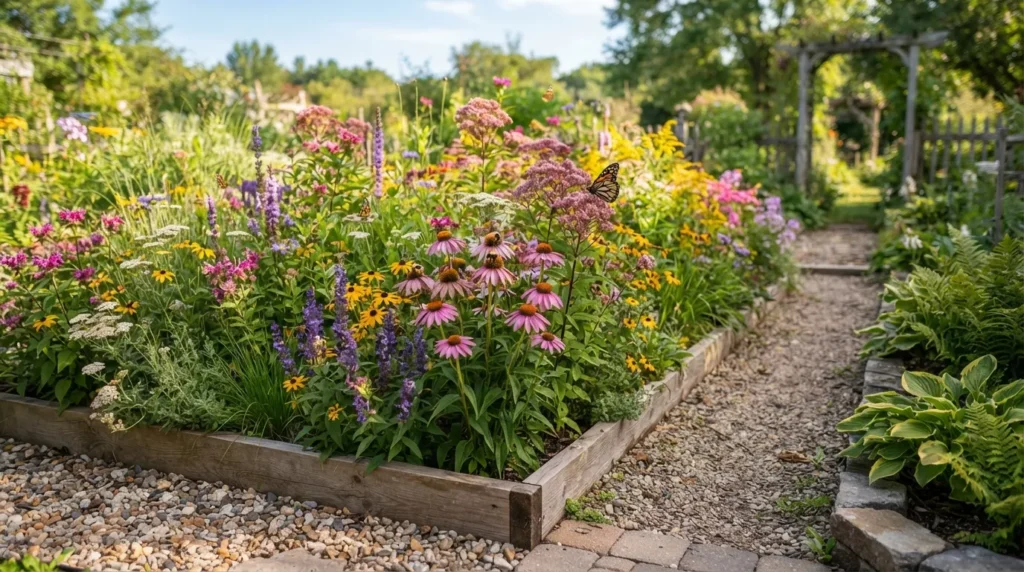
A flower-filled pollinator bed can bring color, movement, and biodiversity into a backyard while making the garden feel more inviting.
Choose flowers suited to your local growing conditions and aim for a mixture of bloom periods so the bed has something interesting happening throughout the growing season.
Different flower shapes and heights also create a more dynamic appearance.
Avoid thinking of the bed as a single-color flower arrangement. Combining several compatible plants can create a layered, natural look.
For pollinator gardens, plant selection matters more than decoration. Choose regionally appropriate flowers and avoid treating the bed purely as an ornamental display.
How To Style It
Begin with taller flowers toward the back and shorter plants toward the front.
Use repeated groups rather than planting one of every flower variety.
A palette of two or three dominant colors can look particularly polished.
Add native or locally appropriate flowering plants where practical.
Consider including plants with different bloom times to provide a longer period of garden interest.
Leave some natural-looking areas rather than making every plant perfectly symmetrical.
A wooden or stone raised bed can provide enough structure to make the planting feel intentional while allowing the flowers themselves to create a softer appearance.
6. Corner Garden Beds
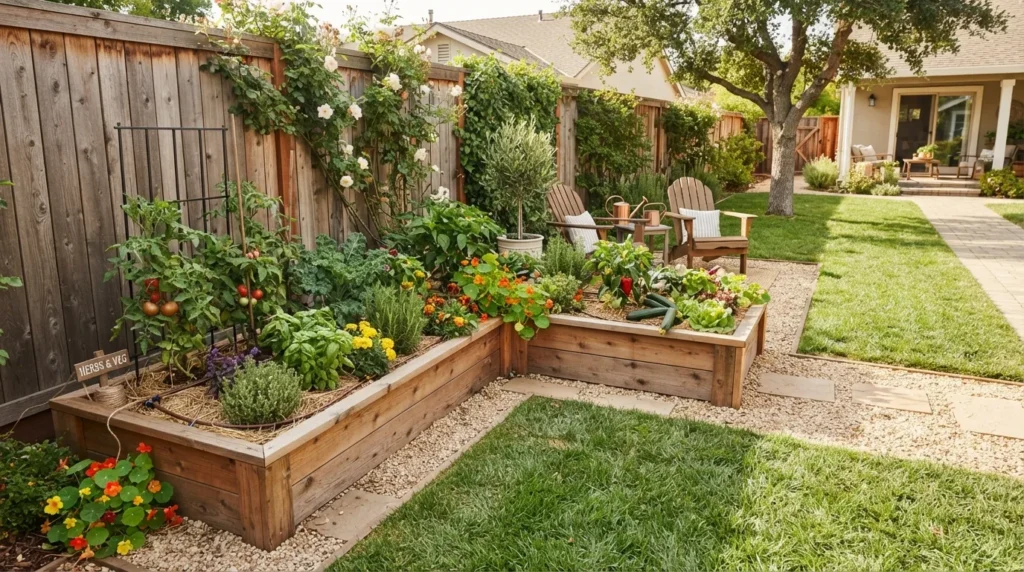
Quick Benefits
- Uses overlooked space
- Defines awkward corners
- Creates a productive planting zone
- Keeps the center of the yard open
- Works well for compact gardens
Why It Works
Corners are frequently underused in backyard layouts.
A raised bed can turn one of these forgotten spaces into a productive garden without taking over the main lawn or patio.
Corner beds are particularly useful when you want to preserve an open central area for children, pets, entertaining, or outdoor furniture.
An L-shaped configuration can follow two boundaries and create a surprisingly large growing area.
However, access should remain a priority. You should be able to reach all planting areas without stepping into the bed.
How To Style It
Measure both sides of the corner before choosing the bed dimensions.
An L-shaped design can work beautifully against a fence, provided the fence and neighboring property conditions allow it.
Place taller crops along the outer edges where they will not unnecessarily block access.
Use the inner corner for a decorative focal point such as a taller plant, small trellis, or vertical feature.
Surround the bed with mulch or gravel.
If the corner is near a patio, choose plants that complement the colors and materials already present.
Keep the central yard open so the raised bed feels like a defined garden feature rather than an obstacle.
7. Brick Raised Beds
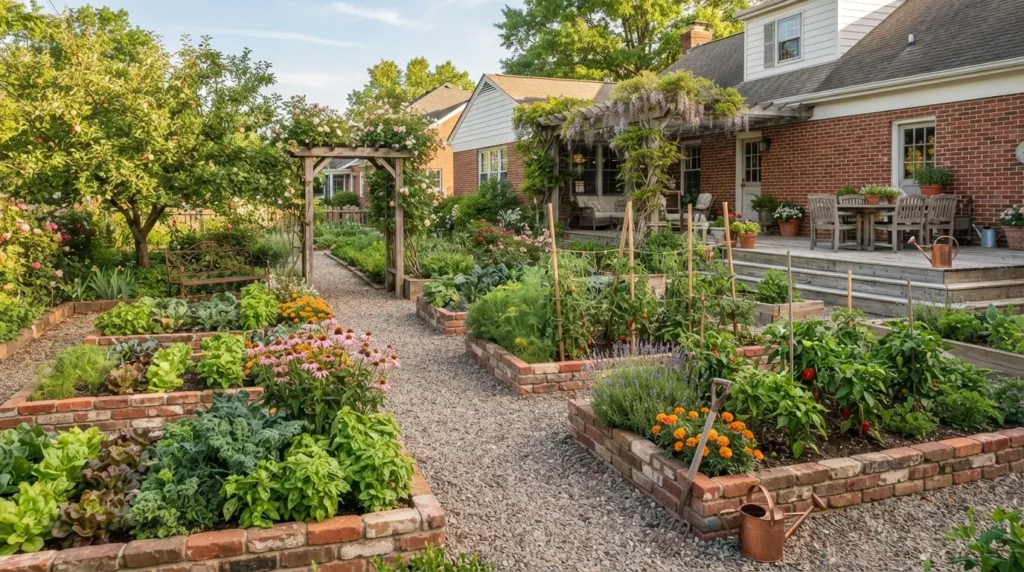
Quick Benefits
- Creates a structured appearance
- Complements traditional homes
- Offers durable edging
- Defines garden boundaries
- Adds architectural character
Why It Works
Brick can give a raised garden a more permanent, built-in appearance.
Unlike a simple wooden frame, brick edging can visually connect the garden to the architecture of a home, particularly when similar masonry or warm earthy tones appear elsewhere in the landscape.
The material also creates a strong contrast with soft foliage.
Green leaves, colorful flowers, and loose planting shapes look especially attractive against structured brick borders.
Brick construction requires more planning than a simple timber frame, but the result can become a long-term landscape feature.
How To Style It
Choose brick colors that complement the home’s exterior and existing hardscape.
Warm red brick creates a traditional cottage or farmhouse feel.
Paler brick can feel more contemporary.
Keep the bed shape simple.
Rectangles, squares, and gentle geometric configurations tend to look more intentional than overly complicated layouts.
Use gravel or stone pathways around the beds to reinforce the structured design.
Inside the bed, soften the hardscape with abundant greenery and flowers.
If constructing a permanent masonry bed, plan drainage carefully and follow appropriate construction practices for your site rather than treating the project like a lightweight planter.
8. Reclaimed Wood Beds
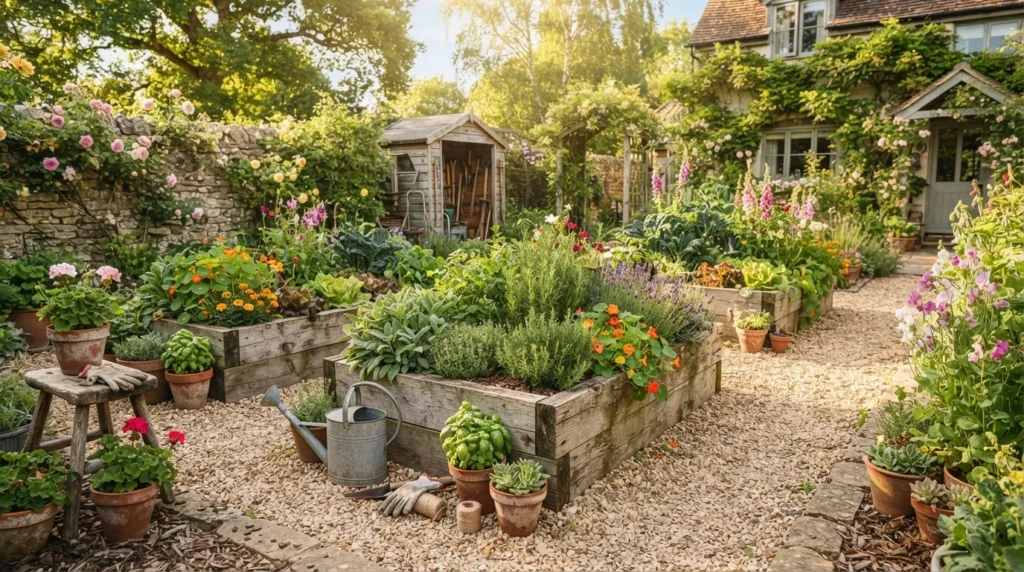
Quick Benefits
- Creates rustic character
- Gives old materials new purpose
- Adds visual warmth
- Works well with cottage gardens
- Can be highly personalized
Why It Works
Reclaimed materials can give a garden an immediate sense of history.
Old boards, weathered timber, and salvaged garden materials can create the relaxed appearance many people associate with cottage and farmhouse gardens.
However, reclaimed wood needs more consideration than simply finding an old board and placing it around vegetables.
You need to know what the wood was previously used for and whether it may have been treated with substances inappropriate for garden use.
For edible gardening, safety should take priority over achieving a particular rustic appearance.
How To Style It
Use reclaimed wood only when its history and condition are reasonably understood and appropriate for the intended application.
If you are uncertain about old timber, use new garden-suitable lumber for the soil-contact structure and bring the rustic character through decorative elements instead.
Pair weathered-looking materials with galvanized metal, terracotta pots, gravel, and soft greenery.
Let the planting remain somewhat relaxed.
Herbs, flowers, leafy vegetables, and trailing plants can all complement a rustic raised-bed design.
Avoid making every element perfectly coordinated.
The charm of this style comes from natural variation and an intentionally informal appearance.
9. Raised Salad Garden
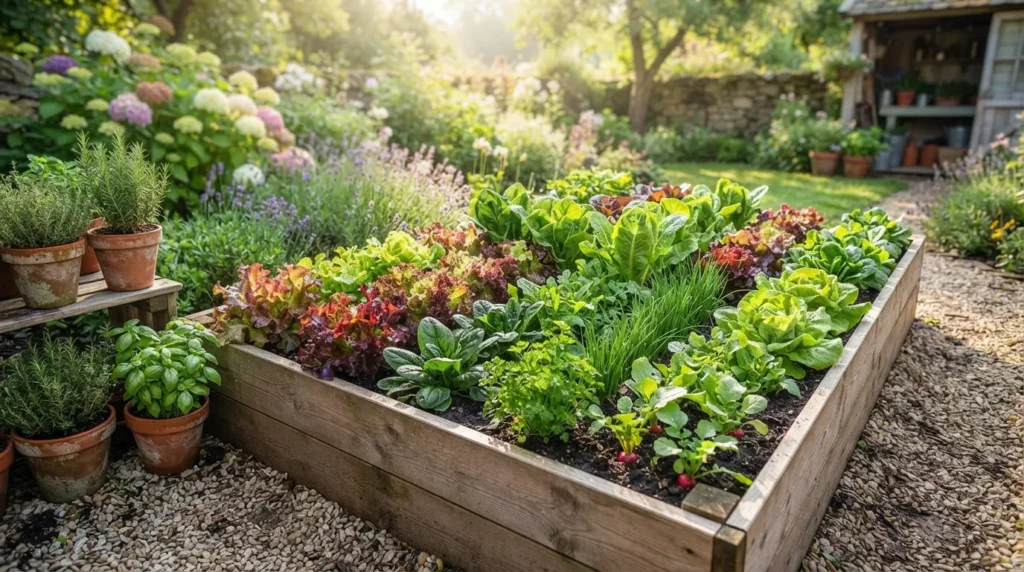
Quick Benefits
- Provides convenient fresh greens
- Works in smaller gardens
- Supports succession planting
- Easy to harvest
- Can look visually lush
Why It Works
A raised bed dedicated to salad ingredients can become one of the most useful features in a backyard.
Lettuce, spinach, arugula, radishes, herbs, and other suitable greens can create a productive mixture of textures and colors.
Because many salad crops are relatively compact, they can work well in smaller beds.
Succession planting can also help maintain a continuous harvest. Rather than planting the entire bed at once, gardeners can stagger plantings according to the crop and local growing season.
Always follow crop-specific recommendations for your climate.
How To Style It
Divide the bed into small planting sections.
Place frequently harvested herbs along an accessible edge.
Use taller or larger plants where they will not shade smaller greens.
Mix different leaf colors for visual interest.
For example, green lettuce alongside red or purple foliage can make the bed look decorative as well as productive.
Keep a small pathway beside the bed so harvesting does not require stepping into the soil.
Use quality soil and compost suitable for edible crops.
Because leafy greens can change quickly throughout the season, replanting empty sections can help keep the garden looking full.
10. Flower-Filled Beds
Quick Benefits
- Combines beauty and productivity
- Adds seasonal color
- Creates a focal point
- Softens hard garden structures
- Works with many landscape styles
Why It Works
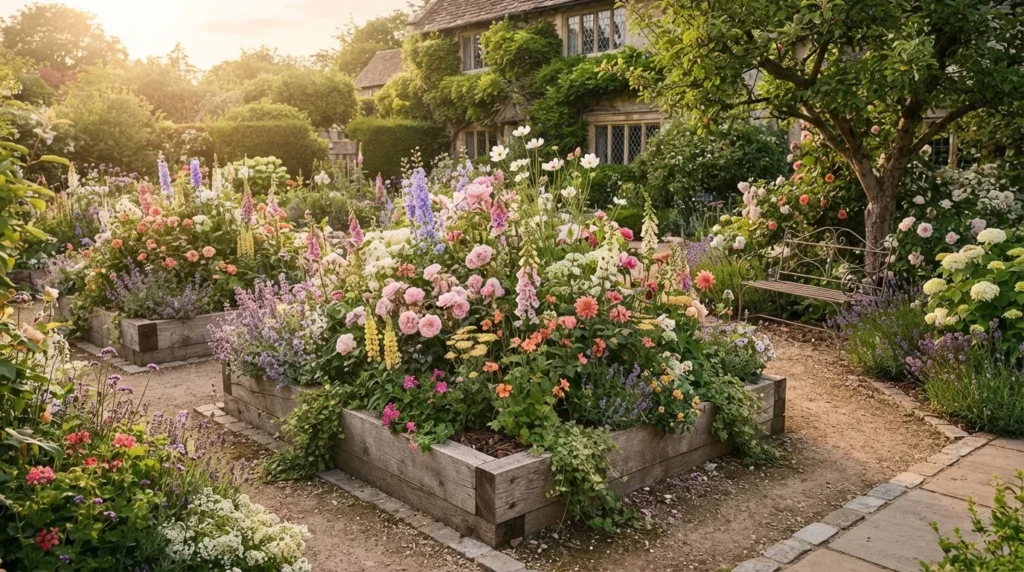
A raised bed filled with flowers can completely change the character of a backyard.
Instead of treating the garden as a purely practical vegetable-growing area, use the raised bed as a designed landscape feature.
Flowers can soften wood, brick, or stone edges while adding height, movement, fragrance, and seasonal color.
You can create a formal arrangement with repeated plants or a more relaxed cottage-inspired planting style.
The most important factor is choosing plants that suit your local conditions, including sunlight, soil, water requirements, mature size, and seasonal temperatures.
How To Style It
Start with the structure of the planting.
Use taller plants toward the center or back and shorter flowers around the edges, depending on where the bed is viewed from.
Repeat the same flower in several places rather than using too many unrelated varieties.
Combine different heights and textures.
Include foliage plants to maintain visual interest even when flowers are not blooming.
A simple wooden or brick raised bed can provide enough structure to support a colorful, informal planting design.
If you want a more cottage-garden appearance, allow some plants to spill naturally over the edges.
For a contemporary look, use fewer plant varieties and repeat them in organized blocks.
How To Choose The Best Raised Bed Location
Before building a raised bed, spend time observing your yard.
Watch The Sun
Track how much direct sunlight the area receives throughout the day.
Vegetables, herbs, and flowers have different light requirements, so choose the location according to what you intend to grow.
Check Water Access
A bed that is far from a water source may become difficult to maintain.
Think about how you will water during hot and dry periods.
Consider Drainage
Avoid placing raised beds in areas where water consistently collects unless the design specifically addresses drainage.
Protect Accessibility
Leave enough room around the bed to walk, harvest, weed, and maintain plants comfortably.
Think About Mature Plants
A small seedling can become a large plant.
Consider mature height and width before finalizing the layout.
Raised Bed Materials To Consider
The frame material affects both appearance and longevity.
Untreated Garden-Suitable Wood
A classic choice for simple raised beds.
Brick
Useful for permanent, structured garden designs.
Stone
Creates a natural, substantial appearance.
Metal
Can create a modern look, but choose products designed for outdoor and garden use and consider heat exposure.
Reclaimed Materials
Can provide character, but suitability and safety should be carefully evaluated.
For edible gardens, avoid materials of unknown history or those that may contain inappropriate treatments.
How To Make Raised Beds Look More Beautiful
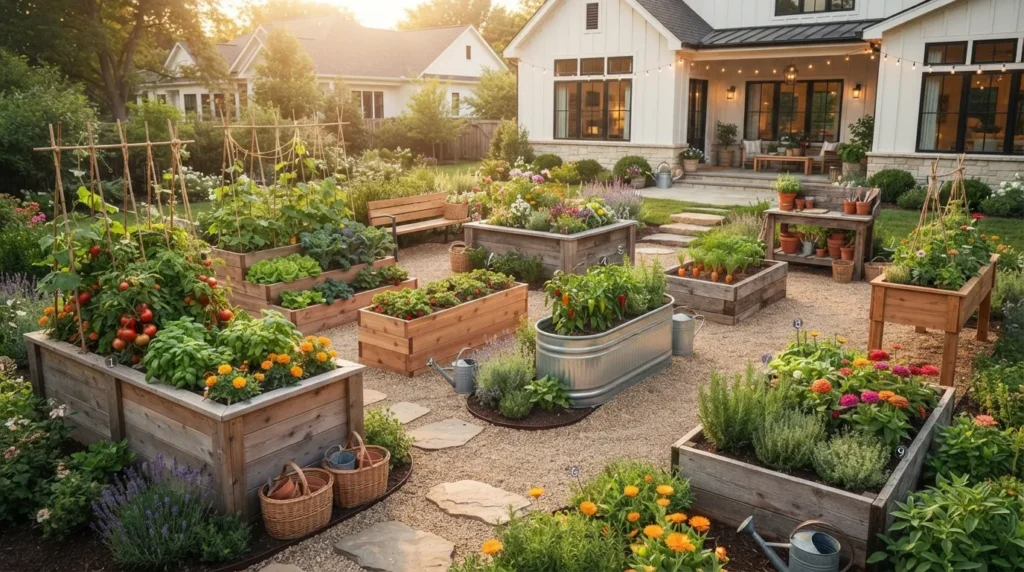
Raised beds become much more attractive when the surrounding garden is considered as part of the design.
Use pathways to define the beds.
Repeat materials around the garden.
Group plants instead of scattering them randomly.
Choose a consistent color palette.
Add trellises for height.
Use flowers around vegetable beds.
Keep weeds and overgrown plants from obscuring the structure.
Most importantly, give the garden enough breathing room.
A beautiful raised-bed garden does not need to be packed with plants.
Sometimes the strongest design comes from repeating a few materials and plant varieties across a simple layout.
FAQ
What is the easiest raised bed to build?
A simple rectangular wooden raised bed is usually one of the most approachable designs for beginners. It requires a straightforward frame and can be customized to the available space. Before building, choose appropriate garden-safe materials, confirm the location receives suitable sunlight, and make sure the finished dimensions allow you to reach the planting area comfortably.
How deep should a raised garden bed be?
The ideal depth depends on what you are growing and the conditions beneath the bed. Many common garden plants can grow successfully in a raised bed with adequate soil depth, while deep-rooted crops may require more. Before building, research the mature root requirements of your chosen plants and consider whether the existing ground beneath the bed will also be available to the roots.
What should I put on the bottom of a raised garden bed?
There is no universal bottom layer required for every raised bed. Some beds are open to the native soil, while others may need a barrier depending on the location and the purpose of the bed. Weed control, drainage, pests, and existing soil conditions should all be considered. Avoid materials that could restrict drainage or introduce unwanted chemicals.
Can I build raised beds in a small backyard?
Yes. Raised beds can work particularly well in compact yards because they allow you to define planting areas and preserve pathways or open space. Narrow rectangular beds, corner beds, vertical trellis beds, and tiered designs can all make efficient use of limited space while keeping the garden organized.
What vegetables grow well in raised beds?
Many vegetables can grow successfully in raised beds, including leafy greens, lettuce, herbs, radishes, carrots, peppers, tomatoes, beans, and other crops suited to your local climate. Plant spacing, sunlight, soil depth, watering, and seasonal timing all affect success, so choose varieties appropriate for your growing region.
Are raised beds better than planting directly in the ground?
Raised beds can offer advantages such as defined planting areas, easier soil management, improved organization, and potentially better drainage depending on the site and construction. They are not automatically better for every garden, however. The best approach depends on your soil, climate, available space, budget, crops, and gardening goals.
How do I keep a raised bed looking neat?
Define clear edges, maintain accessible pathways, group plants thoughtfully, remove weeds regularly, and avoid overcrowding. Repeating materials such as wood, brick, gravel, or stone can also make multiple beds look cohesive. Allow enough space for plants to reach their mature size rather than planting too densely for an immediate full appearance.
Conclusion
Raised beds can completely change the way a backyard garden looks and functions.
The best part is that there is no single style you have to follow. A simple wood frame can create a practical vegetable garden, while tiered beds can turn a slope into a layered landscape. Trellises allow you to grow upward, herb boxes make everyday harvesting convenient, and pollinator beds bring color and life into the garden.
For smaller yards, corner beds and compact salad gardens can make productive use of limited space without sacrificing the rest of the outdoor area. If you prefer a more permanent appearance, brick or stone can give the garden architectural structure. And if you love a relaxed cottage style, carefully selected reclaimed materials can add character when they are suitable and safe for the intended use.
Before building, spend time thinking about sunlight, drainage, access, watering, mature plant sizes, and the materials you plan to use. Good planning will make the finished project easier to maintain and much more enjoyable to use.
You also do not have to build everything at once.
Start with one raised bed.
Grow a few plants you genuinely enjoy eating or looking at. Learn how the space behaves throughout the season, then expand gradually.
A productive garden does not have to look utilitarian. With thoughtful layouts, attractive materials, pathways, trellises, and colorful planting, raised beds can become one of the most beautiful features in your backyard.
Related Articles
- 10 DIY Backyard Garden Ideas for Beginners
- 11 Small Backyard Garden Ideas for Beautiful Outdoor Spaces
- 10 Easy DIY Garden Projects for Summer
- 11 Vegetable Garden Layout Ideas for Beginners
- 10 Cottage Garden Ideas for a Charming Backyard